
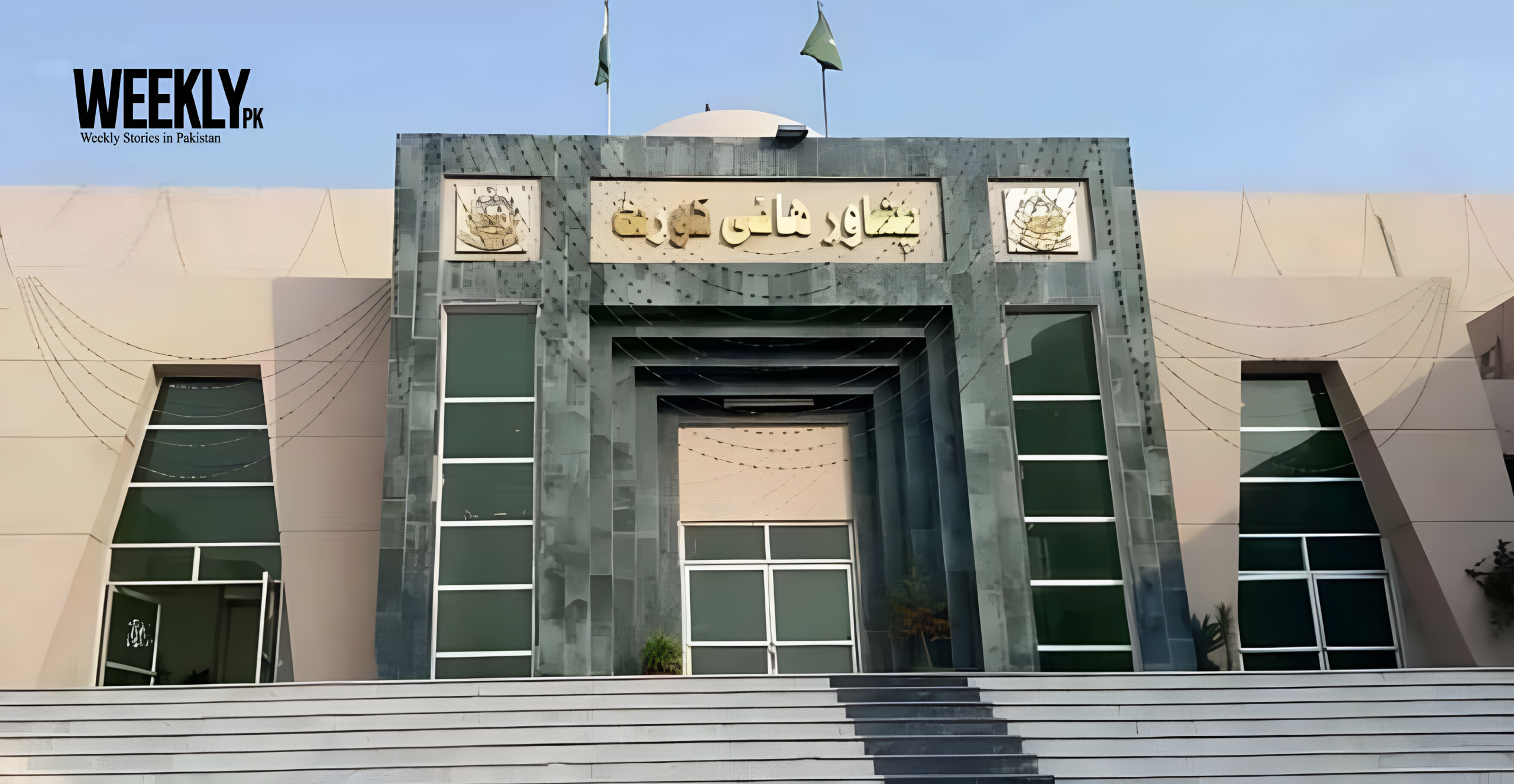
The Peshawar High Court has admitted hearing the petitions challenging the emergency and governor’s rule in Khyber Pakhtunkhwa, setting October 20 as the date for detailed arguments. The decision moves the confrontation over the province from Parliament, where the government secured its approval this week, into a courtroom, where the legal basis of the intervention will be examined directly.
The petitions were filed by PTI Chairman Barrister Gohar Ali Khan, through Advocate Ali Zaman, and by Advocate Salman Khan. They describe the imposition of emergency and governor’s rule as unconstitutional, illegal and carried out in bad faith, and ask the court to declare both measures null and void. They also ask the bench to suspend the notification imposing governor’s rule as an interim measure until a final decision is reached. Gohar’s petition cites a long list of constitutional provisions, including those on fundamental rights, the independence of the judiciary and the specific articles under which the president acted, 232 and 234.
The petitioners’ arguments go beyond the question of procedure. They contend that governor’s rule was not imposed in Balochistan despite terrorist attacks and loss of life there, and argue that the threat of terrorism is being used to curtail the powers of the PTI-led government in Khyber Pakhtunkhwa. They also point out that governor’s rule was not imposed in the province during the years of heavy militancy between 2007 and 2015. The petitions note that PTI secured a two-thirds majority in the province in the 2024 general elections, and argue that any imposition of governor’s rule must strictly comply with the requirements and procedure laid down in Article 234. In his own petition, Gohar argued that the federal decision was discriminatory and that political differences cannot justify curtailing the powers of an elected administration.
The federal government’s position is that the constitutional conditions were met. Law Minister Azam Nazeer Tarar told Parliament that Article 234 provides for governor’s rule when a provincial government cannot be carried on in accordance with the Constitution, and that the cabinet recommended the measures after reviewing the security situation. The Centre has accused the provincial administration of deliberately disengaging from the fight against terrorism, and the National Assembly, the Senate and a joint sitting of Parliament all approved the proclamations this week, with the PPP, PML-N and MQM-P voting in favour. PTI members walked out of the Senate and protested in the joint sitting.
That parliamentary approval will be part of the debate in court. The government can be expected to argue that the elected representatives of the federation have endorsed the decision through the process the Constitution requires. The petitioners are likely to argue that approval by Parliament does not by itself answer whether the facts justified the proclamation in the first place, and that the court retains the power to examine whether the constitutional conditions were genuinely met. How far the court is willing to go into the factual basis of a decision like this is one of the key questions the hearing will raise, and legal experts have described the proceedings as a significant test of the emergency provisions and of the balance of power between the federation and the provinces.
Alongside the main petitions, PTI has also been pursuing questions about the whereabouts of Chief Minister Sohail Afridi. Party Secretary General Salman Akram Raja said PTI was approaching the courts to find out where Afridi was being held, and the party’s KP media cell alleged that police had abducted Afridi’s lawyer, Bashir Wazir, from outside the high court, an allegation that has not been independently confirmed. Daily Times reported earlier that Afridi and several other PTI leaders were taken into protective custody, a description that PTI disputes, calling it an arrest. The same court is also due to hear, on October 20, a separate matter involving interim protection from arrest for Afridi and 27 other PTI leaders in cases linked to the May 9 incidents, which makes the day a busy one for the bench.
Timing matters too. Under Article 234, governor’s rule approved by a joint sitting runs for an initial two months and can be extended by Parliament, up to a maximum of six months in total, although one report quoted Tarar as saying the arrangement would initially remain in place for six months. Whatever the exact period, the clock is running, and a lengthy court process could mean that much of the period passes before the legality of the measure is settled. That is why the petitioners have asked for interim relief rather than waiting for a final judgment.
For now, the province is being run by Governor Faisal Karim Kundi with an 11-member advisory council, and Parliament exercises the legislative powers of the provincial assembly. The court’s decision on whether to suspend that arrangement, even temporarily, would be one of the most consequential rulings in the province’s recent history. Whichever way it goes, both sides have signalled that they will not treat the outcome as final, and an appeal to a higher court seems likely.
Compiled by the Weekly PK Islamabad Political Desk.
Leave a Reply