
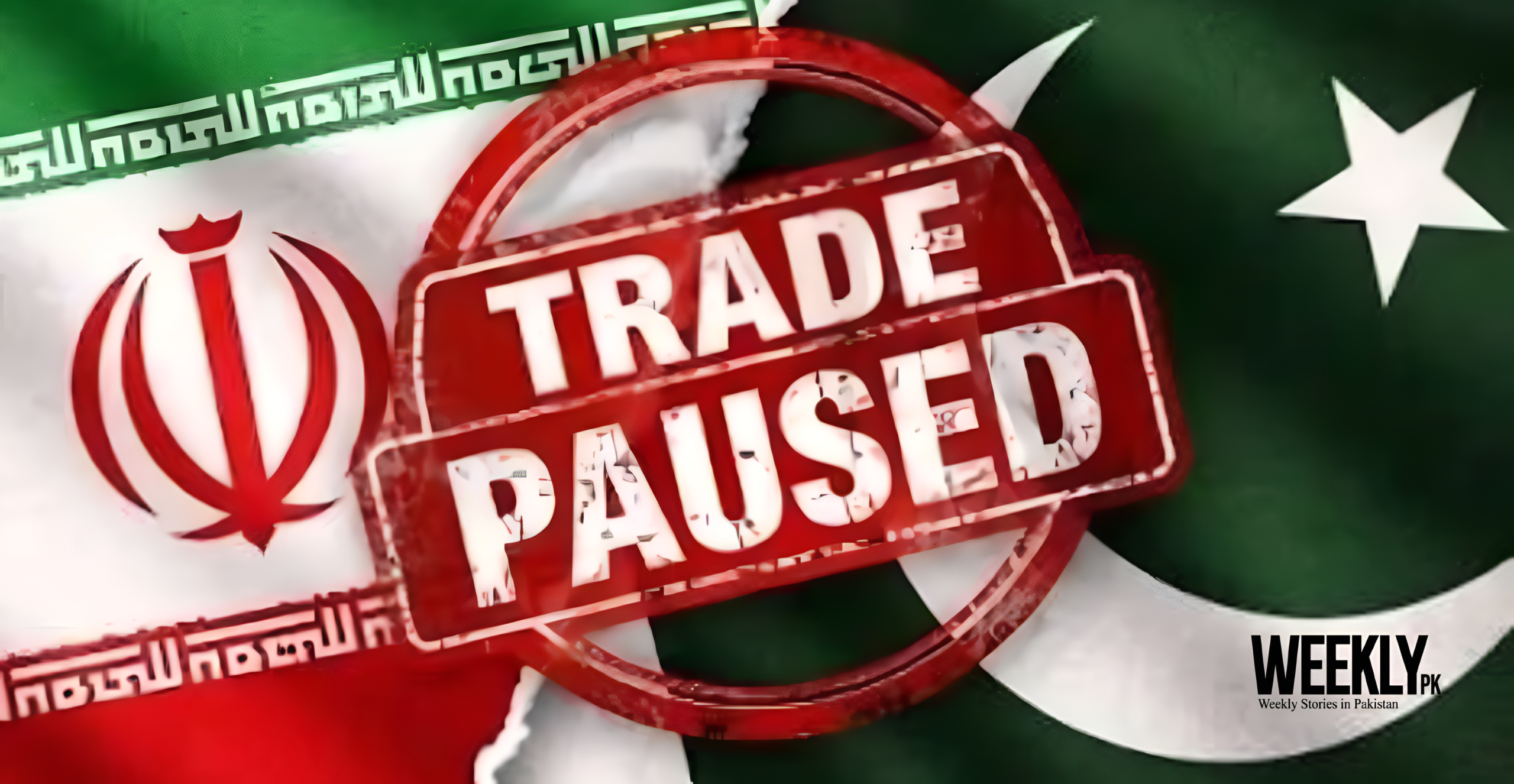
Pakistan has suspended commercial trade with Iran through two of its main border crossings, Gabd-Rimdan and Taftan, citing security and smuggling concerns. The decision, which has stranded hundreds of trucks and raised fears for LPG supplies, was described by officials as temporary, but no reopening date has been announced.
The Ministry of Commerce withdrew its earlier trade authorisation with immediate effect through a memorandum issued on Friday, and the suspension became public on Saturday. Shahid Rind, adviser to the Balochistan chief minister on media affairs, said the temporary closure was intended to address security concerns, prevent smuggling and make the border system more effective. He said the border was likely to reopen soon and that a coordinated system was being put in place to improve border management. Chagai Deputy Commissioner Bakhtiar Ismail described the closure on X as a temporary measure to improve border management in support of counterterrorism efforts. Iran has also described the disruption as temporary, citing technical problems, while Iranian news agency Wana reported that passenger traffic through the Rimdan-Gabd crossing remains operational. The Quetta Chamber of Commerce and Industry has said that trade and commercial activity is suspended across all border crossings between the two countries.
The commercial impact has been immediate. The suspension has left thousands of containers and trucks stranded at the two crossings, according to Arab News, with other reports putting the number of trucks at around 2,000. A customs clearing agent at Gabd-Rimdan said some 65 containers he had cleared were stuck at the border, and traders have warned of substantial financial losses. The goods affected include LPG, rice and fresh produce, and perishable items face the most immediate risk if the delay continues.
LPG is the biggest concern for consumers. Gabd-Rimdan has become a major route for meeting Pakistan’s energy needs, with more than 4,000 tonnes of LPG reportedly imported through it every day. A prolonged halt could tighten supplies and push up prices in the open market, a worry that traders and analysts have raised since the suspension was announced. LPG matters particularly in areas without piped gas, where households rely on cylinders for cooking, and any increase would add to cost-of-living pressure at a time when fuel and food prices are already a political issue. The industry has also called for more frequent price revisions in recent days, which suggests that the sector expects volatility.
The closure follows months of efforts to expand trade with Iran. Since March, Islamabad and Tehran have introduced a series of measures to facilitate border trade, including easing customs procedures, formalising Taftan as a customs station and notifying new transit routes, against the backdrop of the ongoing US-Iran war, which has strained economies in the region. In early August, an Iranian delegation led by Trade and Industry Minister Mohammad Atabak visited Islamabad for the 10th session of the Pakistan-Iran Joint Trade Committee. The delegation also met Prime Minister Shehbaz Sharif, and both sides agreed to expand trade ties by keeping border crossings open round the clock, improving logistics and harmonising customs procedures. That visit came a couple of months after reports that trade through Gabd-Rimdan had come to a complete halt, which shows that disruption at this crossing is not new.
Taftan has also had its own difficulties. The route was already facing frequent interruptions amid unrest in Balochistan, which complicates any assessment of how much of the current disruption comes from the new order and how much from existing conditions. The 909-kilometre border between Balochistan and Iran’s Sistan and Baluchestan province has four official crossings, Taftan-Mirjaveh, Gabd-Rimdan, Mand and Chadgi, and the Quetta chamber’s statement suggests that commercial activity has been affected beyond the two named in the notification.
The security rationale fits the situation in the province. Security forces in Balochistan have been carrying out intensive operations in recent weeks, with the military reporting dozens of militants killed in areas including Washuk, Nushki, Mand and Kalat, and the border region has long been associated with smuggling networks as well as militant movement. Officials have not given details about specific threats that prompted the suspension, and they have not said what changes will be made before trade resumes. The reference to a coordinated system suggests that new procedures or monitoring arrangements are being prepared, but their form is unclear.
The timing is also noticeable. Pakistan has been engaged in diplomacy with Iran, with Iran saying that acceptance of its seven-point proposal could be a starting point for renewed talks with the United States, and with Pakistan stressing dialogue over confrontation. Pakistan has also been deepening defence ties with Saudi Arabia under the Makkah pact. Officials have given only security and smuggling as reasons for the closure, and no connection to the wider regional situation has been stated, so it would be premature to draw one.
For now, the questions are practical. How long will trucks and containers wait at the border, and what happens to perishable cargo? Will the government take steps to secure LPG supplies from other sources if the suspension continues? And what conditions must be met before trade resumes? Traders and consumers are likely to look for clear answers soon, particularly with winter approaching and demand for gas rising.
Compiled by the Weekly PK Business Desk.
Leave a Reply