
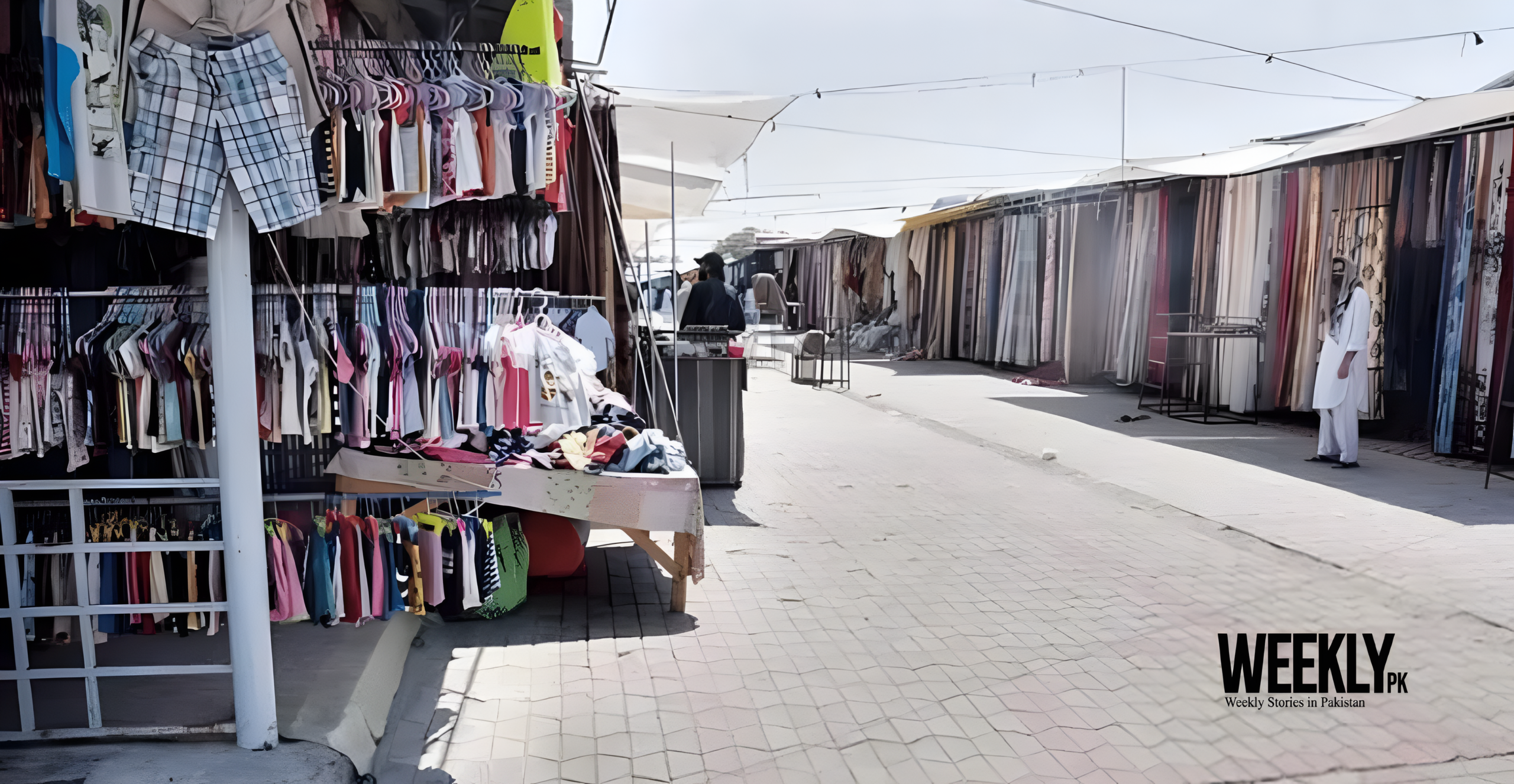
Islamabad authorities have closed two of the capital’s biggest weekly bazaars, H-9 and G-6, from October 16 until they meet fire safety requirements, a decision that comes just as the interior minister told the Senate that the H-9 market has suffered eight fires since 2017 with total losses of around Rs60 crore.
The Directorate of Municipal Administration issued the closure notification with the approval of the Chief Officer of the Metropolitan Corporation Islamabad. The two markets cannot reopen until they obtain fire safety clearance from Capital Emergency Services, which operates under the Capital Development Authority, and no reopening date has been given. Officials have been directed to complete all required safety arrangements to meet the prescribed standards.
The closure follows a fire at the H-9 bazaar on Wednesday that reportedly broke out during welding work as stallholders were installing shutter gates. The cause has not been formally confirmed. Authorities said they plan to make the H-9 Sunday Bazaar fire station operational within a week and to address safety concerns involving electricity and backup power systems.
The figures presented to the Senate by Interior Minister Mohsin Raza Naqvi give the closure its context. In a written reply, he said eight fires have occurred at the H-9 Sunday Bazaar since 2017, damaging roughly 2,200 stalls in total and causing losses of about Rs60 crore, and that no compensation has been paid to the affected stallholders. The two worst incidents were on August 23, 2017, when 611 stalls were damaged with a loss of Rs22 crore, and on July 10, 2024, when 625 stalls were damaged with a loss of Rs28 crore.
Naqvi said an inquiry after the 2024 fire led the Prime Minister’s Office to direct the CDA and the Metropolitan Corporation to prepare a fire safety plan for all bazaars, carry out monthly safety audits and buy modern firefighting equipment. The bazaar now has a Fire Safety Committee, 35 trolley-mounted extinguishers, 100 fire cylinders and a fire tender stationed round the clock. He identified the primary cause of fires as the failure of stallholders to remove their belongings and clear their stalls after the bazaar closes, and said the CDA and the Metropolitan Corporation remain fully committed to implementing all practicable recommendations.
The record since then raises an obvious question. A serious fire at the H-9 market in June destroyed close to 370 shops, according to reporting at the time, and the CDA’s preliminary investigation pointed to a series of safety violations, including the use of tarpaulin sheets, combustible materials stored in shops after business hours, and illegal gas cylinders and stoves. The report also noted problems with fire infrastructure, such as the absence of hydrants, and recommended immediate installation of fire safety systems and stricter inspections across commercial markets in the capital. The operation to control that fire involved 122 personnel, 17 fire engines, 15 water bowsers and seven ambulances drawn from several agencies, a measure of how large the blaze became.
The closure also has human consequences. H-9 is among the largest public markets in Islamabad, operating on Tuesdays, Fridays and Sundays, and has around 2,800 stalls, according to one report. For many stallholders, the weekly bazaar is their only source of income, and a closure of uncertain length hits them directly, particularly those who have already lost goods in earlier fires and, according to the interior minister, have not received compensation. Customers who rely on the bazaars for cheaper groceries, clothes and household goods will also feel the difference, especially at a time of high prices.
Two competing priorities now sit side by side. The first is public safety, which was clearly at risk given the history of fires, the crowds the bazaars attract and the speed at which fires have spread through closely packed stalls. The second is the livelihoods of the vendors, many of whom operate on thin margins. Authorities will need to decide how quickly they can carry out inspections, install the required equipment and issue clearance, and whether any support will be offered to stallholders during the closure.
Separately, the Islamabad High Court has ordered the closure of all shisha cafés in the federal capital, and the court also questioned the practice of declaring such premises private property to prevent officials from entering them, observing that the establishments are accessible to the public. Together, the two developments point to a broader push on regulatory enforcement in the capital this week.
The next question is how long the bazaars stay closed. If clearance is granted quickly, the shutdown may prove a short pause. If not, it will test both the administration’s ability to deliver the measures it has promised and the patience of the thousands of people who depend on these markets.
Compiled by the Weekly PK City Desk.
Leave a Reply