
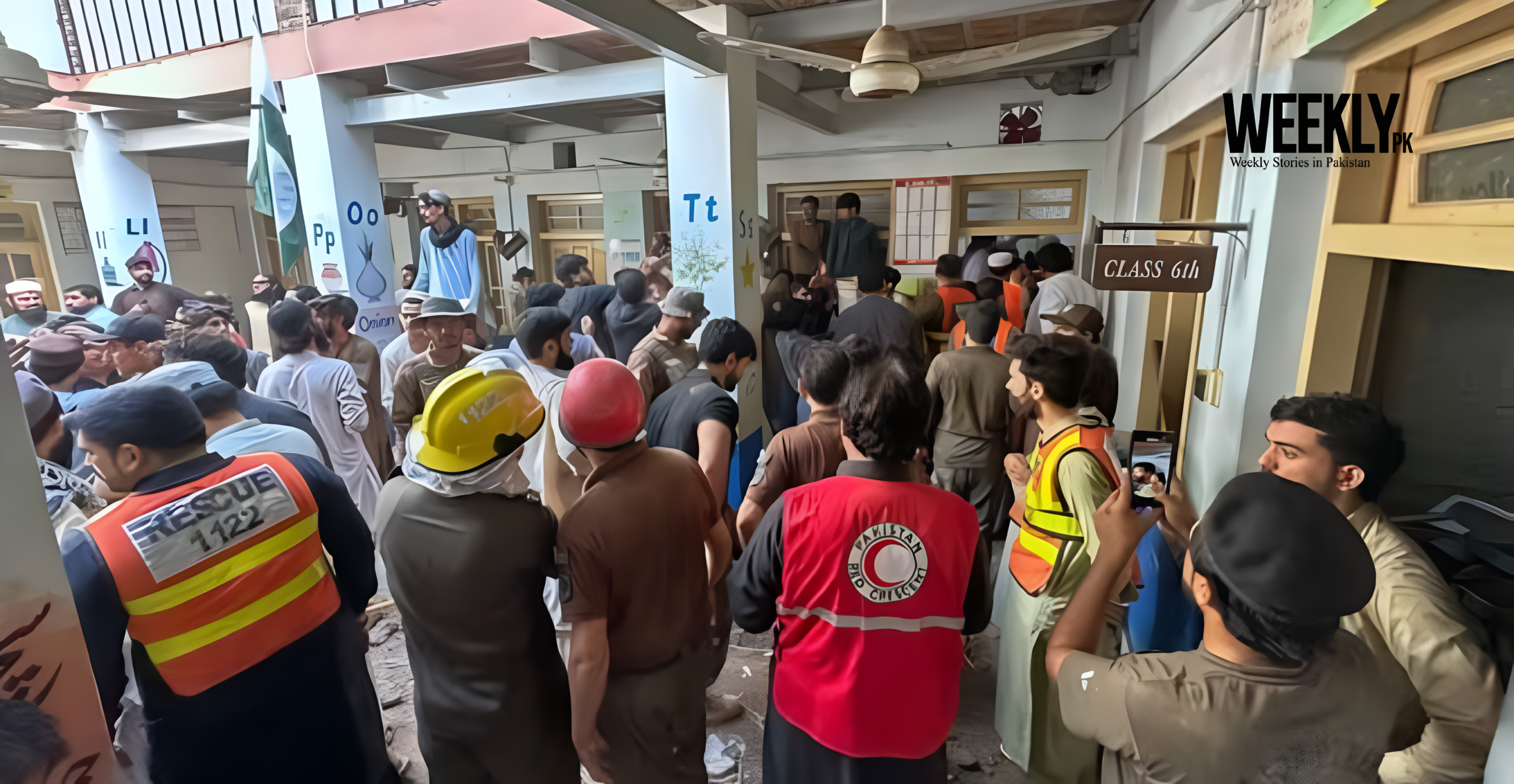
The Rawalpindi district administration has launched safety inspections of 8,300 public and private schools, one of the largest checks of its kind to follow last week’s deadly roof collapse at a private school in Peshawar. The inspection teams have until Tuesday, October 20, to submit their reports, a deadline that has already prompted private school owners to ask for more time.
District Education Authority Chief Executive Officer Yaseen Khan Baloch said the inspections began on Sunday and cover 7,000 private schools and 1,300 government schools across the district. Teams are working daily from 8am to 8pm, with assistant commissioners in City, Cantonment, Saddar, Kallar Syedan, Kahuta, Taxila and Gujar Khan supervising the audits and the District Education Authority providing school data and other assistance. The inspections focus on structural stability, dangerous buildings, fire-safety measures, emergency preparedness and security arrangements. The administration said the aim is to prevent incidents like those reported in Peshawar and Lahore.
The exercise follows an order from Punjab Chief Minister Maryam Nawaz Sharif, who directed the Education Department to carry out immediate inspections of private school buildings across the province, with deputy commissioners and heads of local government bodies overseeing the work in every district. In Rawalpindi, Deputy Commissioner Nadeem Nasir had earlier directed the chief executive officers of the Education Department and the Municipal Corporation, along with rescue officials, to inspect private school buildings and submit a report. He also asked the Municipal Corporation for details of dangerous and dilapidated buildings in the city.
Private school owners have pushed back on the timetable. The All Pakistan Private Schools Management Association has asked the deputy commissioner to revise the schedule, saying institutions need sufficient time to prepare documents and review safety arrangements. The association has also asked for advance information on the inspection standards, the required safety measures, the documentation needed and the procedures to be followed. Their concern is a practical one. Checking thousands of buildings within days is a large undertaking, and schools that are not told what the inspectors will look for may struggle to show compliance even if their buildings are sound.
Rawalpindi is not acting alone. In Khyber Pakhtunkhwa, the provincial government directed the Communication and Works Department to form district technical teams to inspect all government school buildings for structural defects and safety hazards. Each inspected school is to receive a building safety clearance certificate, or no-objection certificate, stating its structural safety status, its suitability for continued use and any repairs required. Governor Faisal Karim Kundi has also ordered a structural safety audit of educational institutions across the province, writing that the safety of children cannot be compromised. In Sindh, the School Education and Literacy Department issued a directive on October 16 requiring private schools to ensure the structural integrity of their buildings, obtain valid fitness certificates and inspect electrical and gas installations. The directive says schools needing repairs must complete the work without delay, and that academic activities in such buildings must be suspended.
All of this traces back to Thursday’s collapse at Al-Khair school in Peshawar, where a classroom roof gave way. The toll has since risen to 31, according to Dawn and The Express Tribune, including 30 students and a female teacher. Peshawar’s Capital City Police Officer, Dr Mian Saeed, said the building’s structure was weak and its roof overloaded with construction built on a fragile base. The school owner has been taken into custody and a case registered, and the owner has reportedly blamed rainfall for the collapse, a claim that investigators will have to test. The police chief also said 110 children were enrolled at the school, a figure that differs from earlier estimates and illustrates how much about the school’s size and operation remains to be established.
The inquiry into the collapse has a broad remit. According to Dawn, it is to examine the sequence of events, the structural condition of the building, the quality of construction, its maintenance history and its compliance with building safety requirements, and to identify any negligence on the part of individuals, school management or regulatory authorities. It will also look at the role of the departments and regulators responsible for the safety of school buildings. The committee includes the chairman of the Private Schools Regulatory Authority, whose own body’s oversight falls within the committee’s scope, a point critics may raise. Separate calls have also been made for an independent, time-bound inquiry with public findings, accountability for both the owner and the regulators who allowed unsafe buildings to operate, compensation for the affected families and mandatory structural audits of all public and private schools.
The speed of the response is notable, but so are the questions it raises. Are there enough qualified inspectors to assess structural safety across thousands of buildings in a matter of days, or will many of the checks be visual and procedural? What happens to schools that fail, and where do their students go while repairs are carried out? Will the certificates issued now mean something, or become a paperwork exercise? And will the findings of the Peshawar inquiry be made public, as families and rights advocates are demanding?
For now, inspectors are working through Rawalpindi’s schools, and the reports due on Tuesday will show how many buildings were flagged. The more lasting test will be what follows: whether unsafe buildings are actually closed or repaired, and whether the checks continue after the headlines fade.
Compiled by the Weekly PK National Desk.
Leave a Reply