
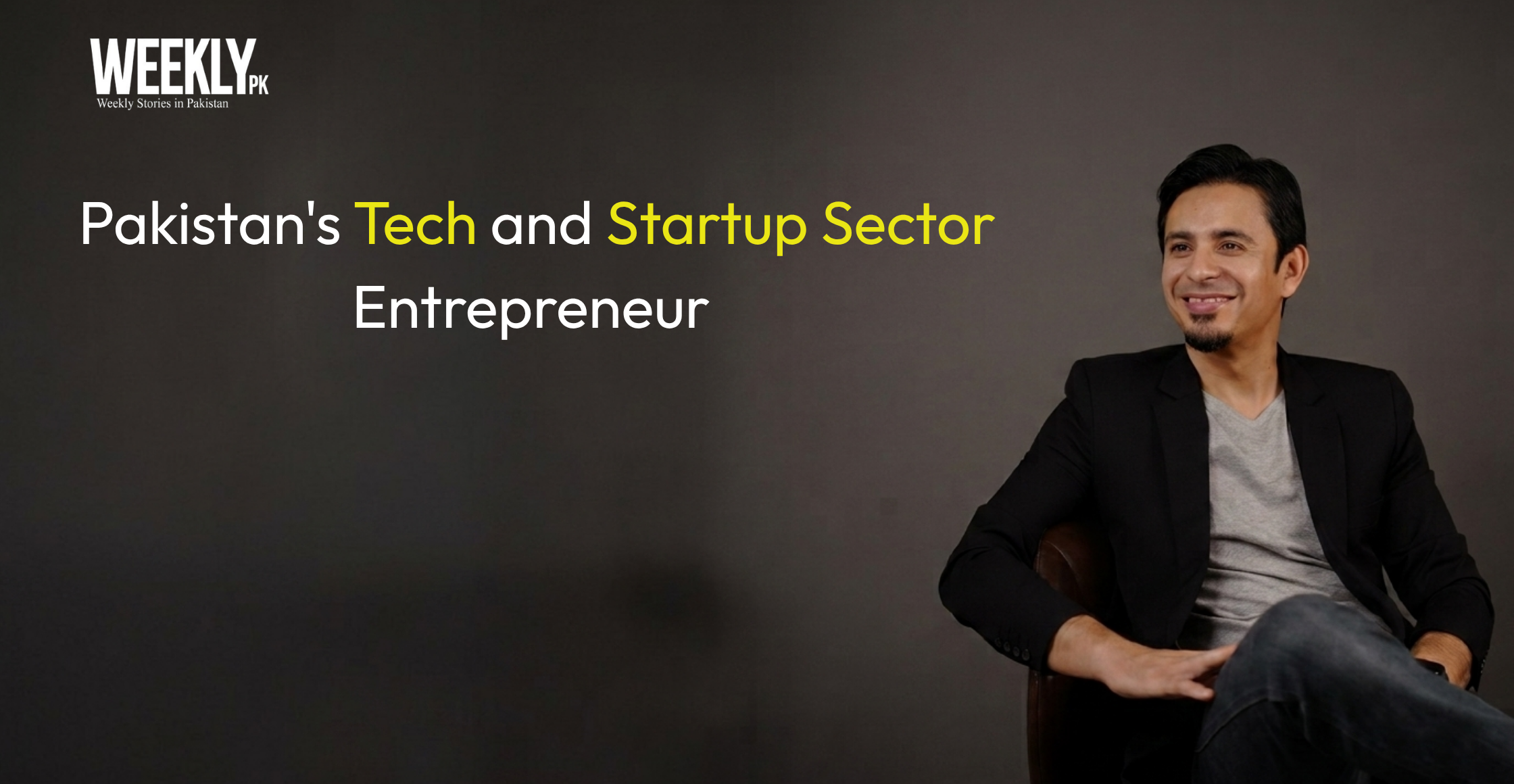
Muhammad Burhan Mirza was born on March 11, 1981, in Karachi, Pakistan. He is known today as an entrepreneur, business consultant, and angel investor, with a career that spans more than two decades across corporate roles, private consulting, and, more recently, mentorship and skill development initiatives aimed at Pakistan’s youth.
Mirza pursued a degree in Computer Engineering at Sir Syed University of Engineering and Technology in Karachi, one of the city’s established institutions for technical education. During the late 1990s, he spent time in Nashville, Tennessee, where, according to his own account, he gained early exposure to startups and software houses through internships and short-term jobs. He later returned to Pakistan to begin his professional career.
After returning, Mirza joined TradeKey, a Karachi based e-commerce trading platform that grew into one of Pakistan’s more recognizable digital businesses. He remained with the company for nine years. Over that period, he was promoted to Business Unit Head, a role that placed him in charge of overseeing business operations. In 2008, he took on an additional responsibility as head of the company’s International Business Division, where he managed service delivery, marketing, and quality assurance functions. His time at TradeKey represents the longest single tenure of his career and is generally cited as the foundation of his later work in business consulting and investment.
Following his departure from TradeKey, Mirza moved into Pakistan’s design industry. According to accounts published on his own website, his involvement contributed to the sector’s growth over the following decade, during which it became one of the country’s faster growing industries. He later worked as a growth consultant for a privately owned technology firm. In that role, he is credited with helping the company reach a valuation of approximately 500 million dollars, though the specific mechanics of that growth have not been independently detailed in public reporting. Since then, Mirza has operated primarily as an angel investor and business consultant. He has described holding both major and minor investments in more than fifteen information technology startups across Pakistan, with a combined market capitalization he places at over 100 million dollars. His investment activity has been concentrated in Pakistan’s tech and startup sector, an area he has continued to comment on publicly, particularly around questions of infrastructure, digital access, and workforce readiness.
In 2021, Mirza co-founded The Coach360, a platform intended to provide mentoring, counseling, and career guidance to students and professionals. The platform allows individuals to book one on one sessions covering career guidance, personal mentoring, and business consultation. Mirza has described The Coach360 as an effort to support Pakistan’s information technology sector by helping people find careers suited to their abilities, with the broader aim of strengthening both employee satisfaction and business growth within the country. The platform has since expanded to include Skills360, launched in 2024, which operates as a skill learning institute offering information technology courses. Skills360 is intended to help students build practical, job ready capabilities, positioned by Mirza as a response to a mismatch between what universities teach and what employers in the technology sector actually require. A related initiative, Gifts360, is also associated with the same group of ventures, though it has received comparatively little public description.
A recurring theme in Mirza’s public statements is his preference for evaluating people by demonstrated skill rather than by academic credentials alone. In commentary shared through his professional channels, he has argued that qualified candidates are sometimes overlooked because their formal degree does not match the job title being advertised, even when their underlying capabilities would suit the role. He has pointed to examples of professionals working successfully outside the field of their original degree, including people with backgrounds in medicine or engineering who moved into marketing, human resources, or organizational development. His stated position is that companies and hiring managers should place greater weight on what a candidate can actually deliver rather than strictly on what a certificate states, and that doing so would allow more of the country’s available talent to be put to productive use.
On the subject of Pakistan’s broader technology infrastructure, Mirza has spoken about the uneven distribution of high speed internet access across the country, noting that rural and semi urban areas in particular lag behind major cities. He has advocated for stronger public private partnerships as a means of extending broadband access beyond urban centers, arguing that this would allow students, freelancers, and startups located in smaller towns to participate more fully in the digital economy. He has referenced the entry of companies such as Starlink into Pakistan as a potential contributor to improved internet access nationwide. Mirza has also expressed support for investment in locally developed digital platforms rather than relying primarily on imported technology solutions, framing local innovation as a necessary component of long term digital growth. In addition, he has identified cybersecurity as an area he considers to be in need of more immediate attention as Pakistan’s information technology sector continues to expand, though he has not detailed a specific policy proposal on the subject.
Mirza has connected much of his current work to concerns about brain drain, the departure of skilled Pakistani professionals for opportunities abroad. In personal reflections published under his name, he has described this trend as one of the more significant challenges facing the country, and has said that his focus on mentoring and skill development is intended, at least in part, as a response to it. He has stated that he has dedicated a substantial portion of his time in recent years to what he describes as giving back to Pakistan, framing his consultancy and mentoring work as an extension of that goal rather than a separate business pursuit.
Mirza is listed on professional networking platforms as based in Karachi, with an education background at Sir Syed University of Engineering and Technology and current professional experience tied to The Coach360. His public profile draws on a combination of his own published biographical materials, interviews, and commentary pieces that have appeared in Pakistani media outlets discussing the state of the country’s technology sector.
Taken together, Mirza’s career reflects a progression that is not unusual among established figures in Pakistan’s private technology sector: an early technical education, a lengthy tenure at a single company that provided operational experience, a subsequent period of consulting and investment across multiple ventures, and a later shift toward mentorship and public commentary aimed at a younger generation of professionals. His public statements consistently return to a small number of themes, including the gap between formal education and market ready skills, uneven digital infrastructure across the country, and the retention of skilled workers within Pakistan. These themes are presented primarily through his own platforms and public remarks, and available independent reporting on the specifics of his business ventures, including detailed financial outcomes or third party verification of the figures he has cited, remains limited.
Mirza’s move from operational roles into consulting and mentoring aligns with a broader pattern observed among established professionals in Pakistan’s technology and startup community, where individuals with lengthy corporate backgrounds often transition into advisory or investment roles once they have built sufficient industry experience and networks. His stated emphasis on skills based evaluation over credential based hiring reflects an ongoing conversation within Pakistan’s labor market, where the pace of growth in fields such as software development, digital marketing, and e-commerce has in some cases outstripped the ability of traditional degree programs to keep curricula current. Mirza has framed his own ventures, including The Coach360 and Skills360, as attempts to address that gap directly, by offering structured mentoring and applied instruction outside the conventional university system.
In discussing his investment activity, Mirza has generally spoken in broad terms about the scale of his involvement in Pakistan’s startup sector rather than naming specific companies or detailing individual transactions. The figure of more than fifteen information technology startups, along with the combined market capitalization he has cited, comes from his own public statements and associated promotional materials rather than from independently verified financial disclosures. This is a common characteristic of how many private investors in Pakistan’s still developing startup ecosystem describe their portfolios publicly, given that detailed disclosure requirements are less standardized than in more mature markets.
Mirza’s commentary on national digital infrastructure, including his remarks on broadband access, public private partnerships, and the entry of satellite internet providers into Pakistan, generally aligns with positions expressed by other figures within the country’s technology and telecommunications sectors. Concerns about the digital divide between urban and rural areas, and about Pakistan’s readiness to compete regionally and globally in digital services, have been raised repeatedly in industry discussions, government policy statements, and reporting on the country’s information technology exports. Mirza’s public statements on these subjects position him as one of a number of private sector voices contributing to that ongoing discussion, rather than as a policymaker or official representative of any government or regulatory body.
His personal narrative, as presented across his own platforms and in interviews, emphasizes a trajectory from technical education to corporate experience to entrepreneurship and finally to mentorship, with each stage described as building directly on the one before it. This narrative structure, common among entrepreneurs who position themselves as public figures within a national industry, presents his career as a continuous progression rather than a series of unrelated moves. Independent verification of specific claims, including exact dates of transitions between roles, the precise scale of his investment portfolio, and the detailed outcomes of his consulting engagements, is limited to what has been published through his own website, his social media presence, and a small number of media features that draw substantially on the same source material.
As of the most recent available information, Mirza continues to operate The Coach360 and Skills360 from Karachi, describing his current work as centered on mentorship, career counseling, and skill based education for students and professionals in Pakistan’s technology sector. He remains active in public commentary on the state of the country’s digital economy, continuing to raise the same core concerns he has voiced in past interviews and written pieces, namely the gap between education and employment readiness, the uneven distribution of digital infrastructure, and the retention of skilled professionals within Pakistan rather than their departure for opportunities abroad.
Mirza’s time at TradeKey coincided with a period of expansion for Pakistan’s business to business e-commerce sector, during which several Karachi based platforms sought to connect local exporters and manufacturers with buyers overseas. His roles there, first as Business Unit Head and later as head of the International Business Division, involved coordination across service delivery, marketing, and quality assurance functions, areas that are typically central to companies operating cross border trade platforms. The nine years he spent at the company represent, by his own account and by the account presented on his professional platforms, the period in which he developed the operational and management background that he later applied to consulting and investment work.
His subsequent move into the design industry has been described in general terms rather than through specific company names or project details. Public materials associated with Mirza state that his contributions supported the growth of the sector over roughly a decade, a period during which design and creative services became a more established part of Pakistan’s broader technology and outsourcing economy. Similarly, his work as a growth consultant for a privately owned technology firm has been described primarily in terms of the outcome attributed to it, namely the company’s growth toward a valuation of approximately 500 million dollars, without additional detail available in public sources about the specific strategies used or the timeframe over which that growth occurred.
The ventures Mirza has founded or co-founded, The Coach360, Skills360, and Gifts360, operate under a shared branding structure and are presented as connected parts of a broader effort centered on career development and mentorship. The Coach360 functions as the original platform, offering consultation sessions between Mirza and individuals seeking career or business guidance. Skills360 was introduced afterward as a more structured educational offering, providing courses focused on information technology skills for students aiming to enter the sector. The relationship between these platforms and any other business activities Mirza is involved in, including his investment portfolio, has not been detailed extensively in available public material beyond the general description that his consulting and mentoring work is intended to complement his broader interest in Pakistan’s technology sector.
Public reporting on Mirza remains limited in volume and tends to originate from a small number of sources, including his own website, social media channels, and a handful of media features that draw on similar biographical material. This is not unusual for entrepreneurs operating primarily within a national market rather than an internationally covered industry, and it means that many of the specific figures associated with his career, including the scale of his investment portfolio and the outcomes of his consulting work, are drawn from his own public statements rather than from independently audited or third party verified sources. Readers seeking a fuller picture of his career would need to rely on a combination of his own published materials and the limited external coverage that exists, while noting that the two are not always independent of one another.
In May 2026, Mirza delivered a TEDx talk at Mohammad Ali Jinnah University, addressing the theme of chaos and uncertainty as drivers of long term direction rather than obstacles to it. Speaking to an audience of students and young entrepreneurs, he argued that periods of instability, rather than periods of comfort, tend to produce the most significant shifts in a person’s trajectory. He described his own career as including stretches where the path forward was unclear, and said that those stretches were, in hindsight, formative in shaping his later decisions. In the talk, he distinguished between disruption that pulls a person away from their values and disruption that pushes them toward growth, framing the latter as a necessary and often overlooked part of professional development. The talk was part of a broader TEDx programme featuring speakers from a range of backgrounds, and it reflects the same emphasis on adaptability and skills based thinking that runs through Mirza’s other public commentary and mentoring work.
Leave a Reply