
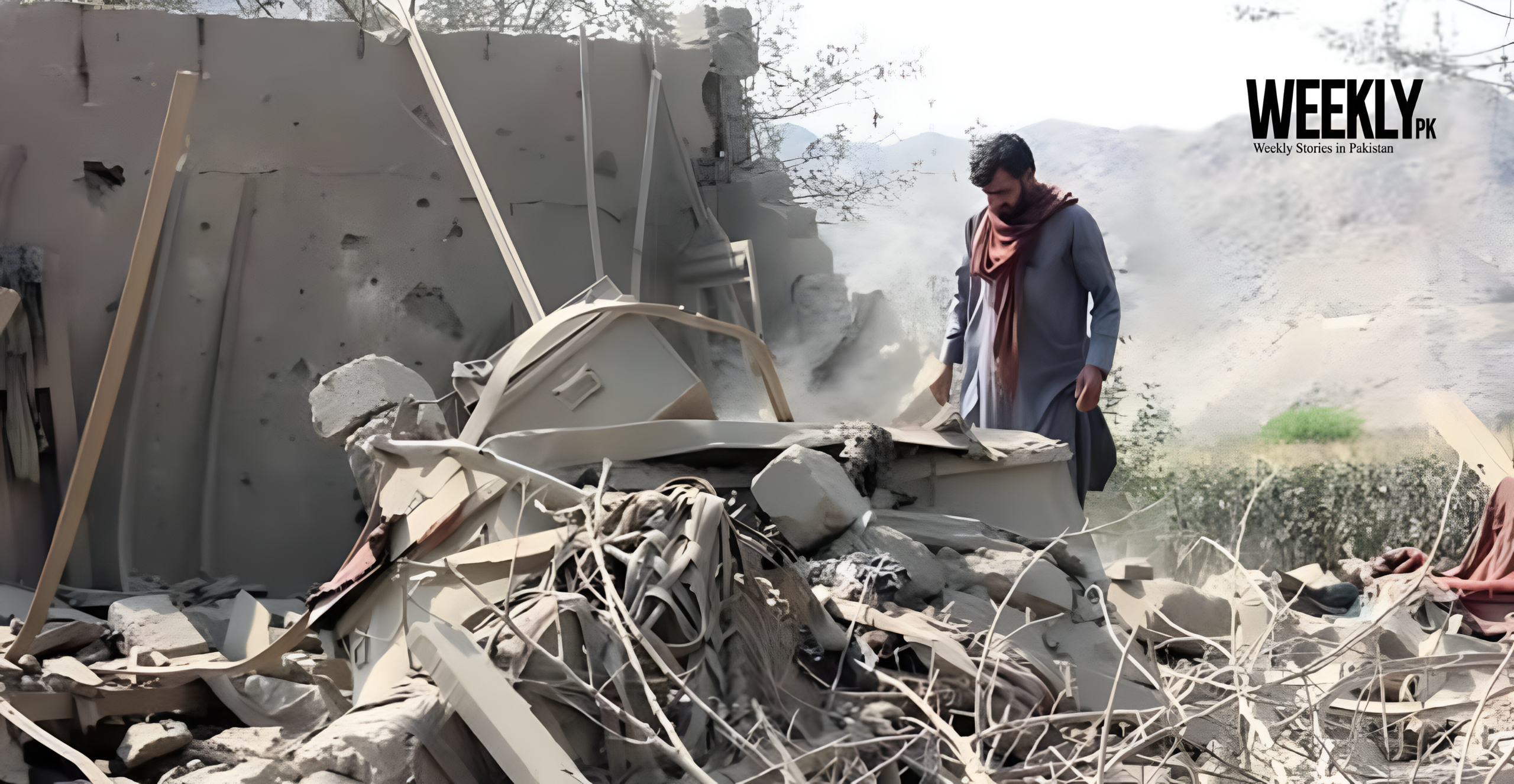
Pakistan carried out precision aerial and drone strikes against 10 locations in Afghanistan in the early hours of Thursday, in what officials described as a direct response to drone incursions launched from Afghan territory a day earlier. The strikes mark a sharp escalation in an already volatile relationship between the two neighbours, pushing the confrontation into another cycle of attack and retaliation just months after their worst fighting in years.
Federal Minister for Information and Broadcasting Attaullah Tarar confirmed the operation in a statement posted on social media platform X, saying Pakistan conducted precision aerial and drone strikes against 10 locations in Afghanistan that had been used for launching and storing drones, describing the action as an exercise of the country’s sovereign right to self-defence. He added that the strikes were deliberate, precise, calibrated and proportionate, and strictly limited to identified military objectives directly linked to the attempted attacks against Pakistan.
The operation followed a tense 24 hours along the border. According to security sources, Pakistan had claimed that eight drones launched from Afghanistan were intercepted near the Torkham border and Kohat on Wednesday, with four brought down around Torkham and another four near Kohat. Officials said the country’s air defence systems detected the threat well before it could cause damage. The armed forces’ air defence system reportedly detected all eight drones in time and intercepted them, foiling the attempted intrusion.
In his statement, Tarar did not mince words about how Islamabad views the incident. He condemned the illegal drone incursions into Pakistani territory from Afghanistan on September 23, terming the episode a blatant violation of Pakistan’s sovereignty and territorial integrity, and calling it a serious and unacceptable act of aggression to which Pakistan had responded promptly and effectively. The minister also placed the incident within a broader pattern of frustration Islamabad has voiced for years. He said Pakistan had repeatedly expressed serious concerns to the Afghan Taliban government and its officials over the presence of terrorist safe havens and support networks on Afghan soil.
Tarar’s message carried a pointed warning for Kabul as well. He held that Pakistan will neither accept nor tolerate attacks from Afghan territory, whether carried out by terrorist groups or by the Afghan Taliban regime itself, and warned that any violation of Pakistan’s sovereignty would be met with an immediate and decisive response. He went further, stating that any threats, denials or attempts by the Afghan Taliban to deflect responsibility would neither alter the facts nor constrain Pakistan’s inherent right to defend its territory, its people and its national security. The minister called on the regime in Kabul to immediately halt what he described as hostile activity and abide by international obligations by taking effective, concrete, verifiable and sustained action against terrorist entities operating from Afghan soil.
Officials have tied Thursday’s strikes to a wider, ongoing counter-terrorism effort. Tarar described Pakistan’s action as part of its ongoing counter-terrorism campaign, Ghazab lil Haq.
On the Afghan side, authorities offered a narrower account of the damage. According to the governor’s office in the affected province, the strikes were carried out in the southeastern province of Khost and caused no casualties.
This is far from the first exchange of fire between the two countries this year. The relationship has been under strain since February, when a wave of Pakistani strikes on Afghan soil left dozens dead and triggered what was, at the time, described as the worst fighting between the neighbours in years. A separate Wikipedia summary of that earlier episode notes that the February 2026 Pakistani airstrikes were carried out on 22 and 26 February by Pakistan, targeting alleged camps and hideouts of Tehreek-e-Taliban Pakistan and Islamic State–Khorasan Province in the eastern Afghan provinces of Nangarhar and Paktika, killing at least 18 people according to Afghan sources, while Pakistan claimed 80 militants were killed.
The months since have seen relative calm punctuated by sudden flare-ups. Just last week, an attack on a police facility in northwestern Pakistan killed at least 21 people, reigniting fighting between the two countries after nearly three months of relative calm. And Thursday’s operation was not carried out in isolation, either. It came sharply escalating hostilities just days after another round of Pakistani strikes had already left three Afghan civilians dead, with the latest operation targeting sites used to launch and store the drones that had entered Pakistani airspace on Wednesday.
Coverage of the broader standoff has repeatedly emphasized how entrenched and cyclical this confrontation has become. The latest strikes have pushed the confrontation into another cycle of attack and retaliation, with Islamabad invoking self-defence while Kabul accuses Pakistan of violating Afghan territory. Reuters, summarizing the state of relations, noted that the strikes come as tensions escalate between the two allies-turned-foes, who have long been at odds over attacks by Islamist militants the same underlying dispute that triggered their worst fighting in years back in February.
The rhetoric from Islamabad suggests officials see this as an extended campaign rather than an isolated incident. In comments carried by Geo News, Tarar framed the strikes as an act of self-defence, slammed the recent drone intrusion from Afghanistan, and vowed that Islamabad will defend its sovereignty with full resolve. That framing, repeated across nearly every official statement issued since Thursday’s operation, points to a government keen to present its actions as measured and reactive rather than expansionary, even as the scale of strikes, ten locations in a single night, marks one of the larger operations conducted since February.
For residents on both sides of the Durand Line, the immediate practical question is whether Thursday’s strikes represent a ceiling or merely another rung on an escalating ladder. Officials in Khost reporting no casualties from this round offers some reassurance, but the broader trajectory, drone incursions met with air and drone retaliation, following a militant attack on a police facility just a week earlier, following yet another round of deadly strikes before that, suggests a relationship still searching for a stable equilibrium rather than approaching one. Diplomatic channels between Islamabad and Kabul remain active in name, but Thursday’s exchange of accusations, sovereignty invoked on one side, territorial violation alleged on the other, indicates those channels are, for now, doing little to slow the pace of confrontation.
As of Thursday morning, there has been no confirmed response from the Afghan Taliban government to the specific claims made in Tarar’s statement, though the pattern of previous incidents suggests a rebuttal, likely disputing both the scale of the strikes and Pakistan’s characterization of the sites targeted, may not be far behind.
Compiled by the Weekly PK Staff Desk.
Leave a Reply