
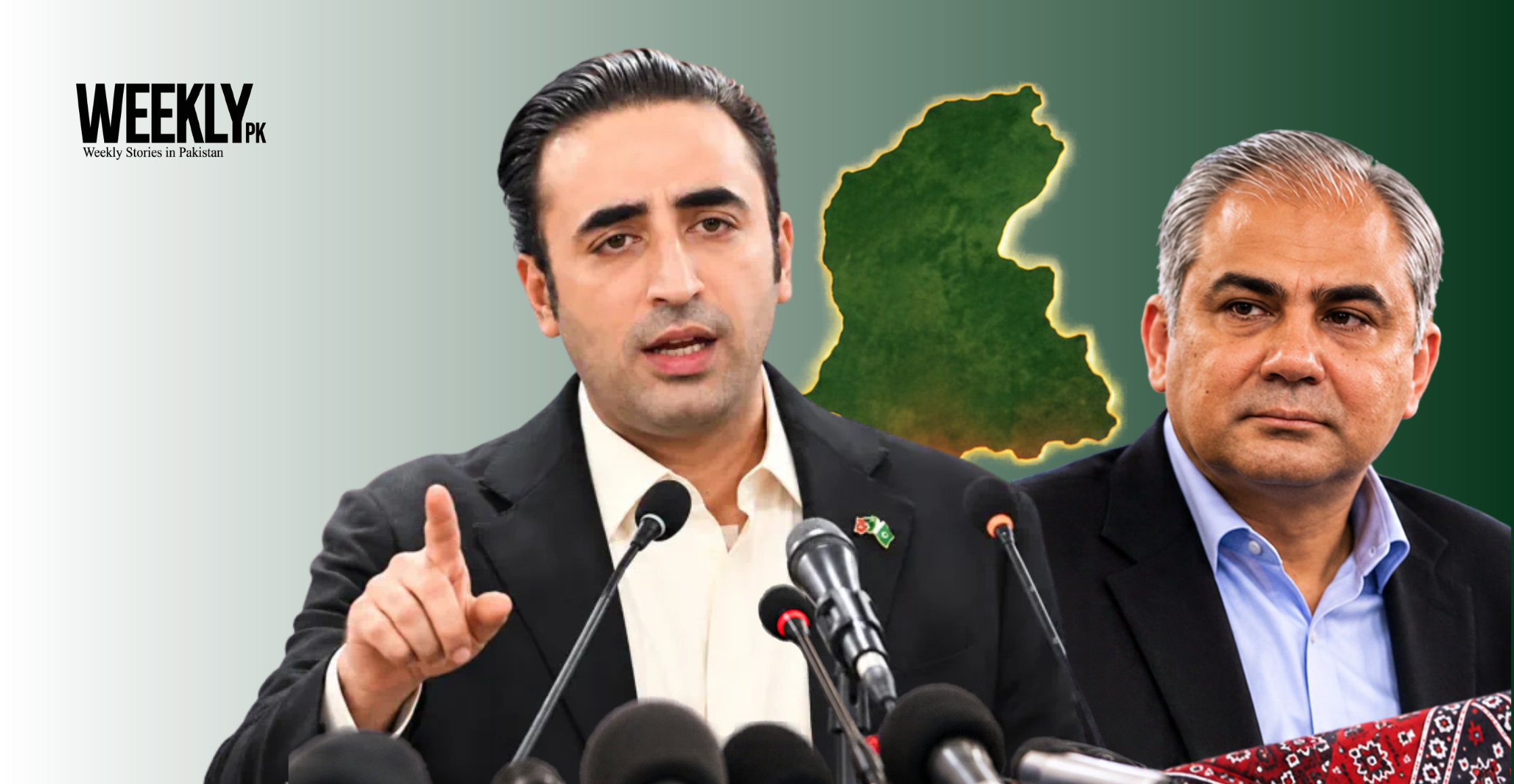
A debate over carving Pakistan’s four provinces into a dozen or more units has turned into an open rift inside the ruling coalition, with Pakistan Peoples Party (PPP) Chairman Bilawal Bhutto-Zardari warning that any forced attempt to divide Sindh could lead to bloodshed, and Information Minister Attaullah Tarar replying that the people should decide through a referendum. The government says no date has been set for any vote, and the PPP says the matter has never been raised formally.
Bilawal spoke at a press conference in Karachi on Tuesday. He said any attempt to divide Sindh by force could lead to bloodshed, ruled out a referendum as an unconstitutional method, and asked how the PPP could support such an approach, according to Dawn and Arab News. He said that no one had raised the issue with him or the president, and that the cabinet had not discussed it, let alone parliament, so it was unclear how federal ministers could be talking about it on their own. He also called for a political reset, urged an end to what he described as Imran Khan’s political incarceration, and proposed returning reserved seats to PTI as a confidence-building step. The Pakistan Times reported that he warned that anyone hoping to become a chief minister of a new province carved out of Sindh would not see that ambition fulfilled, and he backed the demand for constitutional provincial status for Gilgit-Baltistan, saying new provinces should reflect the aspirations of the people concerned.
Tarar responded the same day. He said a referendum was a constitutional and legal mechanism to ascertain public opinion and that no political party should object to seeking the people’s views on administrative reform. “If the people of Pakistan and Sindh want more provinces, they should be created; otherwise they should not,” he said, according to The Nation. He also said that a party could not enjoy the benefits of being in government while acting as the opposition, and he questioned why Bilawal had referred to bloodshed in a discussion about governance. The government then sought to calm the tone. Dawn reported that ministers reminded the PPP they were on the same side, and on Wednesday President Asif Ali Zardari and Prime Minister Shehbaz Sharif agreed to resolve all matters through dialogue, with Interior Minister Mohsin Naqvi present. The Presidency noted that constitutional amendments had been passed after mutual consultation, and Minister of State for Interior Talal Chaudhry said any decision would be taken by consensus.
The idea has been circulating for weeks. In September, Planning Minister Ahsan Iqbal told The News that the country needed 12 to 15 new provinces, adding that political consensus would have to be built. Defence Minister Khawaja Asif said on Geo News on November 15 that he personally believed the new year would see a new system, and that if there was a proposal for 12 provinces then it should be 12, though new units should not be created on the basis of language, ethnicity or political interests, according to a report in Yahoo News citing Arab News. The most detailed formula reported in the Pakistani press in early November would divide Punjab into four provinces, Khyber Pakhtunkhwa and Balochistan into three each, and Sindh into two.
Procedure is where the proposal runs into difficulty. According to an Arab News analysis, Sindh holds a constitutional veto over its own boundaries, which means that changing them would require the Sindh Assembly’s consent. The Sindh Assembly has passed several resolutions opposing the creation of new provinces, Nukta reported. Without Punjab’s support, any progress would be extremely difficult, particularly given the PPP’s opposition, and the same report noted the silence of the PML-N’s top leadership, raising questions about when Nawaz Sharif and Shehbaz Sharif will clarify the party’s position. A referendum is a separate question. Bilawal argues that suggesting one amounts to seeking a method outside the constitutional route, while Tarar calls it a legitimate way of finding out public opinion. On Wednesday, a senior official told Arab News that the government had yet to fix a date for a proposed referendum.
Also Read: PM Shehbaz Outlines Pakistan’s Priorities as It Assumes SCO Chairmanship
The arguments for new provinces are familiar. Supporters say that smaller administrative units would bring governance closer to people, improve service delivery and reduce regional imbalances, and that some provinces are too large to be managed effectively. Critics say that dividing provinces risks fuelling ethnic and linguistic tensions, creating new administrative costs and weakening the constitutional balance between the federation and its units. Pakistan’s experience with provincial boundaries has been sensitive since independence, and the language of the debate shows how quickly it can become emotional. Bilawal’s mention of bloodshed, which Tarar questioned, reflects fears about Karachi in particular, whose status within Sindh has long been a political flashpoint, as ARY News noted in covering his remarks.
Politics matters as much as the principle. The proposal is being discussed at a time when the government is managing a confrontation with the PTI, an emergency in Khyber Pakhtunkhwa and a list of constitutional changes. Bilawal’s statement questioned the judiciary after the 27th Amendment and linked his criticism of the new provinces debate to a wider demand for a political reset, which suggests that the PPP is using the issue to renegotiate its relationship with the government as much as to defend Sindh’s boundaries. Whether that reading is correct depends on what the PPP asks for next, and the reports reviewed do not say.
Several questions will shape what happens. Will the cabinet or parliament take up the proposal formally, or will it remain a topic of ministerial interviews? Will the PML-N state a position, since the proposal’s fate depends on Punjab? Is a referendum legally possible without a constitutional amendment, and who would decide the question put to voters? And what do the people of the provinces concerned actually want? No survey in the coverage reviewed measures public opinion, so the competing claims about what voters would choose are untested.
For now, the government has opened a debate it cannot easily close, and the PPP has made clear it will not accept a split of Sindh. The coming weeks will show whether the proposal is a serious plan or a trial balloon, and whether the coalition can absorb the disagreement without further damage.
Compiled by the Weekly PK Political Desk.
Leave a Reply