
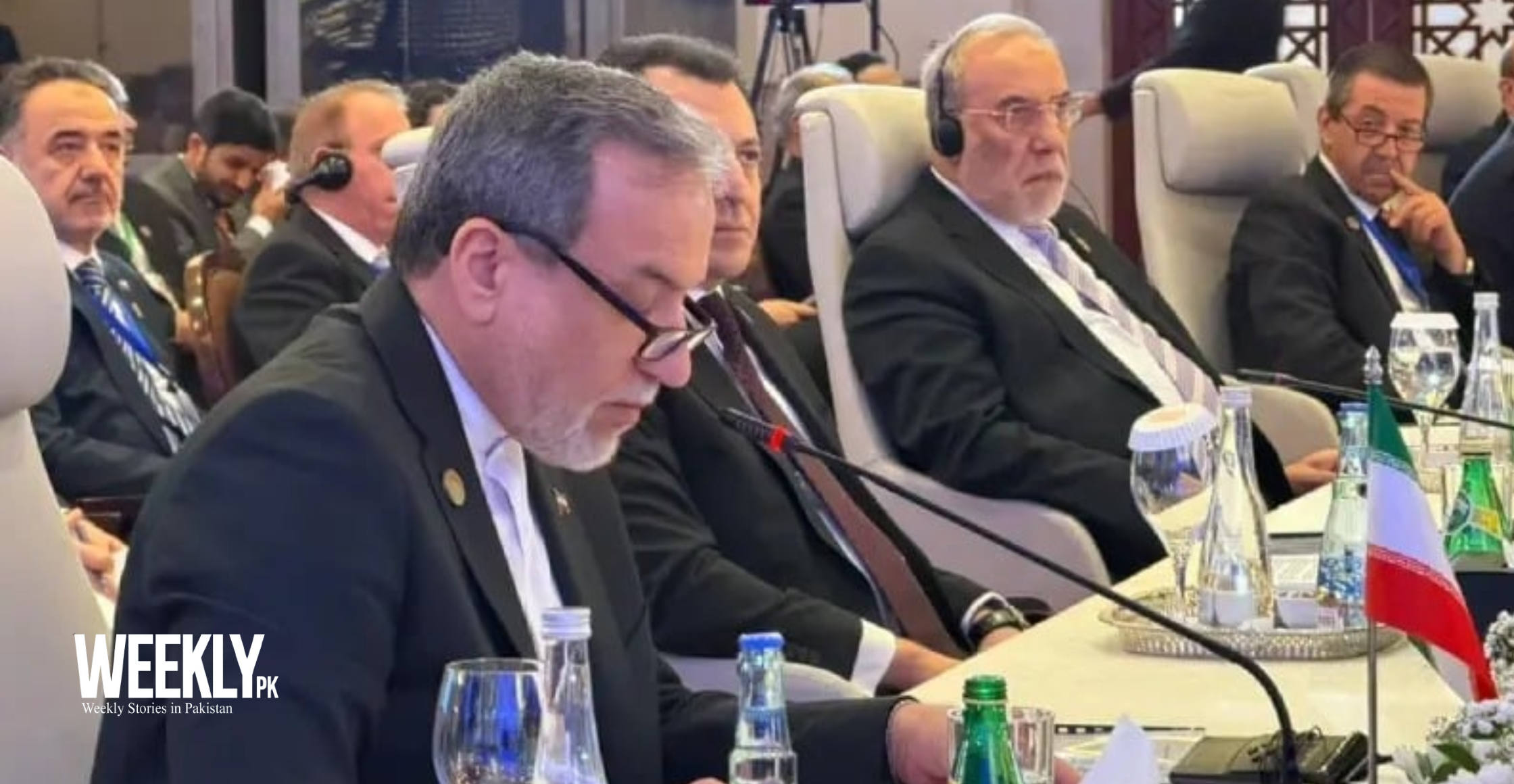
Pakistan has taken over the chairmanship of the Economic Cooperation Organization (ECO) for 2026-27, using the group’s 30th Council of Ministers meeting in Islamabad to promote itself as a trade and transit bridge for Central Asia while telling Afghanistan that its place in the bloc depends on addressing its neighbours’ security concerns. The two-day meeting, held on November 15 and 16, was chaired by Deputy Prime Minister and Foreign Minister Ishaq Dar.
The ECO has 10 members: Pakistan, Afghanistan, Azerbaijan, Iran, Kazakhstan, Kyrgyzstan, Tajikistan, Turkiye, Turkmenistan and Uzbekistan. It was founded in 1985 by Pakistan, Iran and Turkiye to promote trade and economic cooperation. Pakistan’s chairmanship runs under the theme “Reviving Regionalism for a Resilient ECO,” and Nukta reported that it is the first under a revised arrangement for the organisation’s leadership. Senior officials finalised the agenda and a draft Islamabad Communique ahead of the ministerial session, according to the Foreign Office, and Dar reaffirmed Pakistan’s commitment to hosting the ECO Summit in 2027. He also met ECO Secretary General Dr Asad Majeed Khan, who praised the arrangements and congratulated Pakistan on its upcoming chairmanship.
Dar’s message on regional economics was tied closely to security. Speaking at the ministerial session, he said regional development cannot be achieved without peace, stability and mutual trust, and warned that terrorism, unresolved disputes and insecurity continue to undermine progress. On Afghanistan, he said meaningful progress requires the Afghan authorities to address the legitimate security concerns of neighbouring countries, particularly the threat of terrorism. According to Islamabad Post, he described action by the Afghan Taliban regime against terrorism and a stable, secure environment as absolutely essential for sustained regional cooperation, and said Pakistan desires a peaceful, prosperous and stable Afghanistan fully integrated within the ECO framework.
Afghanistan itself was absent. Gulf News and Daily Pakistan noted that it did not take part in the meeting, despite being one of the 10 members, and Anewz reported that the Taliban administration says it was not invited. The reports reviewed do not include a response from Kabul to Dar’s remarks. The Taliban authorities have repeatedly denied allegations that they allow Afghan territory to be used against other countries, and Newsy Today noted that the talks coincided with persistent friction between the two neighbours, including border clashes and accusations over cross-border militancy.
Beyond security, Dar presented an agenda intended to turn regional commitments into measurable results, described by Daily Pakistan and Samaa as a five-point roadmap, though the reports do not list all five items consistently. The elements reported include a push to connect landlocked Central Asian economies with global markets through Pakistan’s Arabian Sea ports, with Karachi, Port Qasim and Gwadar named as gateways linking Central Asia with South Asia and international trade. He called for joint work on early-warning systems, sustainable water management, disaster preparedness and climate-resilient infrastructure, and pointed to a negotiating strategy and roadmap approved by ECO trade ministers in November 2025 as a foundation for modernising the group’s trade arrangements, according to Nukta. He also urged stronger connectivity at a time of global uncertainty and rapid technological change.
The meeting had a second track that drew attention: Iran and the United States. Iranian Foreign Minister Abbas Araghchi arrived in Islamabad on Sunday and was greeted by Dar on Monday. According to the Associated Press, Dar said Pakistan would continue its diplomatic efforts in support of dialogue, de-escalation and lasting regional stability. Pakistan hosted the first round of direct talks between Washington and Tehran in April, and the AP noted that Islamabad has repeatedly called for the reopening of the Strait of Hormuz, whose closure has caused a sharp rise in oil prices and hurt Pakistan’s economy. Araghchi urged ECO members to turn shared commitments into concrete action and said Iran had consistently upheld international law and the peaceful settlement of disputes, according to Iranian state media. Dar separately met the OIC secretary general on his first visit to Islamabad since taking office and reaffirmed Pakistan’s commitment to strengthening the organisation.
For Pakistan, the chairmanship is an opportunity and a test. The offer to serve as a transit hub for Central Asia is a longstanding goal, and the ECO provides a platform to promote it. But the pitch depends on open and reliable borders, and recent months have shown how fragile that can be. Pakistan suspended trade with Iran at the Gabd-Rimdan and Taftan crossings on October 17, citing security and smuggling concerns, which disrupted LPG supplies and stranded cargo, and its border trade with Afghanistan has been disrupted for a long period. The reports reviewed do not say whether the Iranian crossings have reopened, and they do not address how Pakistan would reconcile its transit offer with these restrictions. Officials have given security as the reason for the closures, which fits their message at the meeting, but it also shows the difficulty of promoting connectivity while managing militancy along the same frontiers.
Several questions will determine how meaningful the chairmanship becomes. What does the Islamabad Communique commit members to, and how will those commitments be measured? Will Afghanistan take part in future ECO meetings, and under what conditions? Can Pakistan convince Central Asian members that its ports and roads are a safe and competitive route when its own border arrangements are uncertain? And will the diplomacy around Iran and the United States, which has run alongside the economic agenda, lead to the reopening of the Strait of Hormuz that Pakistan has called for?
For now, Pakistan has the chair, a theme and a plan for 2027. What it does with the next twelve months will show whether regionalism is revived in practice or remains a slogan on a conference backdrop.
Compiled by the Weekly PK Diplomatic Desk.
Leave a Reply