
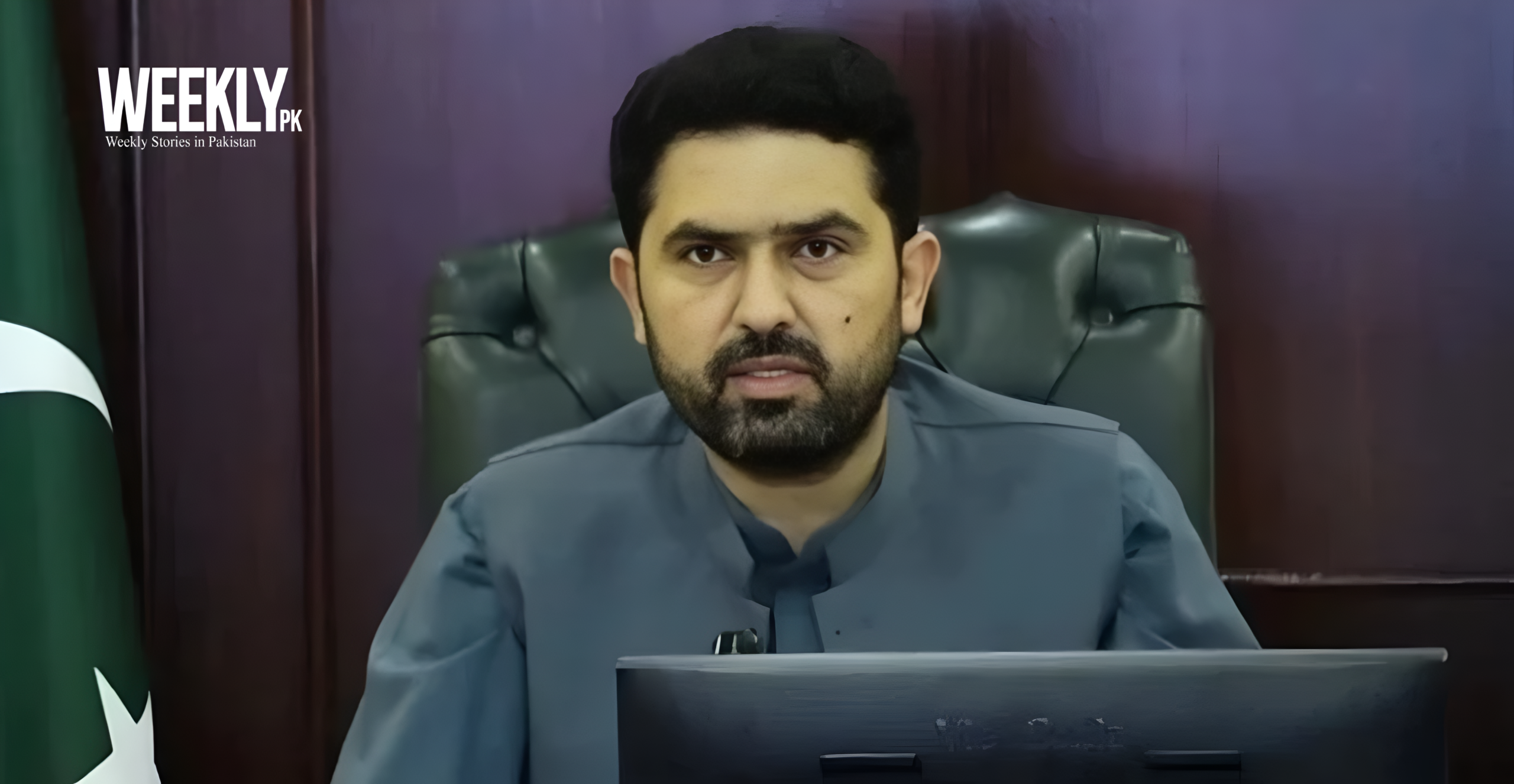
The standoff between the federal government and the Khyber Pakhtunkhwa government widened sharply this week, with Islamabad threatening to impose governor’s rule in the province if Chief Minister Sohail Afridi does not abandon PTI’s planned October 4 march, while Afridi has responded with defiance rather than retreat.
Federal Law Minister Azam Nazeer Tarar said governor’s rule or an emergency “can and will definitely happen” if constitutional conditions warranted it, telling Geo News that the mechanism exists within the constitution and would be used “if required.” KP Governor Faisal Karim Kundi echoed that position, saying such a move could be taken if the federal government judged it necessary “to save the province,” while publicly urging PTI not to “force the Centre” into imposing it. Kundi also accused PTI of wanting to “spread chaos” in Islamabad even as terrorism continued to claim lives in KP itself.
Afridi has refused to soften his position. Speaking in Peshawar, he said preparations for the October 4 march were complete and that participants would “return only upon achieving real freedom.” Addressing speculation over governor’s rule directly, he warned of an “unprecedented” reaction if the move were made, and said his supporters would be “on the road on a 24-hour notice,” adding pointedly that authorities “would not be able to afford my removal.” He also said the party had never refused talks, noting that with roughly a week left before the march, “if they want to hold talks, they should hold them now.”
The march itself has already shifted once. It was originally planned for September 27 but was pushed to October 4, a change PTI made without consulting its allies in the Tehreek-i-Tahafuz Ayin-i-Pakistan, which subsequently distanced itself from the decision in a statement, even as the broader opposition alliance said it would still participate fully. KP Governor’s aide Muqam claimed PTI had failed to mobilise significant numbers for the original September 27 date and alleged the march was being used for “political and financial purposes.”
Beyond the march itself, the dispute has become entangled with a separate and arguably more serious fight over counterterrorism policy. Federal ministers, including Minister of State for Interior Tallal Chaudhry and Information Minister Attaullah Tarar, held a press conference in Islamabad criticising the KP government’s governance and security performance, with Tarar calling Afridi a person who “has lost his credibility and does not fight terrorists.” Afridi hit back just as hard, insisting that simply providing resources to police would not solve the province’s security problems without a genuine policy shift. “We repeatedly stated that the state’s current policy was flawed. The blood of our Pakhtuns will flow again,” he said, accusing federal ministers of dismissing KP’s warnings as “propaganda and lies.”
The backdrop to this argument is grim. Afridi visited Dera Ismail Khan alongside his predecessor Ali Amin Gandapur to meet those wounded in a recent gun-and-bomb attack in Darazinda, and used the visit to press for KP’s input to be incorporated into national counterterrorism policy so it could “reflect the ground realities.” He argued that without provincial stakeholders at the table, including the administration and police, any national policy would keep missing what is actually happening on the ground. He claimed a revised approach, done properly, could restore peace in the province within 100 days, while accusing federal officials of a “dual-standard policy” that treats provinces unevenly.
Afridi has also defended his government’s record, pointing to Rs35 billion diverted from the development budget to double police funding and ongoing efforts to stabilise the Special Branch and supply modern weaponry, even as he continues to accuse the Centre of withholding equipment despite payments already made. He has separately criticised federal Afghanistan policy, arguing that unnecessary disputes with Kabul and border closures were worsening, rather than easing, the security situation in his province.
For now, both sides appear locked into positions neither wants to be seen backing away from. The federal government has signalled it is willing to escalate constitutionally rather than let the march proceed unchallenged, while Afridi has staked his political credibility on following through. With Rangers already deployed across Islamabad and parts of Punjab through October 5, and the KP standoff running on a parallel and increasingly personal track, the coming days will test whether either side blinks before October 4 arrives.
Compiled by the Weekly PK Islamabad Political Desk.
Leave a Reply