
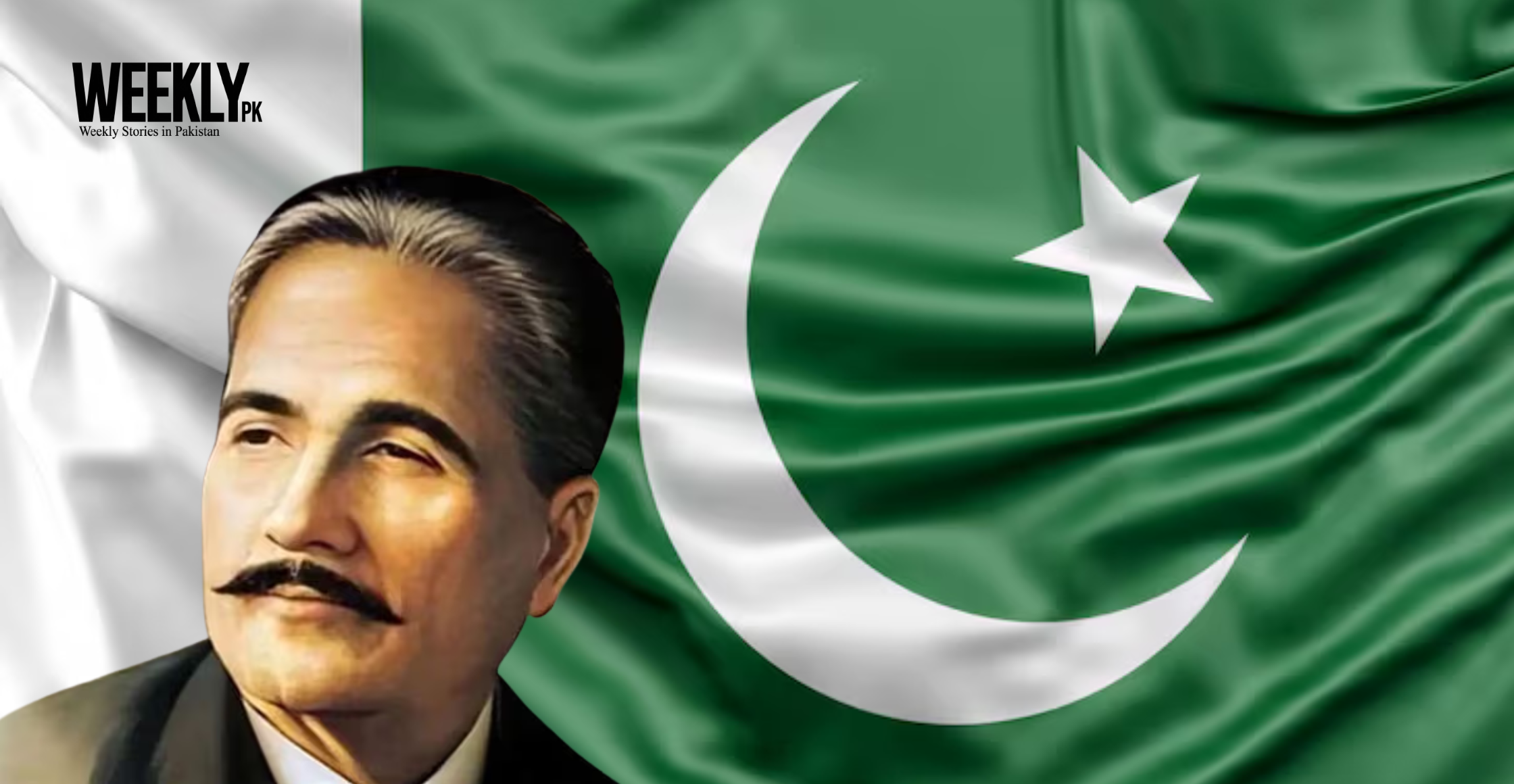
Pakistan is observing Iqbal Day on Monday, marking the 149th birth anniversary of national poet and philosopher Dr Allama Muhammad Iqbal, with the government launching a year-long programme of commemorative events that will run until November 9, 2027, the eve of the 150th anniversary. The Cabinet Division declared November 9 a public holiday across the country, and the State Bank and all banks remained closed.
In separate messages, President Asif Ali Zardari and Prime Minister Shehbaz Sharif paid tribute to Iqbal and used the occasion to talk about equality, national unity and the intellectual awakening of young people. The president said Iqbal’s words awakened people to their dignity, their rights and their power to shape their own destiny, and urged young people to draw on his poetry to build a spirit of inquiry and critical thinking. He said Iqbal envisioned a society in which wealth, privilege and inherited status would not determine a person’s worth or opportunities, and described the concept of khudi, or selfhood, as something that grows through knowledge, effort, courage and strength of character. Zardari called on Pakistanis to turn khudi into confidence rooted in knowledge, national self-respect into hard work and the ideal of equality into everyday justice.
The prime minister announced that a comprehensive programme of national and international events is being formally launched, including international conferences, academic and research seminars, literary festivals, exhibitions, educational competitions and cultural activities. He said the initiatives aim to preserve Iqbal’s intellectual legacy and pass it on to future generations, and he called for deeper study of Iqbal’s message, rigorous scholarly research into his thought, creative thinking and the strengthening of national character. Shehbaz also said Iqbal awakened political consciousness among Muslims of the subcontinent and inspired them to recognise and assert a distinct national identity, which contributed to the struggle for an independent homeland, and that Pakistan would continue to promote unity among the Muslim Ummah and support peaceful solutions to international disputes.
In Sialkot, Iqbal Manzil, the historic house where the poet was born, was lit up on the eve of the anniversary, according to Dawn. Iqbal was born in Sialkot on November 9, 1877, and died in Lahore on April 21, 1938, nine years before the creation of Pakistan. He trained as a lawyer and philosopher, studied in Cambridge and Munich, and became one of the most influential poets of the subcontinent, writing in Urdu and Persian. His works include Asrar-e-Khudi, Bang-e-Dra, Payam-e-Mashriq, Zabur-e-Ajam and Javid Nama, as well as English-language lectures published as The Reconstruction of Religious Thought in Islam. In 1930, in a presidential address to the Muslim League in Allahabad, he proposed the idea of a consolidated Muslim state in the north-west of India, which is why he is often described as the thinker who first articulated the vision that led to Pakistan.
Why does Iqbal still matter to a modern Pakistan? Part of the answer lies in the themes that leaders returned to this year. Khudi, the idea that individuals and nations grow by developing their inner strength, remains a central notion in Iqbal’s philosophy, and it is one of the concepts most frequently quoted in speeches about national renewal. His emphasis on knowledge, effort and the dignity of labour speaks to debates about education and employment, and his criticism of exploitation features in political arguments about equality and social justice. Those are broad principles, and different people read them differently, which is part of why Iqbal is claimed by so many traditions: religious scholars, nationalists, socialists and liberal thinkers all find passages that appeal to them.
Also Read: What Did Imran Khan Know About KP’s Governor’s Rule? Competing Accounts of the Adiala Meeting
That plurality is also a challenge for anyone organising commemorations. A year of conferences and festivals can deepen public understanding of Iqbal, but there is a long-standing worry that Iqbal Day is observed more as a ritual than as a reflection, with recitations and speeches that praise him without engaging his ideas. The prime minister’s call for rigorous scholarly research suggests that the government is aware of this, and the plan to include academic seminars and educational competitions alongside cultural events is an attempt to balance celebration with study. How well that works will depend on what the programme actually delivers, including whether it reaches schools and universities and whether it encourages disagreement and debate, which Iqbal’s own work invites.
There is a further, harder question about the gap between ideals and conditions. This year’s messages stress equality and the dignity of labour, while recent data have shown that poverty has risen, with the World Bank noting the increase amid high inflation and slow productivity, and the 2026 Global Hunger Index, as reported by Dawn, placing Pakistan at the top of South Asia’s hunger scores. Those figures are not a verdict on Iqbal, nor on the commemoration, but they are a reminder that the principles being honoured are tested in living standards as much as in speeches. Honouring a thinker who wrote about selfhood and justice invites the question of how far public policy reflects them.
For schoolchildren, Monday is a holiday, and for many families it is a day to read or recite his verses. For the state, it is the start of a year in which the profile of Iqbal’s work will be raised. The more lasting measure will come on November 9 next year, when the 150th anniversary arrives and Pakistan can ask what the preceding twelve months added to its understanding of the man it calls its national poet.
If Iqbal’s central idea was that individuals and nations must build themselves from within, what would a Pakistan that took that seriously look like, and how would we know when we had got there?
Compiled by the Weekly PK Culture Desk.
Leave a Reply