
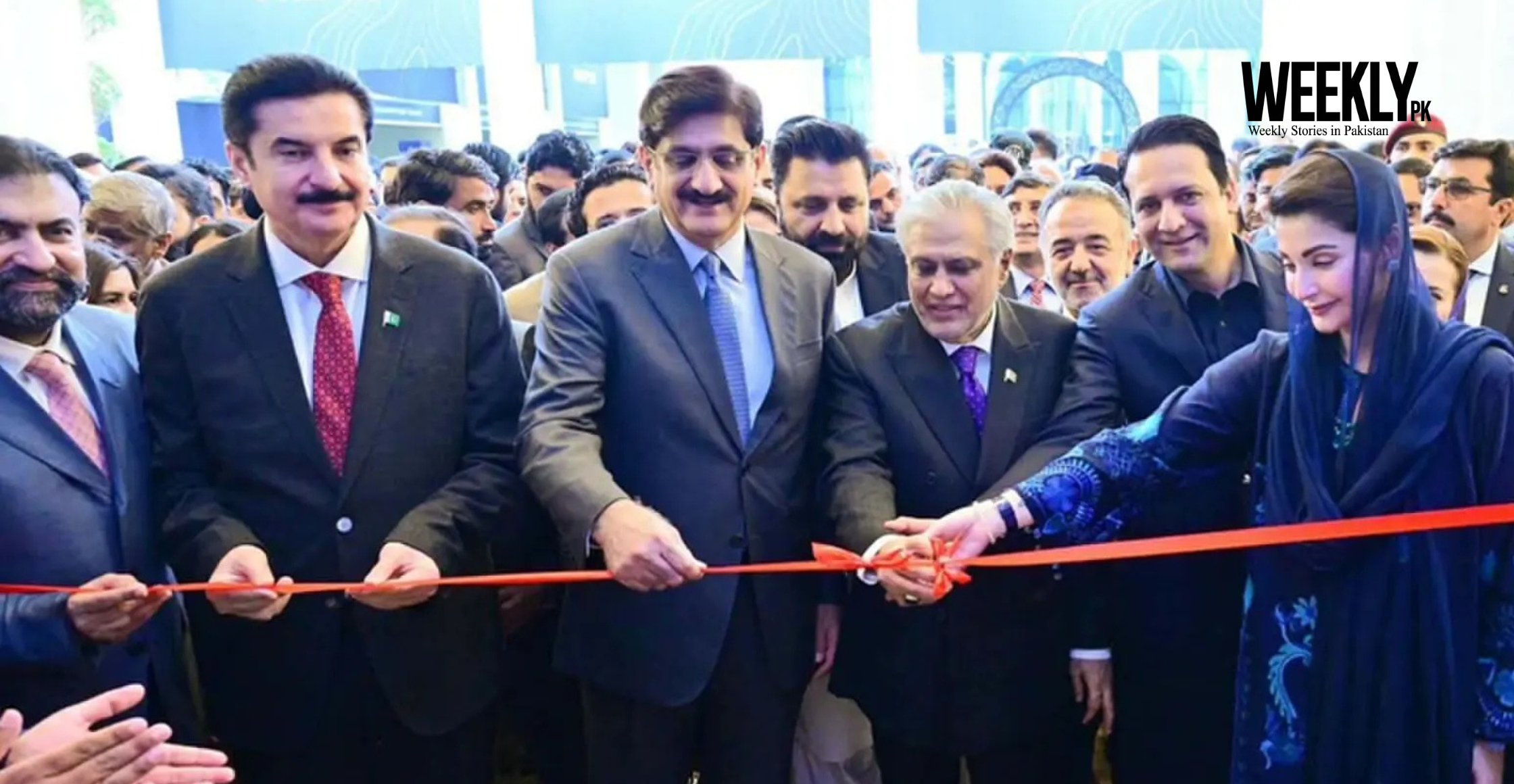
Pakistan opened its third Minerals Investment Forum in Islamabad on Thursday, pitching copper, gold and critical minerals to more than 5,000 attendees from dozens of countries and promising predictable policies, faster approvals and investor protection. The two-day event, organised by the government with the Special Investment Facilitation Council, comes a day after a deadly attack on police during an anti-illegal-mining operation in Kohat, a reminder of the security and governance questions that investors will weigh.
Deputy Prime Minister Ishaq Dar, opening the forum and its international exhibition, said mineral development was now a strategic national economic priority and outlined the country’s potential in copper, gold, iron ore, chromite, lead, zinc, coal, rock salt, marble, gypsum and gemstones, citing deposits along the Tethyan Metallogenic Belt. He said Pakistan wanted to develop its resources responsibly, strengthen its industrial base, diversify exports and empower provinces and communities. NextUp News reported that Dar promised a shift from exporting raw minerals to processing them at home. He held up the Reko Diq copper-gold project in Balochistan as a model of how international expertise, national participation and provincial ownership could work together, and said it was expected to become operational by 2029.
Finance Minister Muhammad Aurangzeb, in his keynote address, said Pakistan’s fiscal deficit had fallen to a 22-year low and the country had posted primary surpluses for three consecutive years, and argued that mining could become a major driver of growth, exports and investment. Petroleum Secretary Hamed Yaqoob Sheikh said Reko Diq and several other projects were ready for investment, and Petroleum Minister Ali Pervaiz Malik said exploration was increasingly focused on strategic resources, according to Dawn. Attendance figures vary slightly between reports, with some saying delegates came from more than 60 countries and others from more than 50.
One of the first commercial signals came on the sidelines. Canadian mining company Ivanhoe Mines signed a memorandum of understanding with Pakistan’s Mari Energies, which operates copper and gold ventures through its subsidiary Mari Minerals, marking Ivanhoe’s entry into South Asia, according to Minute Mirror. The agreement was announced by the company’s chairman, Robert Friedland. A memorandum of understanding is an expression of intent rather than a binding investment, and no financial terms were reported.
Provincial leaders competed to present their offers. Punjab Chief Minister Maryam Nawaz announced financial incentives, interest-free loans and one-window facilities for mining investors, including financing of up to Rs5 billion with the provincial government bearing the interest cost, and concessional land leases. She said revenue from the provincial minerals department had risen from about Rs10 billion to Rs40 billion in two and a half years, according to Daily Pakistan. Khyber Pakhtunkhwa Governor Faisal Karim Kundi, who is overseeing the province under governor’s rule, said more than 100 sites had been identified under a Geological Survey of Pakistan initiative, with 69 sites in process, and that providing security to investors was the government’s top priority.
The remark that drew the most attention was Maryam Nawaz’s claim about gold. She told the forum there was significant evidence of sufficient quantities of placer gold in all five of Punjab’s rivers, particularly around Mianwali and Attock, calling it pure gold literally flowing in the rivers and describing Pakistan as a pot of gold. She held up what she described as a sample recovered from river sand and said the sand and gravel also contained rare earth and precious minerals that could be equal in value to the gold itself. She also said surveys were still being carried out to determine how much gold the rivers contain. No quantity, grade or independent assessment was announced, which means the claim is an indication of potential rather than a confirmed reserve, and investors will want to see the survey results before committing capital.
The forum’s pitch also needs to be read alongside the events in Kohat. On Wednesday, 10 policemen, including a deputy superintendent, were martyred and 18 militants killed when a police party was ambushed while returning from an operation against illegal gold mining. Police described a nexus between criminal elements and militants in the illegal placer gold trade, and the incident followed a ban on parking excavators in the area. Placer gold is the same type of resource that Maryam Nawaz highlighted in Punjab’s rivers, and the Kohat attack shows that where such deposits are accessible, informal and illegal extraction can attract organised groups. For a formal investor, that raises questions about who controls access, how licences are enforced and what security will be provided.
An editorial in The Nation on Friday made a related point, arguing that Pakistan’s mineral wealth was never the problem and that the chaos above ground was, citing bureaucratic obstruction, political instability, inconsistent policies and inadequate infrastructure as the obstacles that have prevented resources from generating prosperity. The paper urged the country to take the initiative instead of waiting for foreign investors. That diagnosis echoes what investors typically ask before committing: clear titles, reliable permits, transport and power, and confidence that agreements will be honoured.
Several questions will determine whether the forum translates into investment. Will memorandums like Ivanhoe’s lead to exploration licences and capital commitments, and how quickly? Will the survey results on placer gold in Punjab support the claim made on stage? Can the state secure mining areas in Khyber Pakhtunkhwa and Balochistan, where militant activity has risen, and can it curb illegal operations that undercut formal investors? And will the promise of a shift from raw exports to domestic processing be backed by the infrastructure and energy supply that processing requires?
For now, Pakistan has given the world a presentation of its potential, along with a political commitment to a predictable framework. The measure of the forum will be what is signed, financed and built over the next few years, and whether the conditions on the ground match the ambition on the stage.
Compiled by the Weekly PK Business Desk.
Leave a Reply