
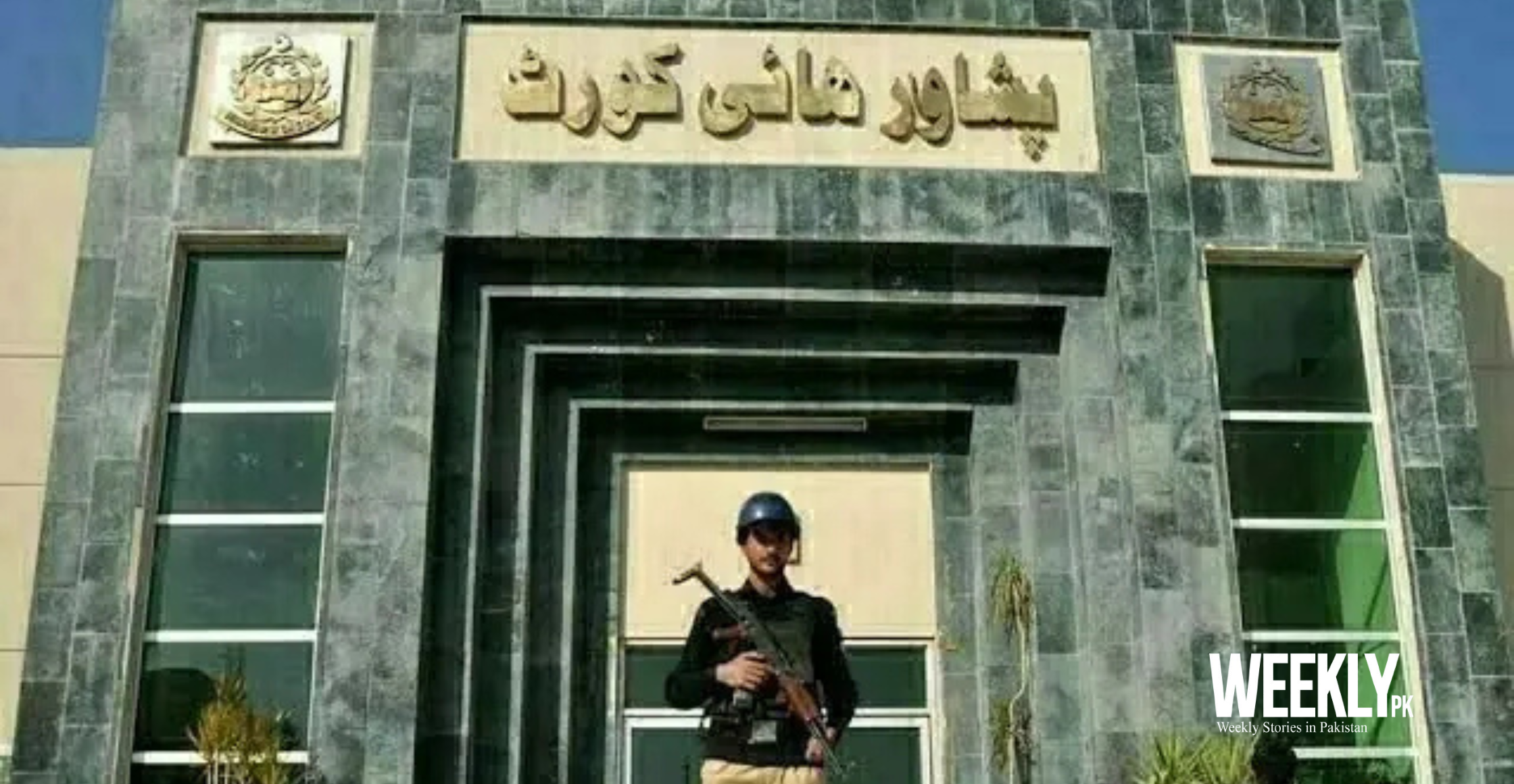
Lawyers across Khyber Pakhtunkhwa stayed away from courts on Tuesday to protest a Federal Constitutional Court (FCC) order that has stopped the Peshawar High Court (PHC) from hearing constitutional petitions filed after the deployment of troops in the province. The order has effectively frozen challenges to the emergency and governor’s rule, the arrests of PTI leaders and the detention of Chief Minister Sohail Afridi, just as those cases were due to be heard.
The FCC order was issued on Thursday, November 5, by a two-member bench headed by Chief Justice Amin-ud-Din Khan, on petitions filed by the KP Home and Tribal Affairs Department. The court noted that the armed forces had been called to act in aid of civil power across the province under an Article 245 order dated October 11 and a Ministry of Defence memorandum dated October 12, and ruled that proceedings before the high court under Article 199 instituted on or after October 12 should be suspended. The KP Advocate General argued that the high court had disregarded Article 245, clause 3 of which, he contended, bars a high court from exercising Article 199 jurisdiction in an area where the armed forces are acting in aid of civil power. The bench issued notices to the respondents and suspended Peshawar High Court orders for the release of people detained under Section 3 of the Maintenance of Public Order (MPO) Ordinance.
The effect on the PHC was immediate. Its administrative committee decided not to proceed with petitions filed under Article 199 on or after October 12, and on Saturday it removed about 105 petitions from its November 10 cause lists, according to Pakistan Today. They included challenges to the emergency and governor’s rule filed by PTI Chairman Barrister Gohar Ali Khan, opposition leader Mahmood Khan Achakzai, the Khyber Pakhtunkhwa Bar Council and MNA Shandana Gulzar, as well as petitions seeking the recovery of Afridi, Assembly Speaker Babar Saleem Swati and MNA Junaid Akbar. Minute Mirror reported that matters concerning governor’s rule and the emergency will now fall under the FCC’s jurisdiction, as will petitions against detention under the MPO Ordinance. This also means that the Peshawar High Court hearing on the governor’s rule petitions that had been scheduled for November 10, as we reported earlier, did not take place.
The Khyber Pakhtunkhwa Bar Council called the strike on Tuesday, and lawyers boycotted the PHC and its benches in other cities. According to Voice PK, they argue that the order will undermine citizens’ fundamental rights and access to justice, since hearings on a large number of constitutional petitions have stopped. The council has said it will challenge the order through legal channels, has decided to become a party to the case and called a meeting of lawyers’ representative bodies to consider an indefinite province-wide strike.
PTI has said it will challenge the order. Gohar told reporters on Monday that important cases had been removed from the PHC’s list, and the FCC itself invited other parties to challenge its interim order through separate petitions. The Tehreek-e-Tahaffuz-e-Ayeen-e-Pakistan (TTAP), the opposition alliance, said after a meeting that the constitutional validity of the emergency and governor’s rule must be subjected to a transparent and impartial judicial review, that it was deeply concerned about the suspension of Article 199 hearings and that access to courts is a fundamental right that must not be restricted. It also raised alarm over the whereabouts and legal status of the dysfunctional chief minister and other PTI leaders, demanding that they be produced before the relevant courts and given access to families and lawyers.
The legal argument turns on a difficult constitutional question. Article 245 allows the armed forces to be called in aid of civil power, and its third clause says that a high court shall not exercise jurisdiction under Article 199 in relation to an area in which the armed forces are acting in that way. The FCC’s order applies that provision to the whole of Khyber Pakhtunkhwa. Lawyers opposing it argue that the clause was not meant to shut off all judicial review of the executive in an entire province, and that an order extending it to petitions about the legality of the emergency itself would mean the measure could not be examined by any local court. The government’s side argues that the Constitution is explicit and that the courts must follow it. Which reading prevails will be decided by the FCC itself, since it is also the court that now hears the underlying cases.
That is the source of concern for the bar. The same body that issued the interim order will decide the challenge to it, and in the meantime, the petitions about arrests and detentions that would normally be heard at the high court are in limbo. For those held under MPO orders, the practical consequence is that their release orders have been suspended and their cases cannot be heard locally. For the broader question of whether governor’s rule was properly imposed, the consequence is a delay, with the period of governor’s rule running while the legal challenge waits.
There are also open questions about the order’s scope. Does it apply to every Article 199 petition from the province or only to those connected to the security operation? What happens to petitions filed before October 12, which were not covered by the stay? And how quickly will the FCC hear the applications by the Bar Council and PTI? The answers will determine whether the strike becomes a prolonged confrontation between the lawyers and the courts.
For now, the government has secured a ruling that moves the contest to the FCC, and the opposition has made access to justice its central complaint. The next step is the FCC’s decision on the applications to challenge its order, and legal circles are watching closely.
Compiled by the Weekly PK Legal Desk.
Leave a Reply