
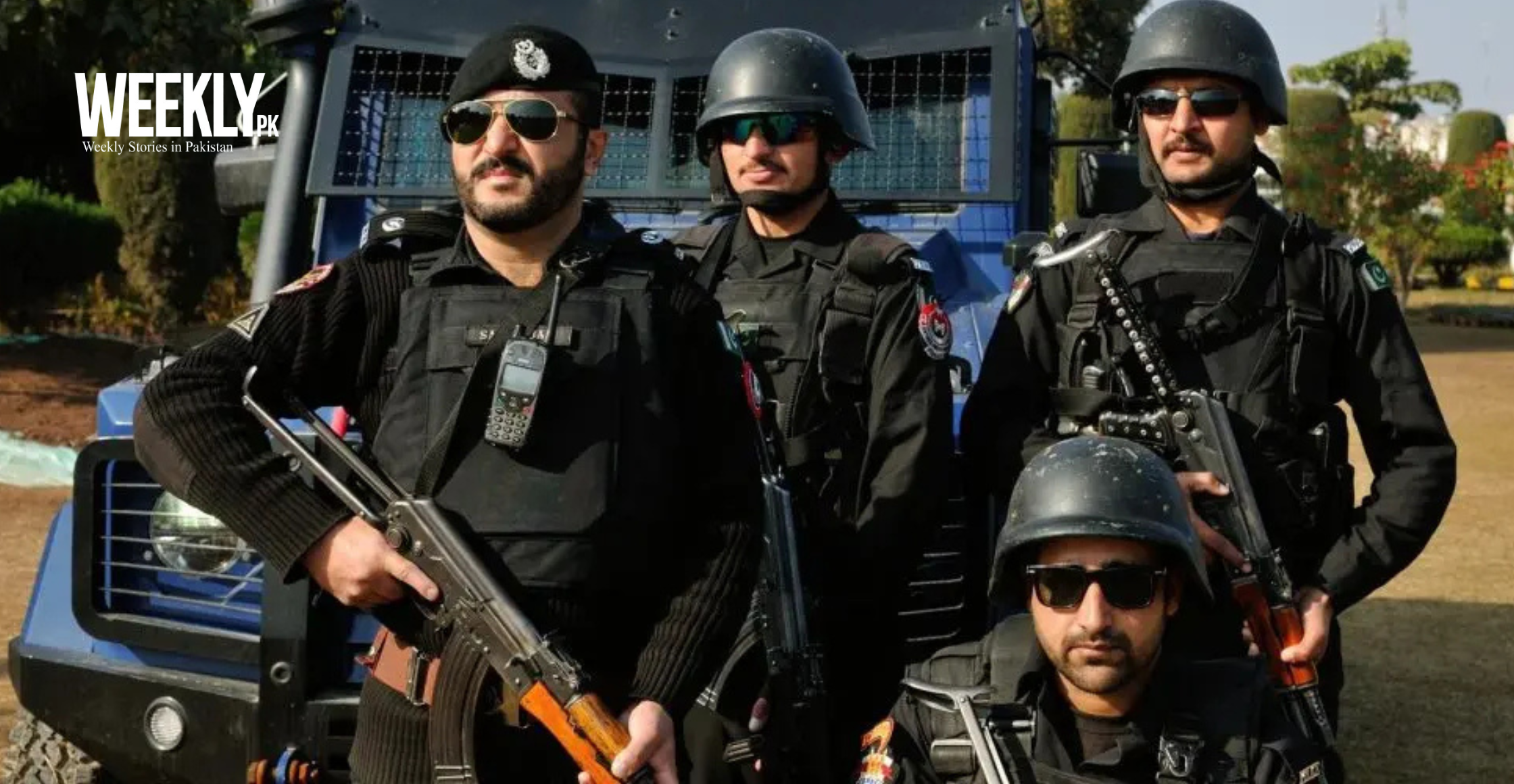
The administrative set-up running Khyber Pakhtunkhwa under governor’s rule has announced a Rs70 billion plan to strengthen the province’s police and Counter-Terrorism Department (CTD), including faceless anti-terrorism courts meant to protect judges, prosecutors and witnesses. The announcement came days before Prime Minister Shehbaz Sharif briefed PML-N President Nawaz Sharif on the situation in the province, and it is the clearest account yet of how the federal government intends to justify and use the emergency it imposed on October 11.
The plan was outlined at a briefing on Sunday at the Governor House in Peshawar, attended by Governor Faisal Karim Kundi, advisers, the chief secretary and senior police officials. KP Home Secretary Amjad Ali Khan said witnesses in terrorism cases were afraid to come forward and that a draft amendment had been sent to set up faceless anti-terrorism courts, which would protect the identities of witnesses, prosecutors and judges. He said the first, second and third priority of the government was security.
The financial commitment is substantial. According to Dawn, the set-up plans to spend Rs70 billion a year on the police and CTD, while The News reported that Rs59.8 billion would go to police infrastructure and Rs10.3 billion to the CTD. Pakistan Times described the sum as the amount for the current financial year, so whether it is an annual or one-time figure is not fully clear from the coverage. Dawn also reported that surveillance capacity would increase by 60% for the police and 70% for the CTD. The plan aims to raise the CTD’s capacity from 12% to 37%, increase the police force’s overall capacity to 75%, expand CTD operations to all 34 districts and set up nerve centres in 10 districts. It also provides for a Safe Cities Authority, artificial intelligence systems to counter misinformation, and training in anti-drone systems and sniping. Police facilities are to be solarised and equipped.
The briefing was candid about the shortfalls. According to Hum News and Nukta, the provincial police force is short of 10,587 personnel and the CTD of another 638. The News reported that the plan includes filling 17,000 vacant police posts, a figure that differs from the vacancy counts and may include newly created positions. The briefing also described the human cost of the security crisis, with 1,003 security personnel and 808 civilians killed between 2024 and September 2026, according to Hum News. Governor Kundi promised that steps would be taken to meet the police’s requirements and said the gaps between the federal and provincial governments on security matters had been eliminated.
On Monday, the political case for the emergency was reinforced. Shehbaz Sharif briefed Nawaz Sharif at their Jati Umra residence in Lahore on the law and order situation and on recent initiatives for the province’s development. According to Dawn, the elder Sharif backed the emergency set-up and said the intervention should have come much earlier. The KP home secretary also criticised the PTI, saying it had failed to take political ownership of counterterrorism actions, while Kundi said even leaders such as JUI-F chief Maulana Fazlur Rehman face restrictions on movement and described intelligence-based operations as necessary. Those statements reflect the federal government’s argument that the previous provincial administration had deliberately disengaged from the fight against terrorism, the reason cited for imposing the emergency.
The plan raises questions as well as promises. Faceless courts are intended to remove the fear that stops witnesses from testifying, a real problem in terrorism trials where reprisals are a constant risk. They also raise issues about fair trial rights, since defence lawyers normally need to know who is testifying in order to challenge their evidence. How the draft amendment will address cross-examination, and what safeguards it will include, are not described in the coverage reviewed. There is also a procedural question about who will pass the amendment while the province is under governor’s rule, a point that is likely to feature in the legal arguments before the Peshawar High Court, which is due to hear the petitions challenging the emergency on Tuesday.
Also Read: Khyber Pakhtunkhwa Under Governor’s Rule: Two Weeks On, Where Things Stand
Funding is another test. Spending Rs70 billion on security is a large commitment for a province that has struggled with vacancies and equipment, and the plan depends on recruiting, training and equipping thousands of personnel in a short time. Previous announcements have not always translated into results on the ground, and the figures for vacancies show how far the province has to go. The timeline is also tied to the political arrangement: the federal government has said governor’s rule will end after six months, which leaves limited time to show progress before an elected government returns.
The PTI has rejected the emergency and is challenging it in court, arguing that the province’s elected government had not lost control and that the measure undermines provincial autonomy. The security plan is, in effect, the government’s answer: a concrete set of steps meant to show that the intervention has a purpose beyond political disagreement. Whether it persuades the courts, the public or the province’s own police will depend on delivery.
For now, the facts are a large budget, a list of reforms, and a political endorsement from the head of the ruling party. What remains unclear is how quickly any of it will change the situation in a province where more than 1,800 security personnel and civilians have died in under three years.
Compiled by the Weekly PK Political Desk.
Leave a Reply