
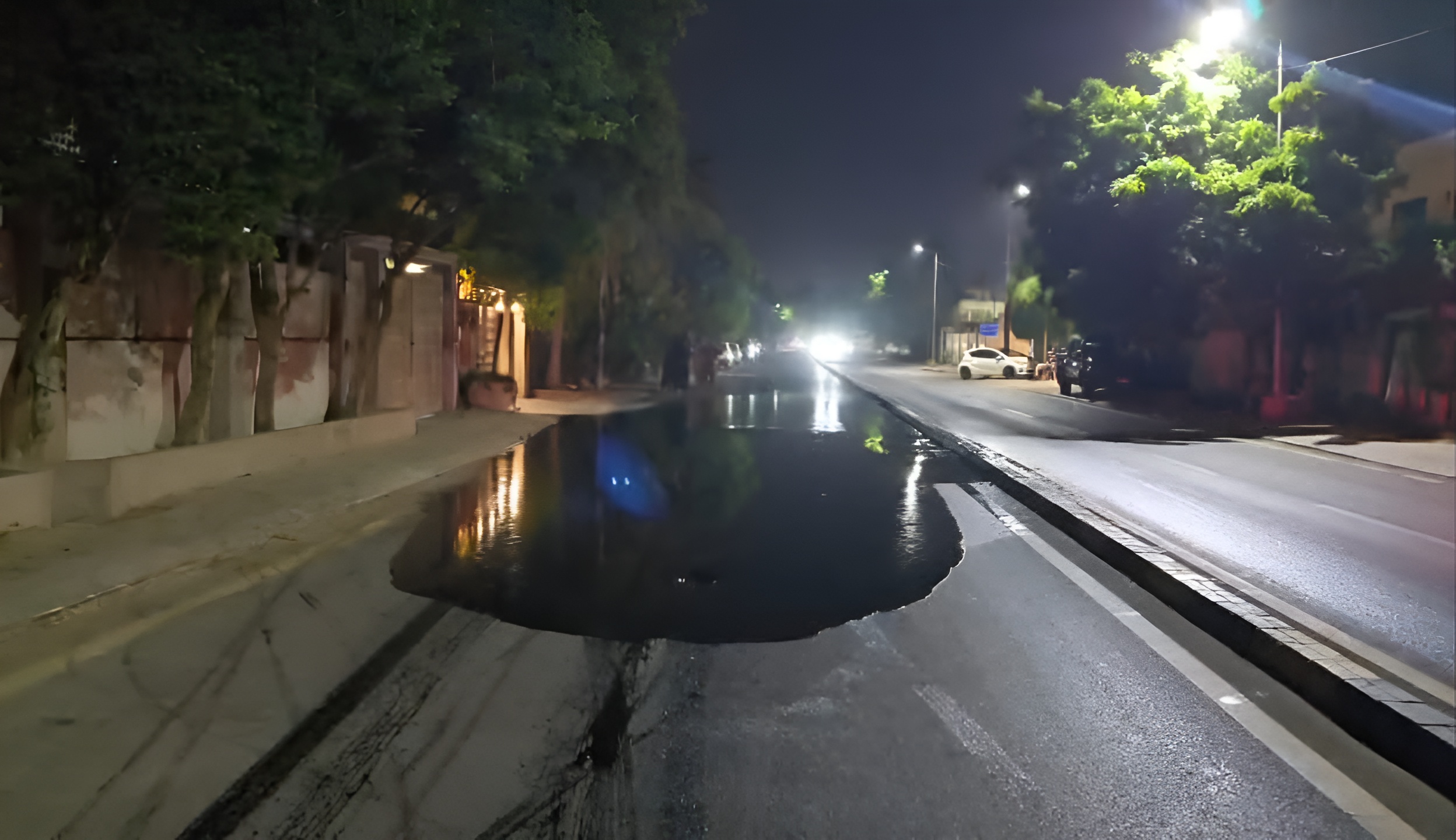
An underground oil pipeline running beneath Khayaban-e-Sehar, Street 13, in Defence Housing Authority’s Phase 6 developed a rupture over the weekend, sending crude oil spilling across the road and prompting a rapid response from DHA’s vigilance team, police and refinery officials. By Monday, cleanup crews had recovered more than 20 drums of spilled oil from the site as repair work on the ruptured section was completed, closing out an incident that once again put a spotlight on the age of the pipeline infrastructure running beneath one of Karachi’s more affluent residential neighbourhoods.
The leak was first reported early Saturday morning, according to police officials, when residents in the area noticed oil pooling across the roadway near Street 13. The DHA Vigilance Team reached the site shortly after being alerted and immediately closed the affected stretch of road to general traffic, citing the slippery and hazardous conditions created by the spill. A large number of local residents gathered near the site in the hours that followed as word of the leak spread through the neighbourhood, with many expressing concern over the smell of crude oil and the visible pooling that had spread across a significant portion of the road surface by mid-morning.
Officials said the pipeline, believed to be around 50 years old and running beneath the middle of the road, had likely failed due to age-related wear rather than any external damage, though a full technical assessment was still underway at the time of reporting. Police were deployed to the area alongside DHA personnel to cordon off the site, manage the crowd of onlookers and divert traffic to alternative routes for the duration of the repair work. Barricades were placed at both ends of the affected block, and officers remained stationed at the site throughout the weekend to prevent vehicles from attempting to pass through the oil-slicked section, a precaution authorities said was necessary given how quickly the surface had become hazardous for both motorists and pedestrians.
Following the leak, DHA authorities alerted the relevant refining company operating the line, with National Refinery Limited confirmed to have suspended supply through the affected pipeline as soon as the rupture was reported. Repair crews began excavation work shortly afterward to access and seal the damaged section, a process that continued through the weekend before being completed early this week. Officials noted that multiple pipelines belonging to different companies run through the same general corridor, a detail that complicated the initial assessment of exactly which line had failed and required close coordination between DHA, police and refinery technical teams before repair work could begin in earnest.
The recovery operation that followed the repair proved substantial. Cleanup teams working the site collected more than 20 drums of spilled crude oil from the roadway and surrounding area, using sand and absorbent material to soak up oil that had seeped into the ground and along the edges of the street. The scale of the recovery underscored how much crude had escaped the line before the leak was brought under control, even though the rupture itself was identified and reported relatively quickly by residents and DHA staff. Workers spent much of Sunday and into Monday shovelling oil-saturated sand into containers for disposal, a slow, labour-intensive process that authorities said was necessary to prevent the contaminated material from washing into stormwater drains or seeping further into the surrounding soil.
This is not the first time a pipeline failure has disrupted the same stretch of DHA. The Khayaban-e-Sehar corridor has seen similar incidents in recent years, including a rupture in January 2020 that the Sindh Environmental Protection Agency estimated released between 50,000 and 60,000 litres of diesel into the surrounding area, an incident that caused groundwater contamination near nearby homes and a college and prompted a formal environmental assessment at the time. Multiple refining companies operate pipelines running through the same general corridor connecting Karachi’s coastal refineries to inland industrial areas, a layout that has made the area particularly prone to repeat incidents as the underlying infrastructure continues to age without any publicly announced programme for full-scale replacement.
Karachi’s oil pipeline network has drawn scrutiny on more than one front this year. A separate leak was reported in Clifton near Sea View in recent months, where a ruptured Pakistan Refinery line sent furnace oil spilling across a service road and into a nearby residential building, forcing similar emergency containment measures, including the use of sand to absorb the spread and excavation work to access and repair the damaged section. Officials in both cases have cited the age of the underlying pipeline infrastructure as a contributing factor, though the pattern of recurring leaks across different parts of the city has raised questions among residents and civic commentators about whether reactive repairs are sufficient without a broader, coordinated effort to inspect and replace ageing lines before they fail.
Environmental concerns tied to these incidents tend to extend well beyond the immediate cleanup. Crude oil and diesel spills of this kind carry a risk of soil and groundwater contamination that can persist long after the visible oil has been cleared from a road surface, particularly in residential areas where spilled material can seep into drainage systems or nearby water sources. Past incidents in the same general area have required follow-up environmental monitoring to confirm that contamination has not spread beyond the immediate spill zone, and residents near this weekend’s rupture have been told to expect similar precautionary checks in the coming weeks.
With repair work on the Khayaban-e-Sehar line now complete and the recovered oil cleared from the site, DHA authorities said the road would be reopened to traffic once final safety checks confirmed the surface was no longer hazardous. Residents in the immediate vicinity have been advised to report any lingering odour or residue to DHA’s vigilance office, as authorities continue to monitor the area for any delayed signs of ground or water contamination following the spill. For now, traffic in the surrounding blocks remains partially diverted as crews complete final surface repairs, with normal flow expected to resume once DHA issues formal clearance for the road to reopen.
Compiled by the Weekly PK Staff Desk.
Leave a Reply