
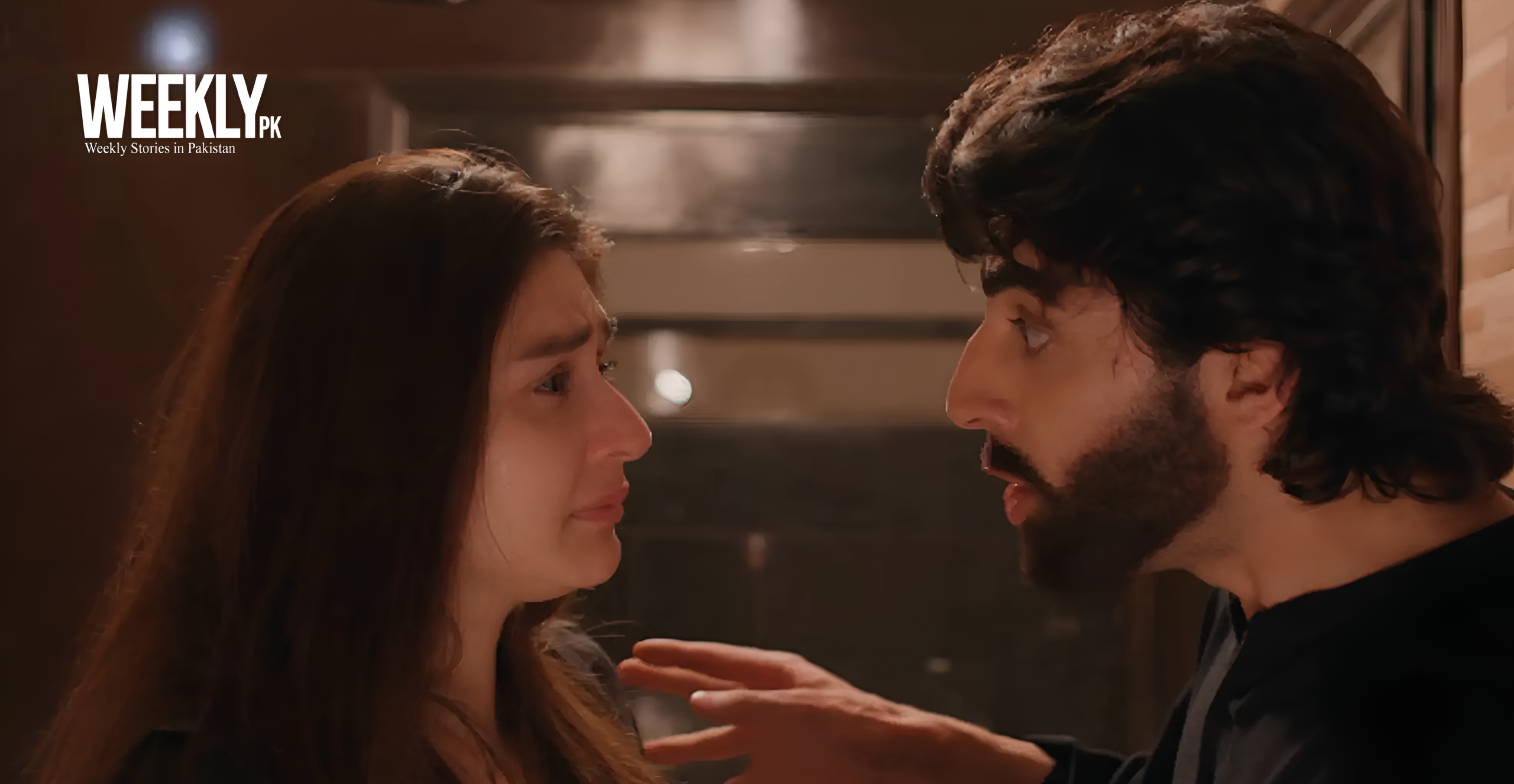
Every few years, a Pakistani drama produces a character that viewers recognise so immediately that the conversation stops being about the show. Zamil, played by Nameer Khan in ARY Digital’s Dar-e-Nijaat, has become one of those characters. His scenes with Zaryab, played by Dur-e-Fishan Saleem, have been discussed less as plot and more as testimony, with viewers saying, in effect, that they know this man. The reason is simple. Zamil is not written as a villain in the traditional sense. He is written as a hypocrite, and hypocrisy is far more familiar than villainy.
The setup is worth restating. Zamil and Zaryab are childhood sweethearts who spent years together, including a period of living together. Then Zamil rediscovers religion, marries a woman from a madressah without telling Zaryab, and only explains himself when she turns up at his door looking for answers. What he tells her in episode 13 is the moment the character crystallised for audiences. He describes the time they spent together as his era of ignorance, says he needed a partner who was pious, pure and innocent, and suggests that God accepted his repentance by giving him his new wife. He then tells Zaryab to look for someone like herself.
It is the second half of that speech that does the damage. Zaryab asks a plain question: does only a man have the right to repent? Zamil does not answer it. He lists the qualities he now wants in a wife and how she falls short of them. That evasion is the whole character in miniature. He has redefined his own past as a phase he outgrew, while defining hers as a permanent verdict on who she is.
This is where the argument that Zamil reflects something real about Pakistani society begins, and it deserves to be made carefully. Nobody serious is claiming that every man behaves this way. What the drama captures is a specific double standard that many viewers, and many women in particular, describe recognising from their own lives: a man’s earlier relationships, mistakes and indulgences are treated as youth, experimentation or a chapter to be closed, while a woman with a comparable history is treated as permanently compromised. The same behaviour produces a redemption story for one person and a lasting stigma for the other. Zamil simply says the quiet part out loud, and dresses it in the language of faith.
That dressing is the sharpest thing about the writing. Zamil does not say he wants a woman with no history because it flatters him. He says it as a matter of repentance and religious duty, which makes the position much harder to challenge in the room. Anyone who objects appears to be objecting to piety itself. Viewers have noticed the trick, and part of the strong reaction to the character comes from watching religious language used less as a moral compass than as a shield against accountability. It is worth being fair here: the drama does not suggest that becoming more religious is a fault. The criticism, as most viewers seem to read it, is aimed at what Zamil does with his new identity, not at the identity itself. Genuine change, the argument goes, should not depend on pretending that the person he changed alongside never existed.
There is also the matter of how the story treats Zaryab afterward. She is left to absorb the emotional cost of a shared past that Zamil has unilaterally declared closed on his side and open on hers. Her later decision to say she wants to marry the pious Abu Bakar is driven, by the show’s own account, less by love than by a need to prove Zamil wrong. That detail matters because it shows how a man’s hypocrisy can shape a woman’s choices long after he has left the scene, pushing her to respond to his standard rather than form her own.
The counterargument is not trivial, and a fair reading has to include it. Drama exaggerates by design. Zamil is a narcissistic character in a heightened story, and treating him as a representative of an entire society risks flattening the many men who handle faith, relationships and their own histories with far more honesty. Critics of this kind of writing also point out that Pakistani television has a habit of building its social commentary around a few recurring types, the hypocrite, the saviour, the wronged woman, and that repeating those types can harden into cliché rather than insight. Some viewers have also questioned whether the show, written by Umera Ahmed, leans too heavily on the idea that a woman’s recovery depends on another man arriving to rescue her, which sits awkwardly beside its critique of Zamil.
Even so, the reaction to Zamil says something on its own. A character does not resonate this widely unless the behaviour behind him is recognisable to a large part of the audience. Whether viewers see him as an exaggeration or a mirror, they are clearly reading him against experiences of their own, and that is the strongest evidence that the writers hit something real. Dar-e-Nijaat has not offered a solution, and it is not obliged to. What it has done is put a familiar excuse under bright lighting and let the audience examine it.
Which leaves a question that the drama, and its viewers, may have to answer sooner than the final episode: if a man can change his life and be forgiven for his past, why does the same society so rarely extend that forgiveness to the woman who lived through it with him?
Compiled by the Weekly PK Entertainment Desk.
Leave a Reply