
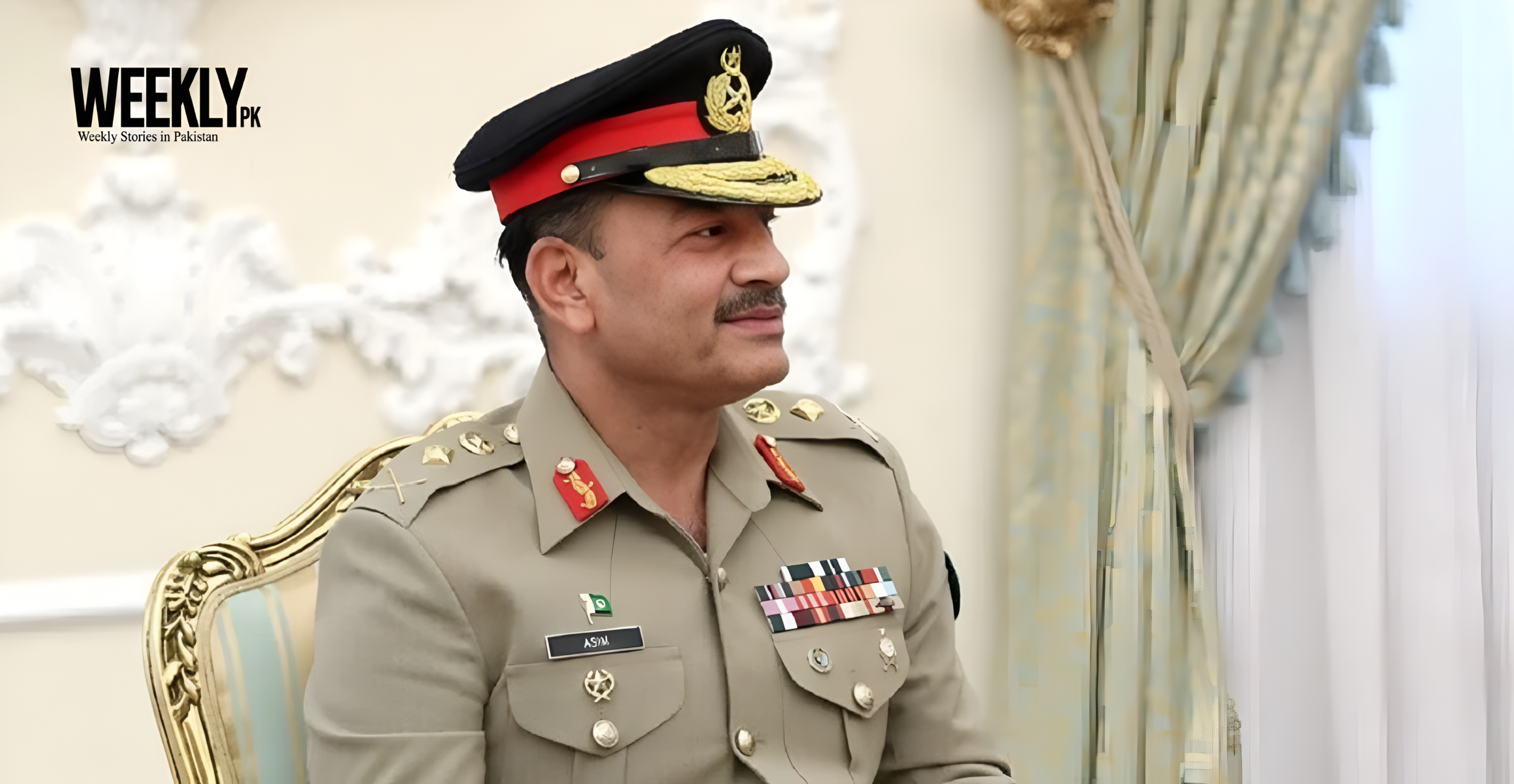
Pakistan’s army chief, Field Marshal Asim Munir, was in Tehran this week for the second time in a week, this time alongside Saudi Arabia’s defence minister and Turkiye’s intelligence chief, in a meeting that brought the three members of the Makkah defence pact face to face with Iranian leaders for the first time since Houthi attacks on Saudi Arabia escalated last month. The talks were followed by an Iranian call for regional security cooperation without outside interference, and by a Saudi statement backing Pakistan’s mediation efforts.
The Monday meeting was hosted by Mohsen Rezaei, secretary of Iran’s Supreme National Security Council, and attended by Saudi Defence Minister Prince Khalid bin Salman, Munir and Turkish intelligence chief Ibrahim Kalin, according to Al Jazeera. Iranian President Masoud Pezeshkian and Foreign Minister Abbas Araghchi also took part in the meetings. The discussions focused on peace and security in the region, and the participants agreed to continue talks. Pezeshkian said Iran supported agreements that would strengthen regional cooperation, resolve disputes and make better use of Islamic countries’ shared resources, and Iranian media reported that Tehran called on Muslim countries to act together to prevent renewed fighting.
The visit came six days after an earlier trip. On October 20, Munir travelled to Tehran with Interior Minister Mohsin Naqvi and met Pezeshkian and Araghchi, according to Iranian state media, in talks that covered bilateral relations and the stalled negotiations between Iran and the United States. Reuters, citing Iranian reports, said Pezeshkian discussed mediation efforts with Munir, and that the army chief also met parliament Speaker Mohammad Bagher Qalibaf. Qalibaf told him, according to an Iranian readout, that Washington cannot earn Tehran’s trust until it meets the seven conditions Iran presented last month for reopening the Strait of Hormuz. Those include the lifting of the US blockade on Iranian ports, the lifting of US sanctions on Iranian oil exports and an end to hostilities on all regional fronts.
A Pakistani official told Reuters that Munir, with US President Donald Trump’s blessing to pursue diplomacy, had presented Iran with a proposal that would offer something to both Washington and Tehran. The details have not been made public.
Pakistan’s role as intermediary dates back to the early weeks of the war, which began after US and Israeli strikes on Iran in late February. Islamabad has been conveying messages between the two sides since late March, and Reuters reported that its efforts led to an interim peace agreement in June, known as the Islamabad Memorandum, which quickly faltered as new fighting broke out weeks later. The attempt to revive talks now takes place in a more complicated environment, with the Strait of Hormuz still a central point of contention and Washington preparing to increase economic pressure on Tehran.
The Monday format was notable for who was sitting at the table. The Makkah Joint Defence Agreement, signed in August by Pakistan, Saudi Arabia and Turkiye, treats an attack on one member as an attack on all, and its members have been dealing with Houthi missile and drone strikes on Saudi territory, including the attack on Riyadh airport earlier this month. Iran backs the Houthis. Bringing the pact’s three members to Tehran to talk directly with Iranian leaders suggests an effort to address the Houthi threat through diplomacy rather than only through deterrence, a line that Pakistani officials have also emphasised, saying the preferred outcome is a negotiated one. Saudi Arabia’s public support for Pakistan’s mediation, reported by The Nation, adds weight to that approach.
For Pakistan, the dual role is delicate. It has just ratified a mutual defence pact with Riyadh and says its collective deterrence is already in play, and at the same time it is trying to keep its channel to Tehran open and credible. The two positions can complement each other, since Pakistan’s standing with Saudi Arabia and with Iran gives it access that few other mediators have, but they can also pull in different directions if the Houthi attacks continue or if the pact’s obligations are tested.
There are also reminders of the strains in bilateral ties. Pakistan suspended trade at two border crossings with Iran on October 17, citing security and smuggling concerns, a decision that has disrupted LPG supplies and stranded cargo. Officials have not linked the closure to the diplomatic effort, and Iran has described it as temporary, but the timing sits uneasily beside the high-level talks.
The immediate questions are about substance. What does the proposal Munir carried to Tehran actually offer, and does it address the seven conditions Iran has set? Will Washington accept a phased approach that Iran has so far resisted? Can Saudi, Turkish and Pakistani engagement with Tehran reduce the Houthi attacks that triggered the latest round of regional tension? Iran’s stated position is that there can be no talks with Washington until its demands are met, which means the mediators will need to find a sequence that both sides can accept. For now, Pakistan has secured a seat in the room, and the next few weeks will show whether that translates into movement.
Compiled by the Weekly PK Diplomatic Desk.
Leave a Reply