
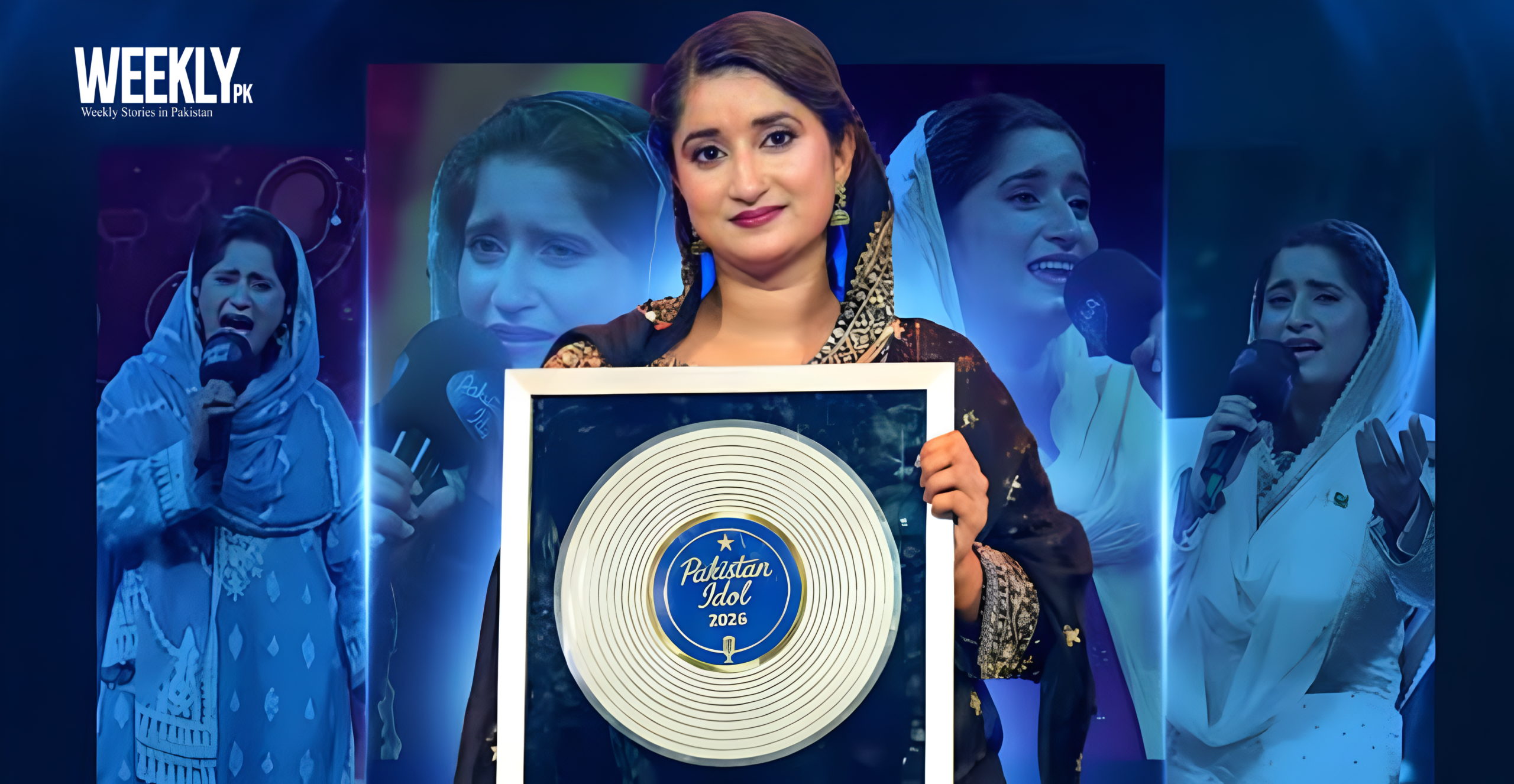
Pakistan Idol 2026 wrapped up on Sunday night with what should have been an uncomplicated feel-good ending, a middle-class singer from Faisalabad walking away with the title after a season of steadily building performances. Instead, the announcement of Hira Qaiser as the winner set off a wave of pushback online almost immediately, with supporters of fellow finalist Tarb Nafees questioning the result and airing their frustration across social media within hours of the Super Finale ending. For a show that had otherwise generated overwhelmingly positive coverage throughout its revival season, the sudden burst of dispute over the outcome is worth examining on its own terms.
The finale itself gave little outward indication that controversy was brewing. Held as a glittering “Super Finale” complete with performances from Rahat Fateh Ali Khan, Bilal Maqsood and Zeb Bangash, and a headline appearance from Atif Aslam as the evening’s Super Icon guest, the event was staged with the kind of production value clearly intended to cement Pakistan Idol’s return as a major national television moment. The night was also screened live in cinemas in both Karachi and Faisalabad, extending the audience well beyond those watching from home and giving the announcement an even larger, more communal stage than a typical televised reveal. When Hira Qaiser’s name was called, she walked onto the stage carrying her young son, visibly overwhelmed, and accepted the Pakistan Idol shield and a Rs1.5 million cash prize from host Shafaat Ali as confetti fell and fellow contestants rushed to congratulate her.
That moment, by most accounts, played exactly as the show’s producers would have hoped, an emotional, camera-ready culmination to a season built around discovering new talent from across the country. It is precisely because the moment landed so cleanly on screen that the backlash which followed feels worth unpacking rather than dismissing outright. Fans of Tarb Nafees, one of eight finalists who reached the show’s final stage alongside Hira, Nabeel Abbas, Maham Tahir, Roohan Abbas, Waqar Hussain and Aryan Naveed, took to social media questioning whether the result reflected the strongest performer of the night, a familiar pattern in televised singing competitions where a portion of the audience invests heavily in a specific contestant and struggles to accept an outcome that goes against their expectations.
It is worth being precise about what the disagreement actually is, and is not. There has been no formal allegation of vote manipulation or procedural irregularity raised by Pakistan Idol’s production team, Geo TV, or any of the show’s judges, Rahat Fateh Ali Khan, Atif Aslam, Fawad Khan, Bilal Maqsook and Zeb Bangash, all of whom participated in the finale without publicly disputing the result. What has surfaced instead is a fan-driven disagreement over subjective merit, the kind of dispute that trails nearly every televised talent competition decided through a blend of judge scoring and public voting, where by definition roughly half the finalist fanbase ends up disappointed by any given outcome. That distinction matters, because a fanbase expressing displeasure online is a very different thing from a credible challenge to the legitimacy of the process itself, and conflating the two risks overstating what is, at its core, an ordinary and fairly predictable reaction to a competitive result.
Still, the intensity of the reaction says something about how invested Pakistan Idol’s returning audience has become in its contestants this season. The show’s 2026 run marked a genuine revival after a lengthy hiatus dating back to its original 2013 season, which had crowned Zamad Baig as its first-ever winner before the franchise went dormant for years. Bringing it back with a high-profile judging panel and a nationwide search for new vocal talent appears to have succeeded in generating exactly the kind of passionate, engaged fan culture that makes a finale controversy possible in the first place, since audiences only argue this fiercely over outcomes they have genuinely come to care about. In that sense, the Tarb Nafees backlash, while uncomfortable for a show trying to close its season on a purely celebratory note, is also indirect evidence that Pakistan Idol’s revival has successfully rebuilt the kind of dedicated following that gives a singing competition its cultural relevance in the first place.
For Hira Qaiser herself, the controversy appears to have done little to dampen the moment. Speaking to Geo News after her win, she said her family’s prayers had played a central role in her success and that she now intended to pursue her ambitions further, framing the victory in personal rather than competitive terms. Her journey, from a middle-class household in Faisalabad through weeks of auditions and eliminations to a Super Finale stage watched simultaneously in two cities, was always going to be framed as an underdog story by the show’s producers regardless of how the finale itself was received online, and that framing has largely held even amid the pushback from Tarb Nafees’ supporters.
The show’s production team, for its part, appears focused on moving forward rather than addressing the controversy directly. Producer Badr Ikram, speaking at the Karachi screening, confirmed that a third season of Pakistan Idol is already being planned, promising an even bigger experience for viewers when it returns, a comment that suggests the franchise sees Sunday’s finale, backlash included, as evidence of a successful season rather than a problem requiring a response. Whether that confidence proves justified may depend less on how Hira Qaiser’s win is remembered and more on whether the show can carry this season’s clearly heightened fan engagement, controversy and all, into its next run without losing the momentum this revival has managed to build.
Compiled by the Weekly PK Entertainment Desk.
Leave a Reply