
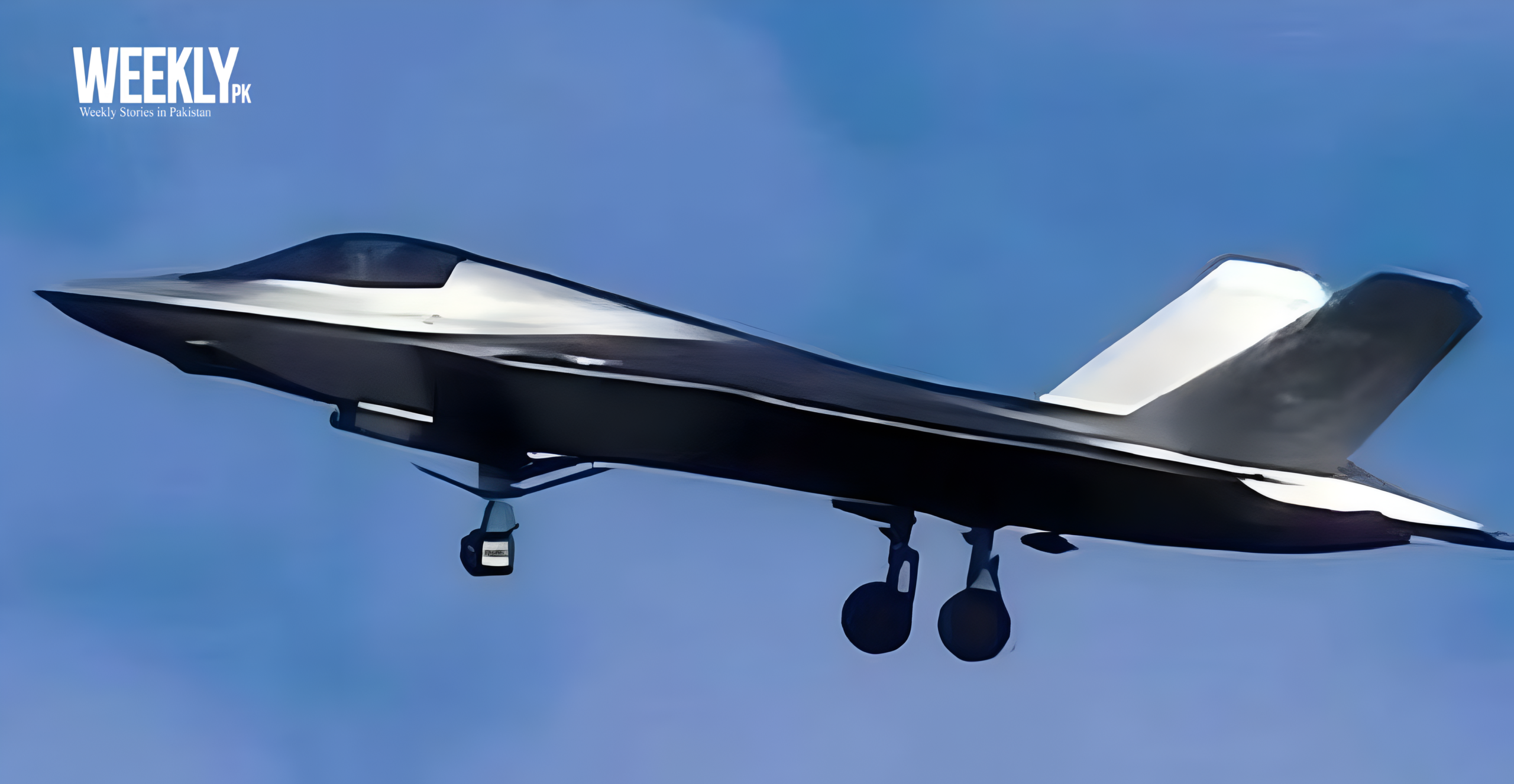
A new set of photographs showing China’s J-35 carrier-based stealth fighter in flight has triggered widespread speculation among defence observers after the aircraft appeared with a striking silver, mirror-like finish in images that began circulating in mid-August and gained wider attention on August 19. The unusual appearance has raised an obvious question among analysts and aviation enthusiasts alike, whether Beijing is testing an experimental new stealth coating, or whether the effect is simply a trick of sunlight and camera exposure on an otherwise ordinary surface. Either way, the images have travelled quickly across defence-focused social media accounts and aviation forums, feeding into the broader, long-running fascination with China’s evolving stealth aircraft programme and its rapid pace of visible development in recent years.
In the photographs, the aircraft looks markedly different from the matte grey finish typically associated with modern stealth fighters. Sections of the fuselage, wings and tail appear to shine with a polished, almost metallic quality, a look that stands in sharp contrast to the low-reflectivity coatings stealth aircraft usually carry specifically to reduce their radar and visual signature. That contrast is precisely what caught the attention of military watchers scanning the images once they began spreading online, since stealth aircraft are, almost by design, meant to look unremarkable and matte rather than eye-catching, making any departure from that visual norm an immediate point of interest for people who track this kind of programme closely.
Opinions on what the images actually show have split fairly quickly into two camps. Some observers have suggested the J-35 could be undergoing tests of an advanced surface treatment designed to manage radar, infrared or thermal signatures in new ways, treating the reflective finish as a genuine materials experiment rather than an accident of lighting. Others have urged caution, pointing out that a single photograph cannot reliably reveal what is actually happening on an aircraft’s skin. Sunlight striking even a standard matte surface at the right angle can produce a surprisingly glossy appearance, and camera exposure settings, along with the image compression that photographs typically undergo before circulating widely on social media, can exaggerate reflectivity well beyond what an observer would actually see with the naked eye standing on a runway or watching a flyover in person.
That distinction matters because stealth performance is determined by far more than surface colour or shine. An aircraft’s radar signature depends heavily on its overall shape, the materials used throughout its structure, the way panels and joints are engineered, and a range of other design features that have nothing to do with how the paint or coating happens to catch light on a given afternoon. A jet can appear bright and reflective to a camera lens while behaving in an entirely different, far less detectable way when radar waves actually strike it in a real detection scenario. The same logic extends to infrared detection, where a reflective surface could plausibly alter how the aircraft interacts with heat and sunlight, but the photographs alone offer no direct evidence that the J-35 has become any harder, or any easier, for infrared sensors to track. For now, the claims circulating about a stealth breakthrough remain firmly speculative rather than confirmed by any verifiable technical data.
The speculation is not without precedent, however, which is part of why it has drawn as much attention as it has. The United States has previously flown stealth fighters carrying similarly unusual, mirror-like surface treatments. An F-22A Raptor was photographed at Nellis Air Force Base back in November 2021 wearing a highly reflective finish across much of its exterior, and a differently treated F-22 was spotted again the following year, generating a similar round of speculation among American defence watchers at the time. The US Navy’s F-35C has also been observed at various points with reflective external panels, though the exact purpose behind those American tests, whether tied to signature management, thermal performance, or some other experimental goal, was never officially confirmed by the US military at the time, leaving those episodes as much a matter of informed guesswork as the current J-35 photographs are today.
Similar appearances between aircraft do not necessarily indicate similar underlying technology, so while the comparison makes the new J-35 photographs more interesting, it does not establish that China has replicated or copied whatever the American programmes were actually testing. It is entirely possible that Chinese engineers arrived at a visually comparable finish through a completely different research path, driven by different design priorities or manufacturing constraints, and reading too much into the visual similarity risks overstating what is actually known.
The naval role the J-35 is designed for adds another layer worth considering. As a carrier-based aircraft operating from China’s newest-generation carriers, including the Fujian, the jet functions in an environment defined by salt spray, humidity and heat, conditions that are notoriously harsh on specialised coatings and surface treatments. Any experimental finish that performs well under controlled testing conditions could prove far less practical at sea if it requires frequent repair or fails to withstand the wear that comes with regular carrier operations, catapult launches, and constant exposure to a maritime atmosphere. That durability question is central to whether any reflective coating spotted on the J-35 represents a serious, sustained design choice or a short-lived test that will not survive contact with operational carrier life over an extended deployment cycle.
If the same finish continues appearing across multiple carrier trials or operational deployments in the months ahead, the case for deliberate, ongoing materials testing will grow considerably stronger, giving analysts a pattern to work from rather than a single set of images. If, on the other hand, it turns out to be a one-off appearance tied to a specific set of lighting conditions or a short test flight caught at an unusual angle, the mystery is likely to fade as quickly as it emerged, joining a long list of aviation photographs that generated brief online excitement before quietly being explained away by something far more mundane than a technological leap.
As of now, Chinese authorities have not issued any official statement confirming the purpose or composition of the coating seen in the images, leaving the question open for continued speculation among defence analysts tracking the J-35’s development as it moves further into carrier operations aboard China’s newest-generation fleet, and among casual observers simply curious about what, if anything, the shine on China’s newest fighter actually signals.
Compiled by the Weekly PK World Desk.
Leave a Reply