
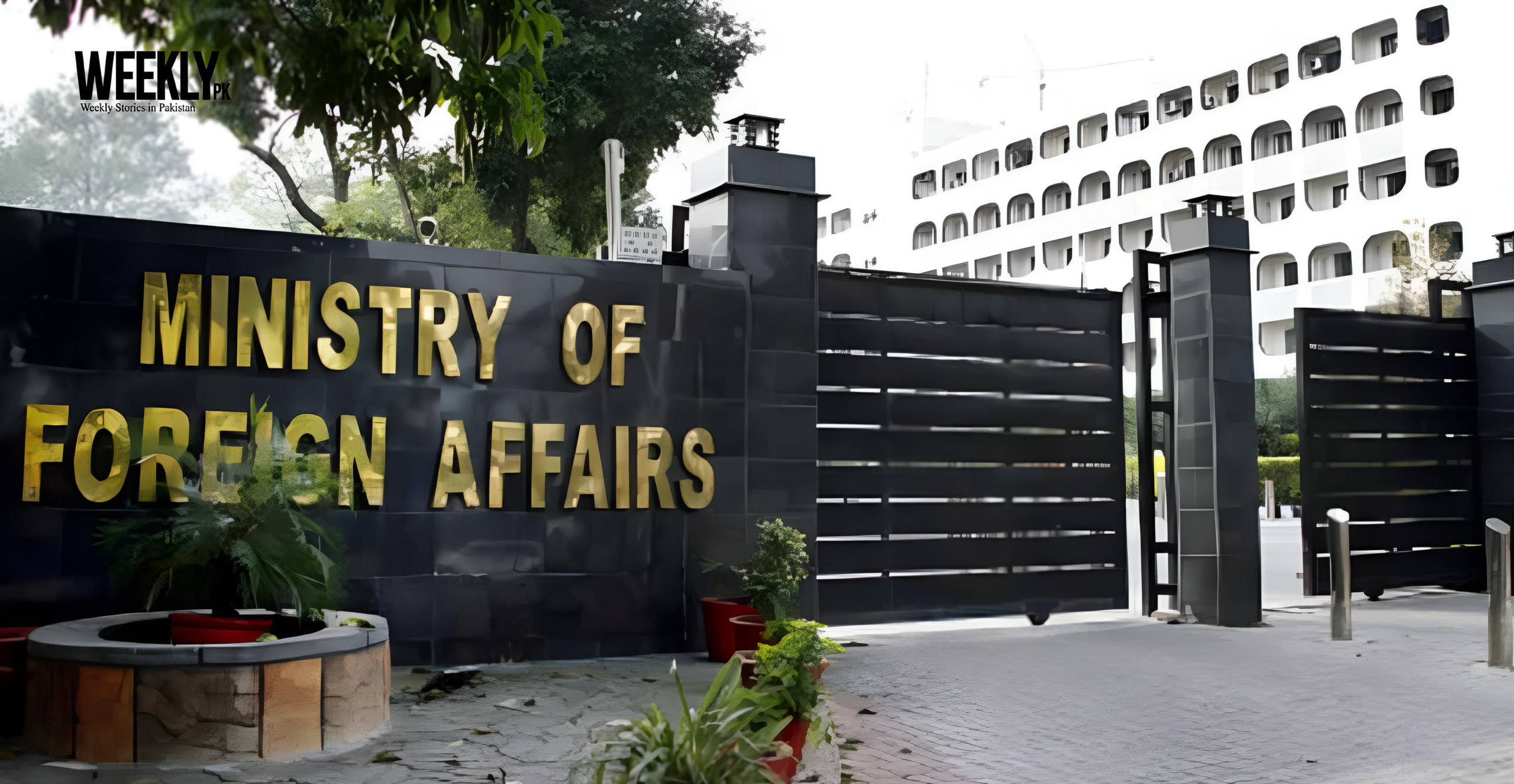
Pakistan’s Foreign Office summoned the United States charge d’affaires in Islamabad on Wednesday and lodged a formal demarche over remarks by the US ambassador to India describing Jammu and Kashmir as part of India, remarks made during the ambassador’s visit to the disputed region.
In a statement, the Foreign Office said Pakistan strongly condemned and categorically rejected the characterisation of Jammu and Kashmir as part of India. The statement underscored that Jammu and Kashmir is an internationally recognised disputed territory, awaiting final disposition in accordance with relevant United Nations Security Council resolutions and the aspirations of the Kashmiri people. The Foreign Office further said the ambassador’s remarks negated the long-standing, well-documented position of the United States on the Kashmir dispute and ran contrary to Washington’s stated commitment to the supremacy of international law and the UN Charter.
Despite the strong language used regarding the ambassador’s remarks, the Foreign Office statement noted that Pakistan continues to appreciate an offer made by US President Donald Trump to mediate between Pakistan and India on the Kashmir dispute, an offer that followed the two countries’ military confrontation last year known as Marka-i-Haq. The Foreign Office urged the American side to ensure that its public statements remain consistent with the disputed status of Jammu and Kashmir going forward.
Kashmir has been a disputed territory claimed in full by both Pakistan and India since the partition of British India, with the two countries fighting their first war over the region in 1948. Following that conflict, the areas that came under Pakistani administration were declared Azad Jammu and Kashmir. A United Nations Security Council resolution passed in 1949 affirmed the right of Kashmiris to determine their own future through a UN-sponsored plebiscite, a vote that has yet to take place more than seven decades later.
The dispute entered a new phase in August 2019, when Indian Prime Minister Narendra Modi’s government revoked the special status and autonomy previously granted to occupied Kashmir by repealing Article 370 of the Indian Constitution. India’s Supreme Court subsequently upheld that move in December 2023, a decision that has remained a point of contention in Islamabad’s position on the dispute.
President Trump’s involvement in the Kashmir issue dates back to his first term in office. In 2019, he told reporters he would be willing to intervene in the dispute if both countries wanted him to, saying he had spoken with officials on both sides and describing the conflict as one that had continued for a long time. He was informed at the time that India had rejected the offer, to which he responded that the decision was up to Modi.
The offer resurfaced more prominently in 2025, after Trump helped broker a ceasefire between Pakistan and India following what was described as the two nations’ most intense military confrontation in decades, an episode referred to in Pakistan as Marka-i-Haq. In remarks praising the leadership of both countries for reaching that peace agreement, Trump said he would work with both governments to see whether a resolution to the Kashmir dispute could be reached after what he called a thousand years of conflict. Following the ceasefire, the US State Department reiterated Trump’s offer, describing each step he takes as aimed at resolving what it called generational differences between countries.
Asked about the administration’s next steps on the offer, State Department spokesperson Tammy Bruce told a White House press briefing that while she could not speak to the president’s specific plans, his general approach was well known, and that the White House would have more to say on the matter in due course. She added that Trump had been the only figure able to bring certain parties to the table for conversations that had previously seemed impossible, and said she remained hopeful that the Kashmir issue could eventually be resolved as well.
Wednesday’s demarche marks the latest in a long-running pattern of diplomatic exchanges between Islamabad and Washington over statements touching on Kashmir’s status, with Pakistan routinely pushing back against any language from foreign officials that appears to characterise the territory as settled or as belonging definitively to either country. The Foreign Office’s response reflects Pakistan’s continued position that any resolution to the dispute must be reached through the mechanisms set out in relevant UN resolutions, rather than through unilateral characterisations by third countries.
— Compiled by the Weekly PK Staff Desk
Leave a Reply