
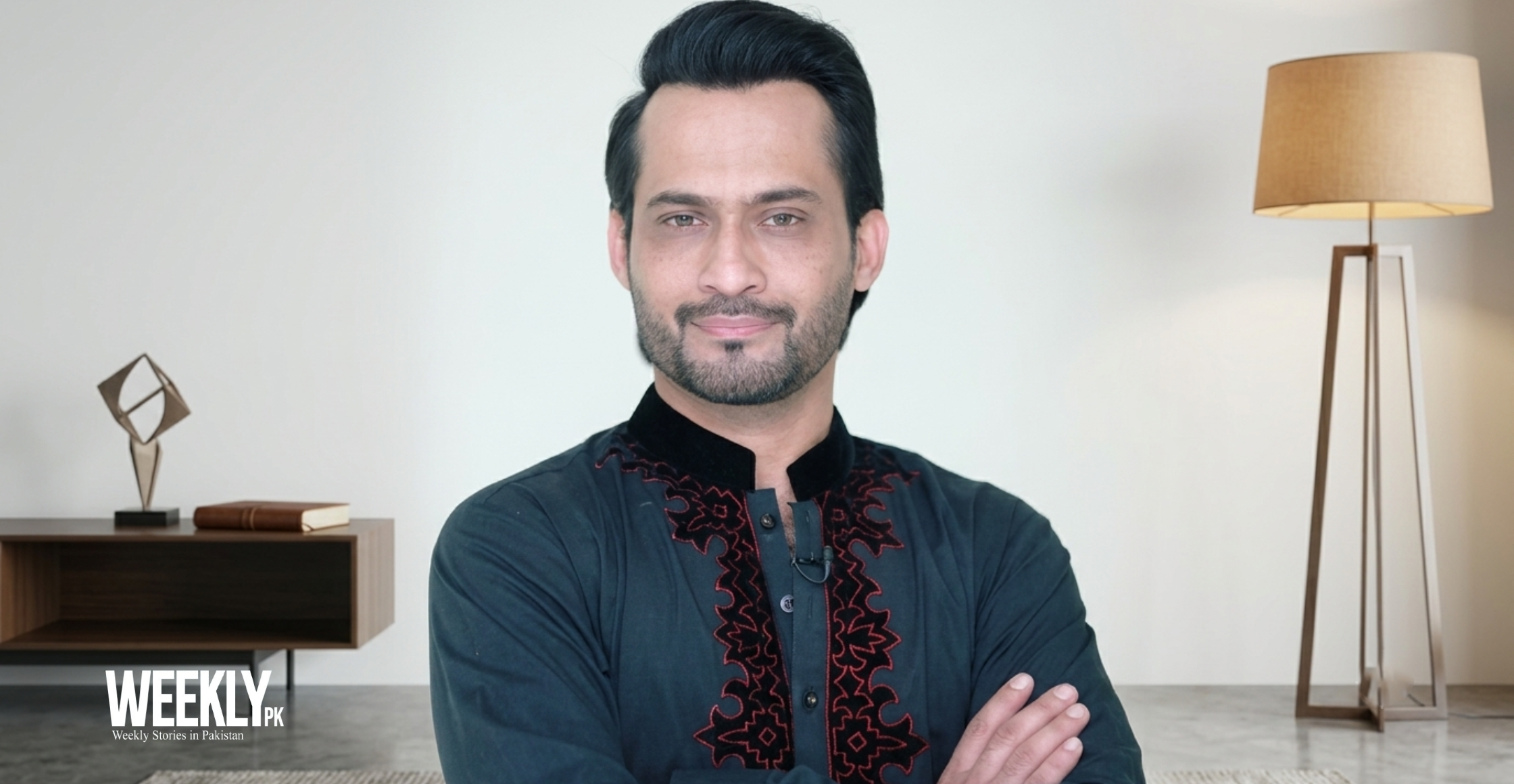
Waqar Zaka is back in the headlines, but this time it isn’t because of cryptocurrency, political commentary or another heated social media debate. Instead, the television host, digital entrepreneur and recent winner of a major international trading competition has announced what many are calling one of his most ambitious and personal initiatives yet: a plan to sell the brand-new 2026 Mercedes-Benz G-Wagon he won as the grand prize and use the proceeds to financially support the education of underprivileged children and talented students across Pakistan.
The announcement, shared through his social media platforms, quickly gained traction online as supporters praised the move while others questioned how the initiative would work in practice. Within hours, clips of his statement had spread across X, Facebook, TikTok and Instagram, with thousands of users debating whether this could become one of the country’s largest privately driven education campaigns. For someone who has built a reputation around unconventional ideas and headline-grabbing projects, the decision to liquidate a high-value luxury vehicle rather than keep it marked a noticeable and deliberate shift in focus.
Rather than discussing financial markets or digital opportunities, Waqar Zaka spoke about something far more fundamental: giving children and young people from low-income families, as well as bright students from traditional backgrounds, access to education that many simply cannot afford. The G-Wagon, awarded after he topped the global TradFi Masters competition against more than 3,000 traders using real capital, represents a substantial sum; estimates place the vehicle’s value in the range of several crore rupees depending on market and location. By choosing to sell it, Zaka is converting a personal prize into a public resource aimed at education.
According to Waqar, the initiative aims to identify children and students whose families struggle to pay school fees or access quality learning opportunities and connect them with sustained support. Instead of positioning the campaign as charity alone, he described it as a long-term investment in Pakistan’s future, arguing that the country’s greatest untapped resource is its young population. His message was simple but powerful: thousands of talented children never get the opportunity to study because financial hardship forces them out of classrooms long before they can realize their potential. The proceeds from the G-Wagon sale would form the seed funding for this effort, with the possibility of additional public participation later.
The announcement resonated with many Pakistanis because it touches on an issue that continues to affect millions of families. Rising inflation, increasing education costs and economic uncertainty have made private schooling impossible for many households, while even government schools often struggle with limited resources. Every year, countless students leave school not because they lack ambition, but because their families simply cannot afford uniforms, books, transportation or monthly fees. Waqar’s proposal attempts to bridge that gap by turning a luxury prize into direct educational support for those who need it most.
Supporters were quick to applaud the initiative, describing it as a refreshing use of both personal success and social media influence. Many argued that public figures with millions of followers have the ability to mobilize resources far more effectively than traditional fundraising campaigns. Several users even expressed interest in sponsoring students themselves if a transparent system is introduced. Comments across social media praised the idea of connecting resources directly with deserving families rather than routing contributions through multiple intermediaries, a concern that has often discouraged charitable giving in Pakistan. The fact that the funding starts with the sale of a hard-won competition prize added extra weight for many observers, who saw it as more than symbolic.
However, the announcement also raised important questions. While enthusiasm surrounding the initiative was evident, many users wanted greater clarity regarding how beneficiaries would be selected, who would verify financial need and what safeguards would be put in place to ensure transparency. Others asked whether the campaign would focus solely on school education or extend to colleges, universities, vocational training and specialized programmes in mathematics, science and emerging technologies. At the time of writing, Waqar has shared the broader vision behind the project; including support for education-driven students and an emphasis on accountability but has yet to publicly outline every operational detail, leaving many supporters waiting for further updates.
The education initiative is the latest chapter in a public career that has repeatedly evolved over the past two decades. Waqar Zaka first rose to prominence as a television host known for reality-based programming that often pushed the boundaries of conventional entertainment. Over the years, however, his public image shifted dramatically. Instead of remaining solely within television, he became increasingly associated with technology, cryptocurrency education and digital financial literacy. His online presence transformed into a platform where discussions about blockchain, investment opportunities and emerging technologies regularly attracted millions of viewers. That evolution also introduced him to an entirely new audience beyond traditional television viewers.
More recently, Waqar has also been involved in several public welfare campaigns, using his digital platforms to amplify fundraising efforts for individuals facing medical emergencies, financial hardship and disaster relief. While not every initiative has escaped criticism, supporters argue that he has consistently demonstrated a willingness to leverage his reach for causes extending beyond entertainment. The decision to sell the G-Wagon and channel the money into education appears to continue that trend, this time focusing on one of Pakistan’s most persistent structural challenges while also reflecting his personal belief that genuine progress comes from knowledge and responsibility rather than free handouts.
The timing of the announcement has also sparked a broader conversation about the role influencers and digital creators can play in addressing social issues. In an era where online personalities command audiences larger than many television channels, expectations around social responsibility have changed significantly. Increasingly, followers expect creators not only to entertain but also to contribute meaningfully to society. Campaigns centred around healthcare, education and food security have become common among public figures, reflecting a growing belief that influence carries responsibility alongside visibility. Selling a prize luxury vehicle to fund learning opportunities stands out as a particularly concrete example of that shift.
Education experts have long argued that Pakistan’s future economic growth depends heavily on improving access to quality education. According to various national and international estimates, millions of school-age children across the country remain out of school, making Pakistan one of the countries with the highest numbers of children lacking access to formal education. Economic pressures remain among the leading reasons families withdraw children from classrooms, particularly in low-income communities where every additional expense places significant pressure on household budgets. Initiatives that convert private success into public educational support have therefore been viewed by many observers as a valuable complement to broader public-sector reforms, even if they cannot replace systemic solutions.
At the same time, experts caution that programmes involving donations or prize proceeds require robust accountability mechanisms to maintain public trust. Transparent beneficiary selection, regular financial reporting and independent verification often determine whether such campaigns achieve lasting credibility. Public enthusiasm may generate initial momentum, but sustained success usually depends on clear governance and consistent communication. As interest in Waqar’s proposal continues to grow, many observers believe these elements will play a crucial role in shaping public confidence. The G-Wagon sale itself provides a clear, trackable starting point that could help build that trust if handled openly.
Social media, meanwhile, has remained overwhelmingly focused on the potential impact rather than the logistics. Numerous users shared personal stories of students forced to abandon education because of financial constraints, while others recalled teachers who quietly paid fees for struggling children out of their own pockets. Those stories transformed the conversation from one centred on Waqar himself into a wider reflection on educational inequality in Pakistan. For many readers, the announcement served as a reminder that behind every statistic lies a child whose future may ultimately depend on whether someone chooses to invest in it. The image of a competition-winning G-Wagon being sold to keep children in school has proven especially powerful in that context.
Whether the initiative evolves into a nationwide movement or remains a smaller community-driven programme will largely depend on the details released in the coming weeks. If implemented with transparency and sustained public participation, it has the potential to change the educational journey of countless children who might otherwise be left behind. The sale of the G-Wagon offers a tangible first step that distinguishes this effort from purely aspirational announcements. If nothing else, the news has already succeeded in shifting public attention towards an issue that rarely trends for positive reasons.
For now, Pakistan is watching to see what happens next. Supporters are waiting for registration details and updates on the vehicle’s sale, potential additional sponsors are looking for more information, and families hoping for educational assistance are following every update closely. In a digital landscape often dominated by controversy, outrage and fleeting viral moments, Waqar Zaka’s latest announcement has sparked a different kind of conversation; one centred not on conflict, but on opportunity. Whether that opportunity ultimately reaches the children who need it most will depend on how the initiative moves from social media promises and a sold luxury vehicle to real-world impact in classrooms across the country.
Leave a Reply