
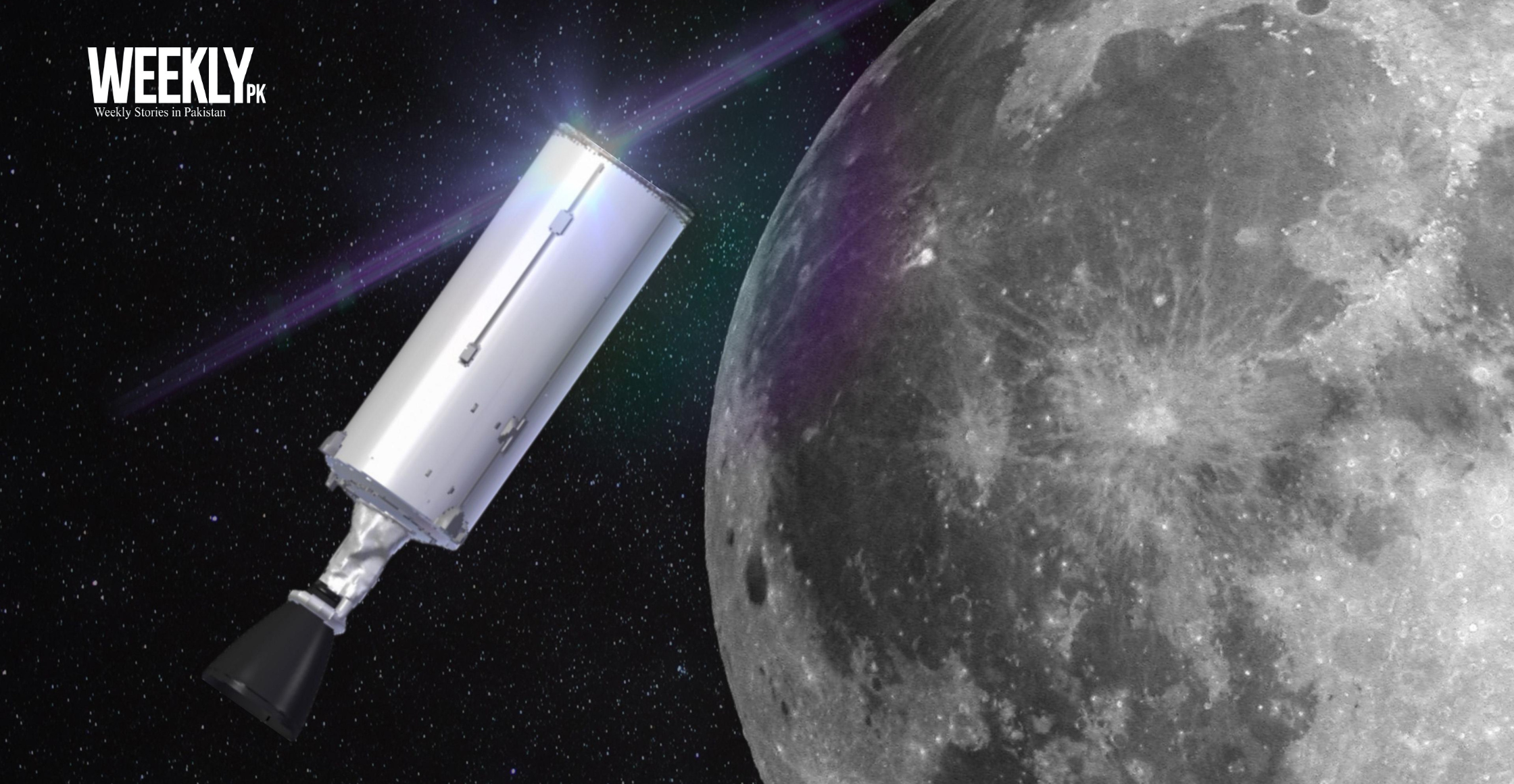
South Korea’s space agency has published a set of before-and-after images of the Moon’s surface, offering the first visual confirmation of the exact spot where a discarded section of a SpaceX Falcon 9 rocket slammed into the lunar surface earlier this week.
The Korea AeroSpace Administration (KASA) said its lunar orbiter Danuri captured the images shortly after the impact, which occurred at around 06:35 GMT on Wednesday. The agency shared the photographs on social media, placing them side by side with earlier images of the same region taken before the collision, allowing observers to spot the fresh disturbance left on the surface.
SpaceX has confirmed that the debris strike was not planned, describing it as unintentional. The rocket stage had been drifting through space for more than a year and a half before gravitational forces gradually pulled it onto a collision course with the Moon.
What Actually Hit the Moon
The object that struck the lunar surface was not an active spacecraft but the spent upper stage of a Falcon 9 rocket, the reusable launch vehicle that has become the workhorse of SpaceX’s operations. Falcon 9 rockets are built so that the first stage returns to Earth and is refurbished for future flights, while the upper stage, once it has done its job of pushing a payload into its intended trajectory, is typically left in space with no further use.
In this case, the upper stage in question launched from Florida in January last year, carrying two lunar landers as its payload. Its task was to fire its engines with enough force to send both landers out of Earth’s orbit and onto a trajectory toward the Moon. Once that job was complete, the empty stage was left behind, drifting in a long, looping orbit that carried it out toward the Moon and back again, cycle after cycle, for roughly eighteen months.
Scientists have described how the combined gravitational pull of the Earth, the Moon and the Sun, along with subtle pressure from sunlight itself, nudged the drifting stage’s path very slightly with each pass. Over time, those small nudges accumulated into a measurable shift, and astronomers tracking the object eventually determined that it was on a slow but steady path toward a lunar impact, gaining speed with every orbit.
By the time it struck the Moon, the rocket stage was travelling at an estimated 5,400 miles per hour, or roughly 8,700 kilometres per hour. Despite being an empty, inert structure, the object is substantial in size, comparable to a five-storey building, and weighs approximately 4,000 kilograms, or about 630 stone, when measured under Earth’s gravity.
A Flash Too Faint to See
Because the impact occurred at such high velocity, it produced a brief, dramatic flash of light and likely kicked up a small plume of lunar dust and debris on contact. However, that flash would have been extremely difficult to detect from Earth. The event happened during daylight hours across much of the world, and even under ideal night-time conditions, the flash would have been too faint for amateur astronomers to catch, even with high-end telescopes.
Instead, it has fallen to larger, more sophisticated observatories, including South Korea’s own space agency, to piece together exactly what happened using orbital imagery rather than ground-based observation. KASA’s Danuri orbiter, which has been circling the Moon and gathering scientific data, was positioned to capture the aftermath and is now being used to study the impact site in more detail.
No Threat to Earth, But a Bigger Question About Space Debris
Officials have been clear that the impact posed no danger whatsoever to Earth or to any operational spacecraft, satellites or missions currently active around the Moon. The rocket stage was always going to come down somewhere, and a lunar impact, while unusual, does not carry the same risks as debris re-entering Earth’s atmosphere uncontrolled.
Even so, the incident has reignited a broader conversation among scientists about the growing problem of debris accumulating in space, a concern that extends well beyond this single rocket stage. Matt Bothwell, an astronomer at the University of Cambridge, pointed to how quickly the volume of material in orbit and beyond is increasing.
According to Bothwell, space is becoming increasingly congested, with more objects being launched every year than the year before. He warned that within a few decades, the density of material in orbit could make it genuinely difficult to send spacecraft beyond Earth’s immediate vicinity without navigating around clutter.
This is not a new concern in the scientific community, but incidents like Wednesday’s lunar impact tend to bring it back into public focus. Unlike the debris field circling Earth, which includes tens of thousands of tracked objects ranging from defunct satellites to bolts and paint flecks travelling at extreme speeds, deep space debris, like a spent rocket stage drifting for years before eventually colliding with a celestial body, represents a different but related challenge: predicting and tracking objects that are no longer under any form of active control.
The Rocket’s Long History Before the Impact
The particular Falcon 9 booster involved in this event has had an active operational life. Since its original launch from Florida in January last year, the same booster section, referring to the reusable first stage rather than the upper stage that struck the Moon, has continued flying commercial missions. SpaceX has confirmed that this booster is scheduled to fly again on 10 August, marking its 18th flight, this time to carry 29 Starlink satellites into low-Earth orbit.
This distinction is worth noting for readers unfamiliar with how Falcon 9 missions work. The first stage, which returns to Earth and lands for reuse, is entirely separate from the upper stage, which does not return and is generally discarded in space once its job is done. It was this discarded upper stage, not the reusable booster now preparing for its next Starlink mission, that ended up on a collision course with the Moon.
Why This Matters for Lunar Exploration
The timing of the impact is notable given how much lunar activity is currently underway. Multiple countries and private companies have ramped up missions to the Moon in recent years, from orbiters and landers to plans for eventual crewed missions and permanent lunar infrastructure. South Korea’s own lunar programme, anchored by the Danuri orbiter, has been part of this renewed wave of interest, gathering data on the lunar surface, its resources and its environment.
As more missions head toward the Moon, incidents involving discarded rocket stages eventually reaching the lunar surface may become less of a rare curiosity and more of a recurring feature of lunar operations. Space agencies and private companies alike will likely face increasing pressure to plan for the eventual disposal of spent hardware, whether that means directing stages toward controlled disposal, adjusting trajectories to avoid future collisions with the Moon or other bodies, or developing better long-term tracking systems for objects drifting far from Earth.
For now, KASA’s imagery offers scientists a useful, if unplanned, opportunity. Studying a known impact site, with a precisely understood object, mass and impact velocity, gives researchers a rare natural experiment to better understand how such collisions affect the lunar surface, information that could prove useful for future missions involving landers, rovers or eventual human activity on the Moon.
What Comes Next
KASA has not indicated whether it will release further imagery or a more detailed technical analysis of the impact site in the coming days. Given the scientific interest in analysing craters and disturbances caused by known objects, it is likely that space agencies and independent researchers will continue examining the Danuri images and any additional data gathered by other lunar-orbiting missions in the region.
SpaceX, for its part, has not indicated any change to its operational procedures as a result of the incident, and the booster associated with the mission remains on schedule for its next Starlink launch later this month. Whether this event prompts broader policy discussions around end-of-life planning for spent rocket stages remains to be seen, but for astronomers like Bothwell, it serves as a timely reminder that the challenge of managing space debris is no longer confined to Earth’s immediate orbit.
Leave a Reply