
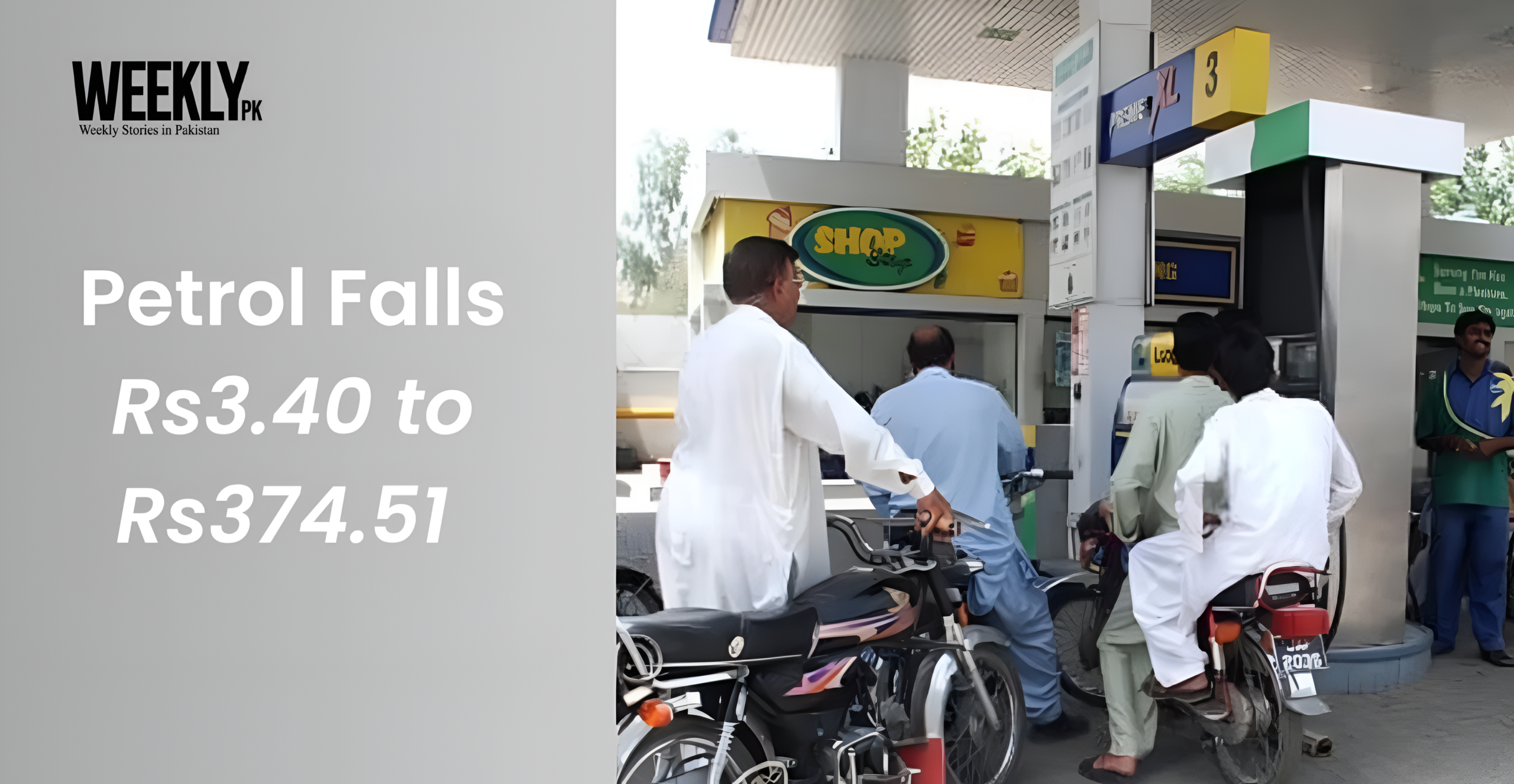
The government has cut the price of petrol by Rs3.40 per litre and high-speed diesel by Rs7.76 per litre, bringing relief of a modest kind to motorists, transporters and farmers who have been paying close to Rs400 for diesel. The new prices, announced by the Oil and Gas Regulatory Authority (OGRA) on Monday night, took effect on November 3.
Under the revised rates, petrol drops from Rs377.91 to Rs374.51 per litre, while diesel falls from Rs402.96 to Rs395.20. Business Recorder noted that diesel had gone up by Rs2.29 on Friday, from Rs400.67 to Rs402.96, while petrol had been left unchanged at Rs377.91, so Monday’s reduction more than reverses the diesel increase. OGRA said the ex-depot prices were set under the federal government’s petroleum pricing mechanism. The Petroleum Division’s notification, according to Minute Mirror, said the revised rates would apply from midnight on November 2.
The cut comes under a pricing system that changes frequently. On July 17, the government replaced weekly reviews with a daily pricing mechanism, as renewed tensions between the United States and Iran drove volatility in global oil markets and raised concerns over fuel supplies, according to Express Tribune. Under the same set of measures, the Cabinet Division ordered shops, markets, shopping malls and bazaars to close by 9pm throughout the week. Reports differ on how long the new rates will remain in force, with one outlet saying they apply for a single day and another saying three days, which suggests that prices could change again soon.
A notable element of the latest revision is a burden-sharing arrangement with domestic refineries. According to reports, the government has agreed with refineries that they will absorb an estimated Rs15 billion a month, in order to keep the petrol price about Rs15 per litre below what it would otherwise be according to international market prices. Pricing details cited by Investify linked the petrol reduction to the arrangement at Rs14.71 per litre, with refineries surrendering Rs49.02 per litre on sales to oil marketing companies, though those figures should be checked against OGRA’s own documents. One report says the government continues to collect about Rs114 per litre on petrol and Rs100 per litre on diesel in levies and charges, a figure that has featured in the debate over the petroleum levy and Jamaat-e-Islami’s protests.
The practical effect needs to be kept in perspective. Petrol remains above Rs370 and diesel is close to Rs400, as Minute Mirror observed. Compared with the Rs398.96 recorded for petrol on October 9, the latest price is about Rs24 lower, which is a meaningful change over a few weeks, but it follows a long period in which fuel costs rose sharply, and it leaves prices well above where they were a year ago. For a household that spends a large share of its budget on transport, the reduction will be felt only partially.
Diesel’s larger cut is arguably the more important of the two. The fuel is widely used by public transport, goods carriers and agricultural machinery, which means that a lower price can ease freight and operating costs across the economy. If transporters pass on even part of the saving, it could help moderate the prices of food and other goods that rely on long-distance trucking. That would matter at a time when food prices are one of the main drivers of inflation: this week’s data showed annual inflation easing to 9.61% in October, but food prices rose 2.26% in a single month. ProPakistani also reported on Tuesday that wheat imports had so far failed to bring down flour prices, a reminder that cheaper fuel does not automatically translate into cheaper staples.
Also Read: Petrol Price Rises by Rs28 in September as Daily Pricing Mechanism Keeps Pump Rates Moving
There is a limit to how far the central bank and the government can rely on fuel prices to bring inflation down. The State Bank of Pakistan raised its policy rate to 12% last week, and analysts expect a gradual decline in inflation only if energy and food prices stabilise. A single price cut does not establish a trend, and with prices now adjusted daily, the direction will depend on international crude prices, the exchange rate and the continuing conflict in the Middle East.
Questions remain about the refinery arrangement itself. How long can refineries sustain a monthly burden of Rs15 billion, and what happens to the pricing mechanism if they cannot? Is the burden-sharing a temporary measure to smooth the price path, or does it reflect a deeper adjustment in how the petroleum levy and refining margins are handled? And will consumers see a lasting reduction, or will the next revision reverse it? Neither OGRA’s press release nor the notification reviewed so far answers those questions, and they are likely to be raised in the next round of talks with the International Monetary Fund.
For now, the headline is a simple one. Petrol is Rs3.40 cheaper, diesel is Rs7.76 cheaper, and drivers will pay the new price at the pump from Tuesday. Whether that is the start of a downward path or a pause in a volatile one will be clear only in the coming days.
Compiled by the Weekly PK Business Desk.
Leave a Reply