
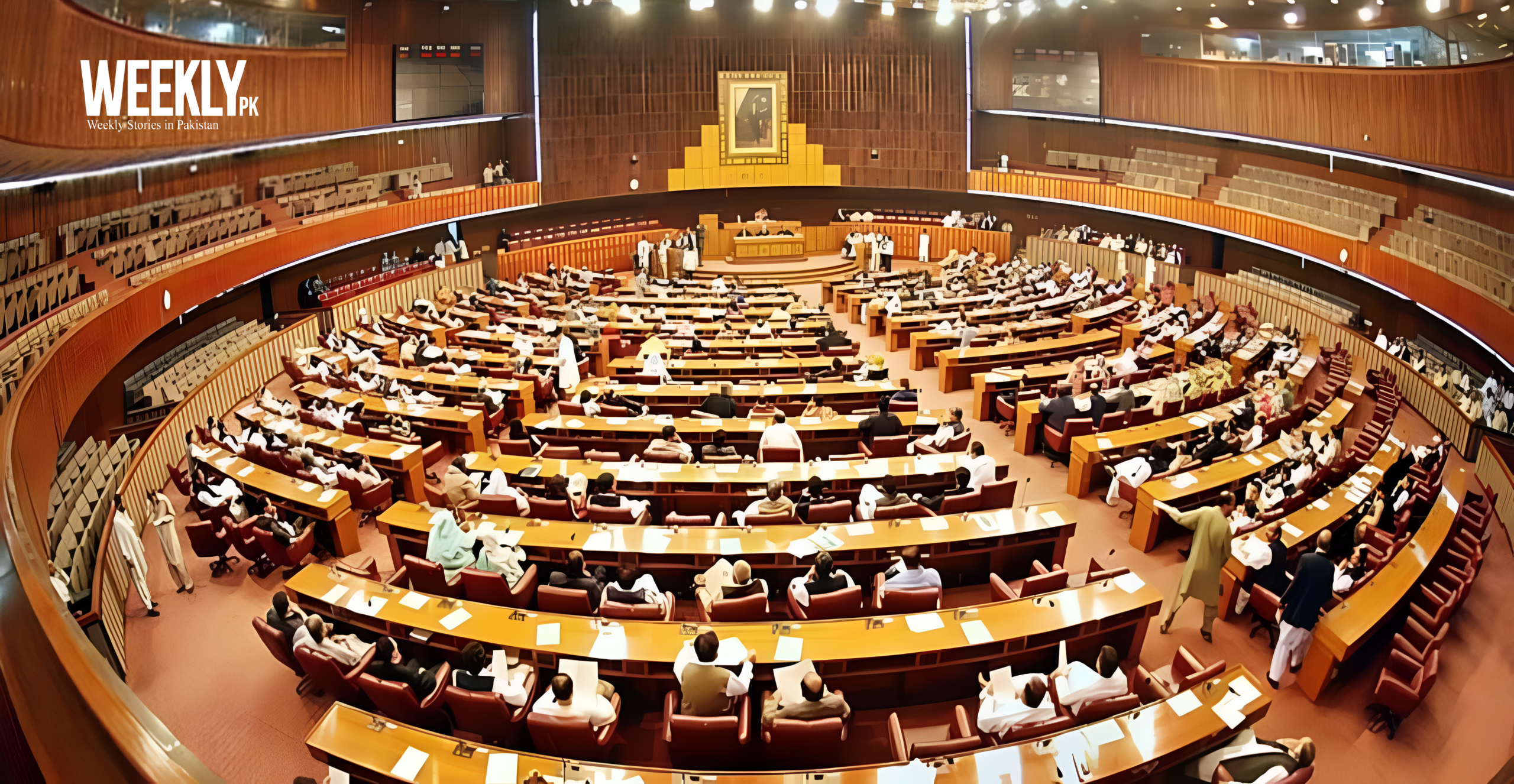
The National Assembly of Pakistan has held a series of sittings in Islamabad this week as part of its ongoing session, taking up a packed legislative agenda alongside the Senate at Parliament House. Lawmakers convened on August 17, 18 and 19 to discuss matters of national and international importance and to transact pending legislative business, according to schedules issued by the National Assembly Secretariat.
The week’s proceedings began with a comprehensive 111-point agenda issued for the concurrent sessions of the National Assembly and the Senate, with a separate 42-point agenda specific to the National Assembly session. Ahead of the sitting, the National Assembly’s Business Advisory Committee met to finalise the business of the lower house, including the duration of the session and other key procedural matters.
Among the issues raised on the floor, members submitted calling attention notices concerning growing water scarcity in Islamabad, the need for additional water purification plants, and delays in the allotment of land for the construction of the National Museum at Shakarparian. The House also moved forward on several pieces of legislation, with lawmakers introducing amendment bills covering the Employees’ Old-Age Benefits scheme, the Natural Gas Development Surcharge, and the Gas Infrastructure Development Cess.
Standing committees were also active during the week. Committees on Commerce, Defence, Privatisation and Maritime Affairs presented reports on bills before the House, including the Insurance Bill and the Copyright (Amendment) Bill. Separately, National Assembly records show committee-level activity continuing in parallel with the plenary sittings, including meetings of the Standing Committee on Privatization and the General Assembly of the Women’s Parliamentary Caucus, both held at Parliament House during the week.
The Senate met alongside the National Assembly on several of these days. On August 18, the Senate convened at 11:30 a.m. while the National Assembly met later in the afternoon at 2 p.m., with both houses taking up issues of national and global importance in addition to legislative business. The following day, the National Assembly resumed its session at half past two in the afternoon to continue discussion on national and international matters alongside further legislative work.
The current session follows weeks of uncertainty over when it would be summoned. Earlier in August, parliamentary sources indicated that the government had initially planned to call a normal National Assembly session by August 7, but the timeline shifted amid political developments, including remarks by a federal minister that had stirred debate. Under parliamentary rules, the government is bound to summon National Assembly sittings periodically to complete the mandatory number of sitting days required during its tenure, while opposition members retain the right to submit a requisition for a special session, which the Speaker must then convene within a fixed period.
Beyond the National Assembly, related parliamentary activity has also been recorded at the provincial level this week. In Khyber Pakhtunkhwa, the provincial assembly’s standing committees have continued to meet on matters ranging from education to sports and youth affairs, reflecting a broader pattern of legislative activity across federal and provincial legislatures during this period. At the federal level, the Senate, chaired by Chairman Yousaf Raza Gilani, also held meetings this week, including discussions with the Speaker of the Gilgit-Baltistan Assembly at Parliament House.
The National Assembly is the lower house of Pakistan’s bicameral Parliament and is directly elected by voters across the country’s constituencies, while the Senate functions as the upper house, giving equal representation to all provinces to balance the numerical differences between them in the National Assembly. Together, the two houses are responsible for passing federal legislation, with money bills required to originate in the National Assembly before being sent to the Senate for recommendations.
Parliamentary observers note that sessions of this scale, spanning multiple legislative items across finance, energy, insurance and copyright law, typically reflect an effort to clear a backlog of pending business before the House moves into its next scheduled recess. Committee reports presented this week are expected to inform further debate and voting in subsequent sittings, though no final passage dates have yet been announced for the bills introduced.
The National Assembly Secretariat has indicated that further sittings will be announced as the session progresses, with committee meetings continuing in parallel at Parliament House in Islamabad.
Leave a Reply