
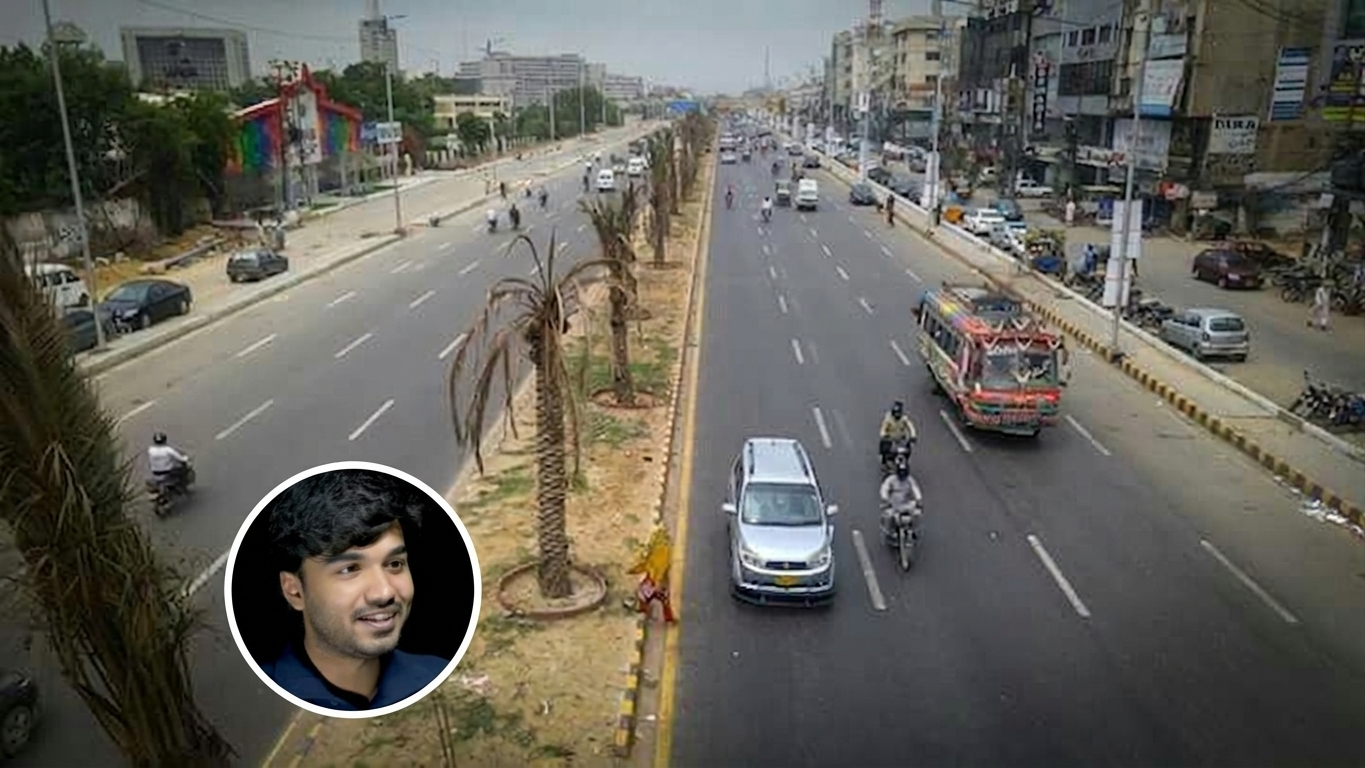
Mir Raza, the twenty six year old entrepreneur behind Karachi’s popular dessert chain, was found dead in Gulistan e Jauhar on Wednesday, days after he was allegedly abducted from outside his home in the city’s PECHS neighbourhood, in a case that has reignited public anger over the deteriorating law and order situation in Pakistan’s largest metropolis.
The body of Mir Raza Ali, son of Mir Hassan Ali and the founder of the widely known waffle and dessert outlet Wafflix, was recovered from bushes near the Shadi Qila wedding hall in Gulistan e Jauhar Block 1. Police shifted the remains to the Jinnah Postgraduate Medical Centre for a post mortem examination, a procedure that investigators say will be crucial in establishing the precise sequence of events that led to his death.
According to officers involved in the recovery operation, the body appeared to have been lying in the area for one to two days before it was discovered. Investigators say it bore what they described as apparent burn marks, injuries so severe that formal identification through facial features was not possible. It was left to Raza’s father to confirm his son’s identity through the clothing he was wearing, a grim task that underscores the brutality allegedly inflicted upon the young businessman in his final hours.
Station House Officer Kamran Qureshi, who is overseeing the investigation from Ferozabad Police Station, said that preliminary evidence points toward a sequence in which Raza was tortured before being shot. An injury mark on his back was also noted by investigators, though police have been careful to stress that the exact cause of death will only be confirmed once the post mortem report is finalised. Qureshi’s remarks, delivered in the aftermath of the recovery, have already set the tone for what is expected to be a closely watched investigation, given the profile Raza had built for himself as a young entrepreneur in the city’s competitive food and beverage market.
The case began several days earlier, when Raza was reported missing after leaving his home at 4 am in the morning. A kidnapping case had already been registered at Ferozabad Police Station on Tuesday, a day before his body was found, after his father approached police with a complaint alleging that his son had been taken by unidentified individuals.
The FIR lodged by the family lays out a timeline that has since become central to the investigation. Raza is said to have returned home from his Wafflix outlet near Bahadurabad Chowrangi during the night between July 27 and July 28. At around four in the morning, he reportedly told his mother that he was stepping outside for what he described as ten minutes, He never returned.
When his mother later attempted to reach him on his mobile phone, she found it switched off, according to the family’s account. What followed was a frantic search by relatives who checked nearby areas and contacts before alerting Madadgar 15, the emergency helpline often used in Karachi to report missing persons and abductions. When those efforts failed to produce any information about his whereabouts, the family proceeded to file the kidnapping case against unidentified suspects, setting off what would become a short but harrowing search that ended in tragedy.
Police say they are now working to piece together what happened to Raza in the roughly two days between his disappearance from PECHS and the discovery of his body several kilometres away in Gulistan e Jauhar. Investigators have begun reviewing CCTV footage collected from cameras installed around the Shadi Qila wedding hall, in the hope that recordings from the area might offer clues about how the body came to be left in the bushes nearby, and whether any vehicles or individuals were seen in the vicinity around the time investigators believe the body was dumped.
The abduction and killing of a young entrepreneur known to a considerable segment of Karachi’s youth, particularly through his dessert brand’s popularity on social media, has struck a nerve in a city that has in recent years grown increasingly anxious about street crime, kidnappings for ransom, and targeted violence against businesspeople. Wafflix had, in a relatively short span, built a loyal customer base around Bahadurabad, an area known for its density of eateries and its status as something of a food hub for the city’s middle and upper middle class residents. Raza’s death has therefore reverberated well beyond his immediate family and friends, drawing reactions from customers, fellow small business owners, and residents who say the incident is yet another sign that no one, regardless of standing or visibility, is safe from Karachi’s rising tide of violent crime.
In the hours following news of his death, attention also turned to the digital footprint Raza and his business had built over the years. Both his personal social media accounts and the official pages associated with Wafflix appeared to have been deleted or otherwise taken down, a development that has puzzled some followers and fuelled speculation online about who might have been behind the move and why. It remains unclear whether the accounts were removed by family members seeking to shield themselves from public attention during a period of grief, by platform moderators responding to reports, or by other parties entirely. Police have not commented on whether the disappearance of these accounts forms any part of their ongoing investigation, though the timing, coming so soon after the discovery of his body, has not gone unnoticed among those following the case closely.
This is not the first instance in recent weeks of a young professional falling victim to violent crime in Karachi. Just days earlier, a young doctor identified as Akash was shot dead during what police described as an exchange of gunfire linked to an alleged bank robbery attempt near Teen Talwar. According to Senior Superintendent of Police South, Mahzoor Ali, Dr Akash had withdrawn cash from a bank and was travelling with his father and cousin to another branch when the incident occurred. Police say the family’s vehicle came to a stop outside the bank when armed men allegedly approached from behind, prompting a security guard stationed at the premises to open fire under the belief that the occupants of the vehicle were being targeted by robbers. In the ensuing exchange of gunfire, Dr Akash was killed, a case that has itself remained under scrutiny as police continue to investigate the actions of all parties involved, including reports that some suspects allegedly connected to that case were later killed in what police described as an exchange of fire involving their own associates.
Taken together, the killing of Mir Raza and the shooting of Dr Akash have added to a growing sense of unease among Karachi residents, particularly professionals and small business owners who increasingly view routine daily movement through the city, whether for work, banking errands, or simply stepping outside one’s home, as carrying a degree of risk that would have seemed unthinkable in calmer years. Both cases involve young men in their twenties, both cut down in circumstances that remain only partly understood, and both now under active police investigation with the public watching closely for updates.
For Raza’s family, the wait for answers has been especially agonising given how it began. What was described as a ten minute errand outside the family home in the early hours of the morning turned into a two day search that ended not with his safe return but with the recovery of his body kilometres away, allegedly bearing signs of torture and a gunshot wound. The family’s kidnapping complaint, filed the day before his body was found, now forms a central piece of evidence as investigators attempt to reconstruct his final movements and identify who might have taken him from outside his own home.
Police officials have so far declined to speculate publicly on a motive, though the nature of Raza’s business and his visible profile as a young, apparently successful entrepreneur has led some observers to question whether he may have been targeted specifically because of his perceived financial standing. Kidnappings for ransom remain a persistent, if underreported, feature of criminal activity in parts of Karachi, and investigators are understood to be examining whether any ransom demand was communicated to the family during the period he was missing, though no such demand has been publicly confirmed by police or by the family.
The investigation is also expected to examine phone records associated with Raza’s mobile device, which the family says was switched off shortly after he stepped outside his home. Establishing the last known location of the phone before it went dark could offer investigators a crucial lead in tracing his movements between the time he left his house in PECHS and the eventual discovery of his body in Gulistan e Jauhar, an area that lies a considerable distance from his residence and place of business.
As is often the case in high profile crimes of this nature in Karachi, the incident has prompted renewed calls from residents and community members for greater police visibility and improved security measures in residential neighbourhoods, particularly during the late night and early morning hours when Raza is believed to have been taken. Critics of the city’s law enforcement apparatus have pointed to the case as further evidence of gaps in neighbourhood policing and surveillance infrastructure, arguing that better lit streets, more consistent police patrols, and a stronger network of security cameras in residential pockets like PECHS could help deter, or at minimum aid in the swift resolution of, such crimes.
Officials at Ferozabad Police Station have indicated that the investigation remains active and that additional details are expected to emerge once the post mortem report is completed and CCTV footage from the Gulistan e Jauhar area has been fully reviewed. Authorities have not ruled out the possibility of additional arrests or the identification of suspects in the coming days, though as of Wednesday no individuals had been named or apprehended in connection with either the alleged abduction or the killing itself.
For now, the death of Mir Raza has left a void among those who knew him personally and among the wider community of customers who had come to associate his name with the Wafflix brand he built. The sudden disappearance of both his personal and business social media presence in the aftermath of his death has only added to the sense of confusion and unease surrounding the case, leaving unanswered questions not just about who was responsible for his abduction and killing, but also about the circumstances surrounding the erasure of his digital identity so soon after his passing.
As Karachi continues to grapple with a string of violent incidents targeting young professionals and business owners, the case of Mir Raza stands as a stark reminder of the risks that persist even for those who have found visible, public success in the city’s competitive commercial landscape. Investigators say the coming days will be critical in determining what exactly happened to the young entrepreneur between the moment he stepped outside his home for what he told his mother would be ten minutes, and the moment his body was discovered, allegedly bearing signs of torture, in the bushes near a wedding hall several kilometres away.
Leave a Reply