
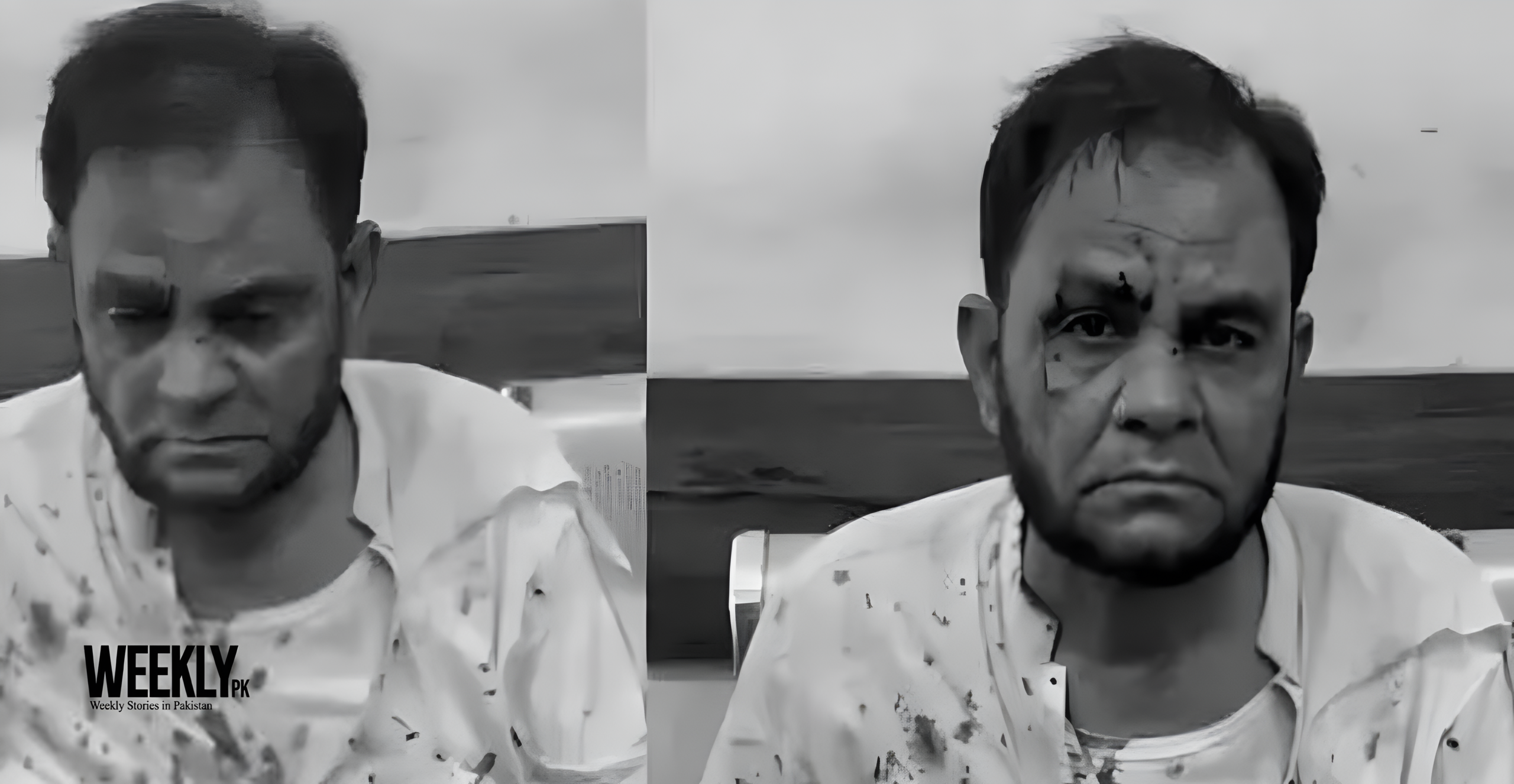
Professor Muhammad Arif Saqi, a senior faculty member at the University of Karachi who was assaulted earlier this month following a minor road accident near Safoora Chowrangi, has pardoned the prime suspect in the case, Konain Shah, after the suspect visited his home and personally apologised.
Confirming the out-of-court settlement to Dawn, Prof Saqi said the suspect, who had secured bail in two cases registered against him, arrived at his residence along with his father and father-in-law, where the matter was resolved amicably. The visit marked the resolution of a case that had drawn attention in academic and legal circles after a professor, rather than quietly absorbing the incident, chose to pursue formal legal action against his attacker.
The incident itself occurred on September 8, when Prof Saqi was travelling to the university in a car driven by his nephew. A minor accident took place during the journey, damaging the nephew’s vehicle. When Prof Saqi asked for payment to cover the repair costs, he and his nephew were assaulted and illegally detained by a group of armed men at the scene. A case was subsequently registered over the assault and unlawful confinement, and Konain Shah was arrested and later remanded into police custody before eventually securing bail, sent briefly to prison as the case moved through its early stages.
Explaining his decision to pursue formal action in the first place, Prof Saqi said that as a teacher, his conscience would have troubled him had he failed to raise his voice against what he described as an injustice. He said he also felt that if he stayed silent and the same suspect went on to mistreat someone else in a similar situation, he would consider himself partly responsible for not having spoken up when he had the opportunity to. That sense of obligation, he said, was what led him to lodge the original FIR rather than settle the matter privately from the outset, a decision aimed less at personal grievance and more at ensuring the suspect understood the seriousness of what had happened and had the chance to, in the professor’s words, realise his mistake and repent.
Prof Saqi said that objective had ultimately been achieved when Konain, accompanied by his father and father-in-law, arrived at his residence on Sunday night and expressed genuine regret over his conduct. Reflecting on his decision to accept the apology and settle the matter rather than continue pursuing the case through the courts, the professor said he did not consider it advisable, particularly as an educator, to adopt what he called an attitude of stubbornness once genuine remorse had been shown. As part of the settlement, the suspect also paid compensation for the repairs to the online taxi vehicle that had been driven by Prof Saqi’s nephew at the time of the original accident, with the vehicle’s owner reportedly expressing satisfaction with the quality of the repair work carried out.
The case had moved relatively quickly through Karachi’s legal system in the roughly two weeks between the original assault and this week’s resolution. Three individuals were initially held in connection with the assault on the professor and his nephew, with the case escalating to Konain Shah being formally remanded into police custody before later being sent to prison as proceedings continued. That the matter has now concluded through a personal reconciliation between the two parties, rather than a prolonged trial, reflects a pattern not uncommon in cases of this kind in Pakistan, where victims retain the legal right to pursue formal prosecution but often choose to accept a sincere apology and compensation once it is offered, particularly when the accused demonstrates visible remorse through direct, in-person engagement with the affected party’s family.
For Prof Saqi, the resolution appears to close a chapter that began with what should have been a routine, minor traffic accident and escalated, briefly, into a case that drew formal police and judicial involvement. His decision to speak publicly about both the assault and his eventual forgiveness offers a rare, first-person account of how such disputes are sometimes resolved outside the formal machinery of prosecution, even after that machinery has already been set in motion.
Compiled by the Weekly PK Staff Desk.
Leave a Reply