
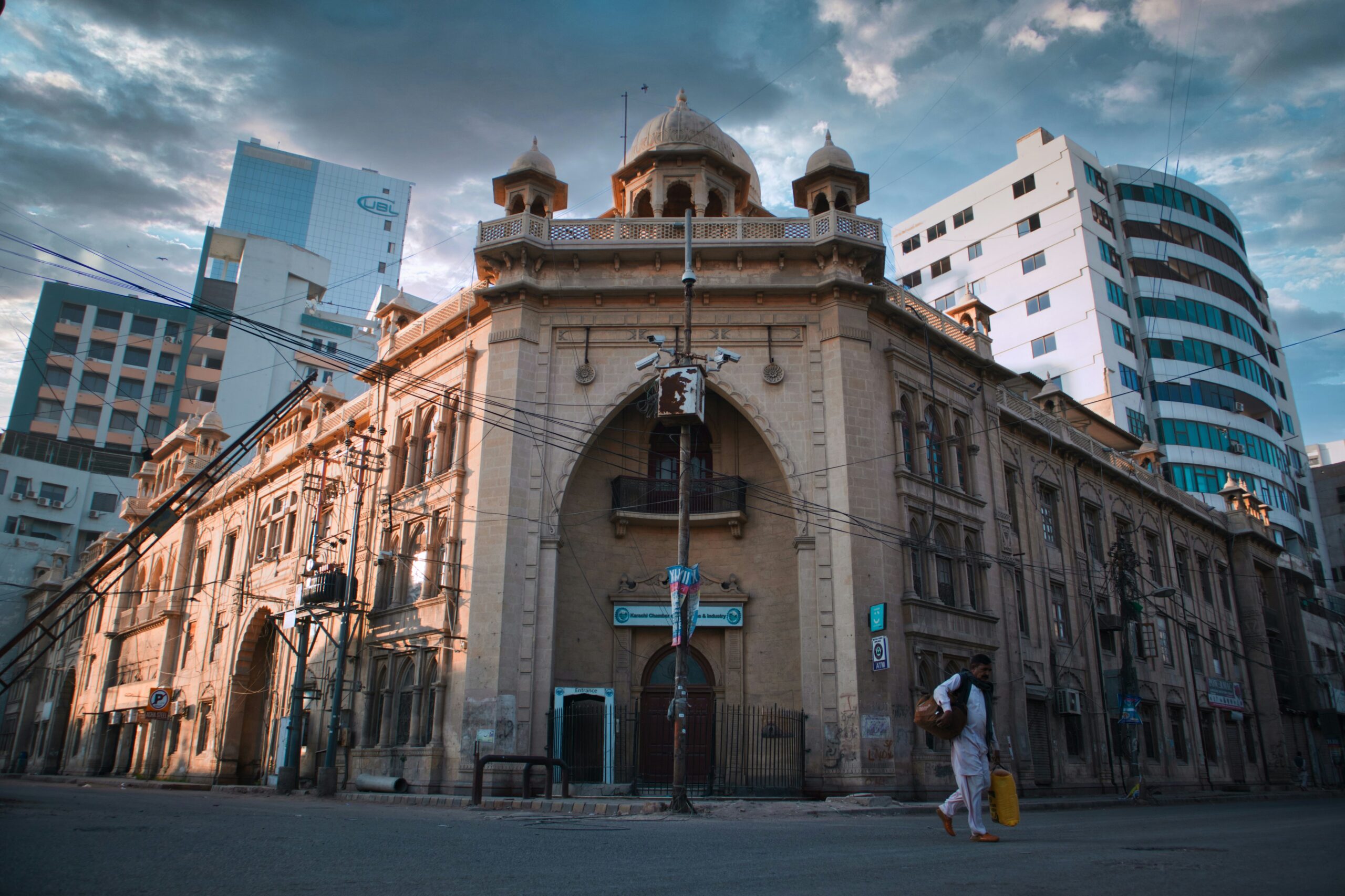
The Karachi Metropolitan Corporation has approved a budget of Rs55.28 billion for the current fiscal year, passed through a majority vote during a City Council session chaired by Mayor Barrister Murtaza Wahab. The vote was not without friction, however, as opposition members on the council benches abstained from the final count, citing what they described as an uneven distribution of development schemes across the city’s union councils.
According to officials familiar with the budget’s structure, total revenue for the year is estimated at Rs55.28 billion, with total expenditures projected at Rs55.13 billion, leaving a surplus of roughly Rs146 million. That surplus, while modest against the size of the overall budget, is being presented by the mayor’s office as evidence of improving fiscal discipline within the corporation.
A large share of the funding is earmarked for infrastructure and civic works. Reports indicate Rs200 million has been set aside for road construction and rehabilitation, and Rs150 million for cleaning stormwater drains, while Rs4.63 billion will go toward infrastructure schemes under the district Annual Development Programme. For a city that floods with predictable regularity during monsoon season, the stormwater and drainage allocations in particular are likely to draw scrutiny over the coming months, both from residents and from opposition councillors who have raised concerns about how such funds are ultimately distributed among union councils.
The budget session also touched on how local government funding reaches the neighborhood level. Council member Najmi Alam raised concerns during the debate about clogged drains linked to the widespread use of plastic bags, and pushed for individual union councils to take responsibility for banning them locally while also investing in rainwater harvesting to ease the city’s dependence on groundwater extraction, which he warned is worsening subsoil conditions and could add to Karachi’s earthquake vulnerability over time. Under the City Local Infrastructure Program, each union council has reportedly been allocated Rs20 million for localized development work, a figure that opposition members argued still falls short of what many neighborhoods actually need.
On the revenue side, the corporation is expected to draw heavily on government grants, recovery of dues from K-Electric, and financing tied to the World Bank-backed Competitive and Liveable City of Karachi project. Union council grants have also been increased, moving from Rs500,000 to Rs1.2 million, a change local government officials describe as an effort to give union councils more direct control over small-scale neighborhood projects rather than routing every decision through the central corporation.
Mayor Wahab has framed the budget as the product of sustained reform over the past two years and has pledged that development schemes will be distributed evenly across all areas of the city, a promise that has been met with skepticism from opposition leaders who say similar assurances in past years were not fully honored. Whether that pledge holds up will likely become clearer as individual union councils begin drawing down their allocations over the coming fiscal year.
For residents, the practical test of this budget will not be the topline number but whether long delayed projects, from road repairs to drainage work, actually materialize in their own neighborhoods before the next monsoon season arrives.
— Compiled by the Weekly PK Staff Desk
Leave a Reply