
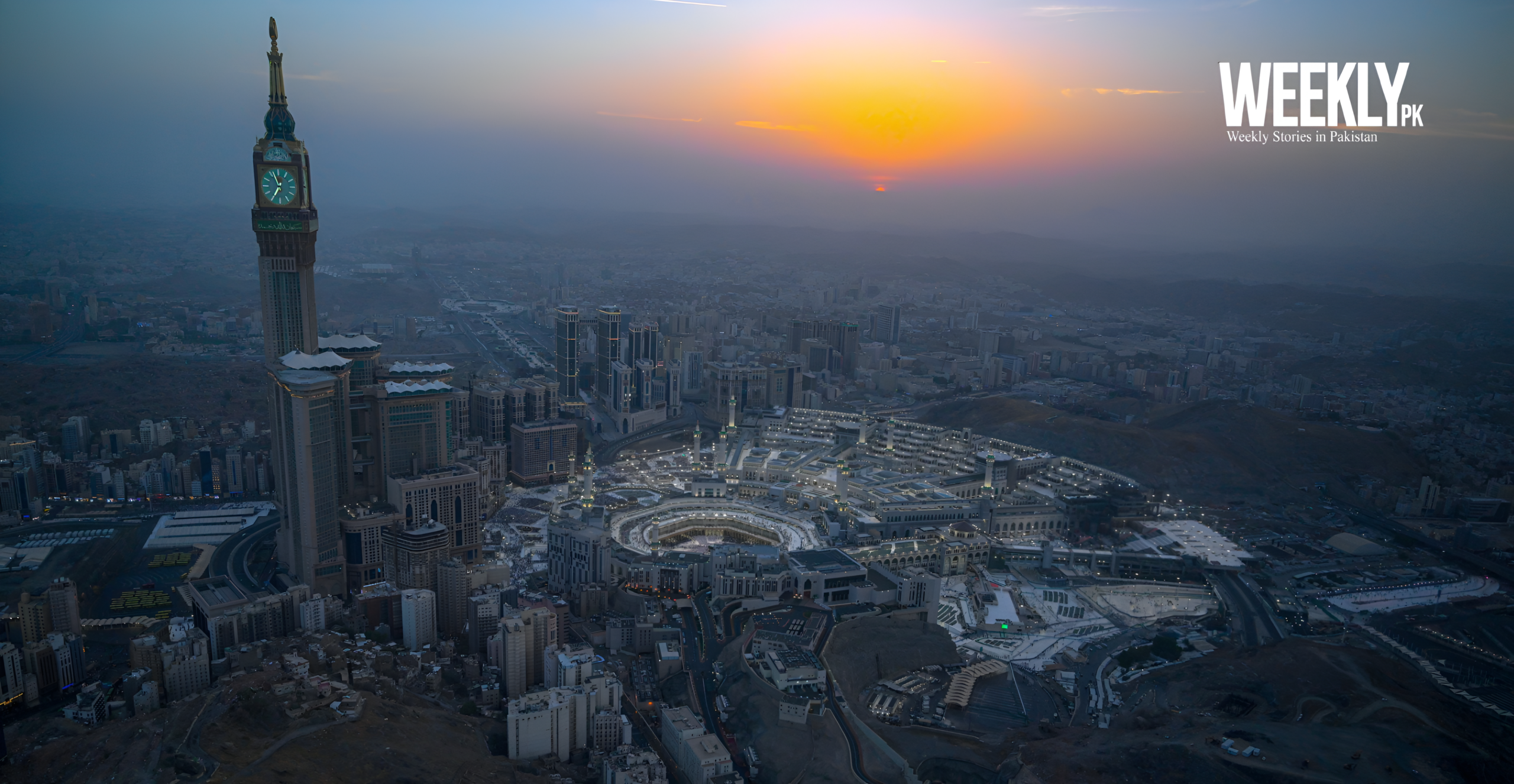
The Saudi-led coalition intercepted a Houthi drone before it entered Mecca this week, triggering the first security alert in Islam’s holiest city in nearly a decade, as a sharply escalating conflict between Saudi Arabia and Yemen’s Houthi rebels continues to wound civilians, disrupt oil production and threaten one of the world’s most critical shipping corridors.
Saudi authorities said the drone was intercepted before reaching Mecca, home to the Kaaba, the site toward which roughly two billion Muslims worldwide face during daily prayers. The alert was swiftly lifted after a few minutes, with a similar alert activated at the same time for Taif and Jeddah, Saudi Arabia’s second-largest city, suggesting the drone’s flight path had raised concern across multiple population centers rather than a single, isolated target. A Houthi military source strongly rejected the claim that Houthi forces posed any threat to Mecca or other Islamic holy sites, telling Yemen’s SABA news agency, “We categorically deny that there is any threat from Yemen directed at the city of Mecca or any other holy sites,” and describing the reports as “misinformation.” Saudi officials have previously described the security of pilgrims visiting Mecca as a “red line” in the conflict, a framing that underscores just how symbolically significant this week’s incident was, regardless of the Houthis’ denial of intent.
The Mecca incident is the latest flashpoint in a conflict that has escalated dramatically since early September, when a wave of Houthi missile and drone attacks wounded more than 70 people and ignited fires at oil facilities and utilities across southern Saudi Arabia. Major-General Turki al-Maliki, spokesman for the Saudi-led coalition, said the attacks hit “civilian and economic facilities” in the cities of Abha, Jazan, Najran and Khamis Mushait, describing the strikes as a “dangerous escalation” and a “blatant violation” of Saudi sovereignty. Saudi officials separately said the wounded included women and children, underscoring the civilian toll of strikes officially described as targeting economic and infrastructure sites. The Houthis said the attacks were carried out in retaliation for more than 120 strikes Saudi forces had launched on Yemen over the preceding three days, with military spokesman Yahya Saree stating that Yemeni armed forces had conducted “a large-scale, long-range military operation” using dozens of ballistic missiles and drones. Houthi-linked media separately accused Saudi Arabia of carrying out a series of strikes in Yemen’s Taiz province around the same period, describing renewed raids on the Al-Waziyah district, illustrating how both sides have continued trading blame for initiating each fresh round of the conflict.
The renewed fighting follows the collapse of a roughly four-year truce that had largely held since a UN-brokered ceasefire in April 2022, a period that had offered Yemen its longest stretch of relative calm since the war began. Hostilities began escalating again after the Houthis declared a blockade on Saudi shipping in July and gained control of critical points along the country’s Bab al-Mandeb coastline, a strategically vital waterway connecting the Red Sea to global shipping lanes and one of the most heavily trafficked chokepoints in global maritime trade. Fighting has since intensified across multiple fronts inside Yemen, including the country’s west coast, with Saudi-backed government forces claiming territorial gains in the provinces of Hodeida, Taiz and Baydah, even as the Houthis have continued launching attacks on Saudi oil facilities and tankers moving through the Red Sea, a dual-front conflict that has made it increasingly difficult for either side to claim clear momentum.
The economic stakes of the conflict extend well beyond Saudi Arabia’s borders. The fighting threatens to squeeze shipping through Bab al-Mandeb, a critical route for oil and global trade along the Arabian Peninsula, at a moment when the ongoing Iran war has already nearly halted shipments through the Strait of Hormuz, a separate waterway that moved roughly one-fifth of the world’s oil before that conflict began. With two of the region’s most important oil shipping routes now simultaneously disrupted, the renewed Saudi-Houthi conflict has delivered a fresh jolt to a global economy already unsettled by nearly three years of overlapping regional wars, compounding pressure on energy markets that had already been absorbing repeated shocks from the broader Middle East conflict throughout the year.
The conflict has also drawn international diplomatic reactions well beyond the immediate region. Russian Foreign Minister Sergey Lavrov, speaking during talks with his Saudi counterpart Prince Faisal bin Farhan Al Saud, said the Houthi attacks on Saudi Arabia were counterproductive and damaging to the global economy, adding that resolving the underlying issues through military means was unacceptable, a notable intervention from a country that has often positioned itself as a mediator in regional disputes even while pursuing its own separate conflicts elsewhere. Separately, Pakistan told the United Nations that the Houthi attacks on Saudi Arabia had brought the broader Middle East conflict to a “dangerous juncture,” reflecting growing international concern that the renewed fighting could further destabilize a region already strained by simultaneous conflicts involving Iran, Israel and now Yemen’s civil war reigniting after years of relative calm. Pakistan’s statement carries particular weight given its own longstanding defense relationship with Saudi Arabia, including a recently signed defense pact between the two countries.
The current escalation marks a sharp resurgence of a conflict dating back to 2015, when Saudi Arabia first intervened in Yemen’s civil war after the Iran-aligned Houthis seized the capital, Sanaa, and ousted the country’s internationally recognized government. That original intervention, and the years of fighting that followed, left tens of thousands dead and pushed Yemen to the brink of famine before the 2022 truce brought a fragile period of relative calm that many hoped might prove lasting. Humanitarian organizations have separately warned that the renewed conflict risks compounding an already dire situation inside Yemen, where shortages of basic medical supplies, including vaccines, have raised fears for the health of millions of children even before the latest round of fighting resumed. With that truce now effectively shattered and attacks reaching as far as the outskirts of Mecca itself, the coalition has said it will respond “firmly” to further Houthi strikes on Saudi urban areas, raising the prospect of continued escalation in the weeks ahead as both sides show little indication of stepping back from the conflict, and as the broader region continues to absorb the compounding effects of multiple, simultaneous wars playing out across the Middle East.
Leave a Reply