
The idea of using a referendum to create new provinces has lost support from both sides of the political divide in a matter of days, with the Pakistan Tehreek-e-Insaf (PTI) reversing its position within 24 hours and senior Pakistan Peoples Party (PPP) leader Raza Rabbani warning that a public vote cannot override the Constitution. The government has said it has not fixed a date for any referendum, and Al Jazeera notes that there is still no formal proposal or agreement among the governing parties.
The turn began with PTI’s own mixed signals. A day before its reversal, PTI Chief Whip in the National Assembly Malik Aamir Dogar had supported the idea of a referendum, saying his party would take a final decision on a proposed 28th Constitutional Amendment when its draft was presented to parliament. On Saturday, PTI Information Secretary Sheikh Waqas Akram backtracked, describing the referendum proposal as an absurd and futile exercise and saying it could not replace a majority vote or a constitutional bill in the National or provincial assemblies, according to The Nation. He argued that floating a referendum instead of introducing legislation validated the party’s long-standing claim that the sitting assemblies lack legitimacy because they were formed on what he called a stolen mandate. He added that the matter would be discussed by the parliamentary party, the political committee and the core committee, but that the final authority rested with jailed founder Imran Khan, and that PTI would form a policy on new provinces only after its leaders were given direct access to him.
PTI Chairman Barrister Gohar Ali Khan set out the party’s position on Monday in Islamabad. He said the creation of new provinces required a constitutional amendment and that a referendum could not serve as an alternative, adding that any such amendment would need a two-thirds majority in both the National Assembly and the Senate, and that provincial assemblies would also have to approve relevant changes by a two-thirds majority, according to Aaj News and Daily Pakistan. Changing existing provincial boundaries, he said, would involve fulfilling the constitutional requirements as well. Gohar said the party would consult its committees, allies and the joint opposition, and Imran Khan, before announcing a final position, and he criticised conflicting remarks by PPP and PML-N ministers on the issue as a staged political exchange. He also said Interior Minister Mohsin Naqvi had not discussed the matter with PTI, and used the occasion to criticise the 26th and 27th Constitutional Amendments and to warn against weakening the judiciary.
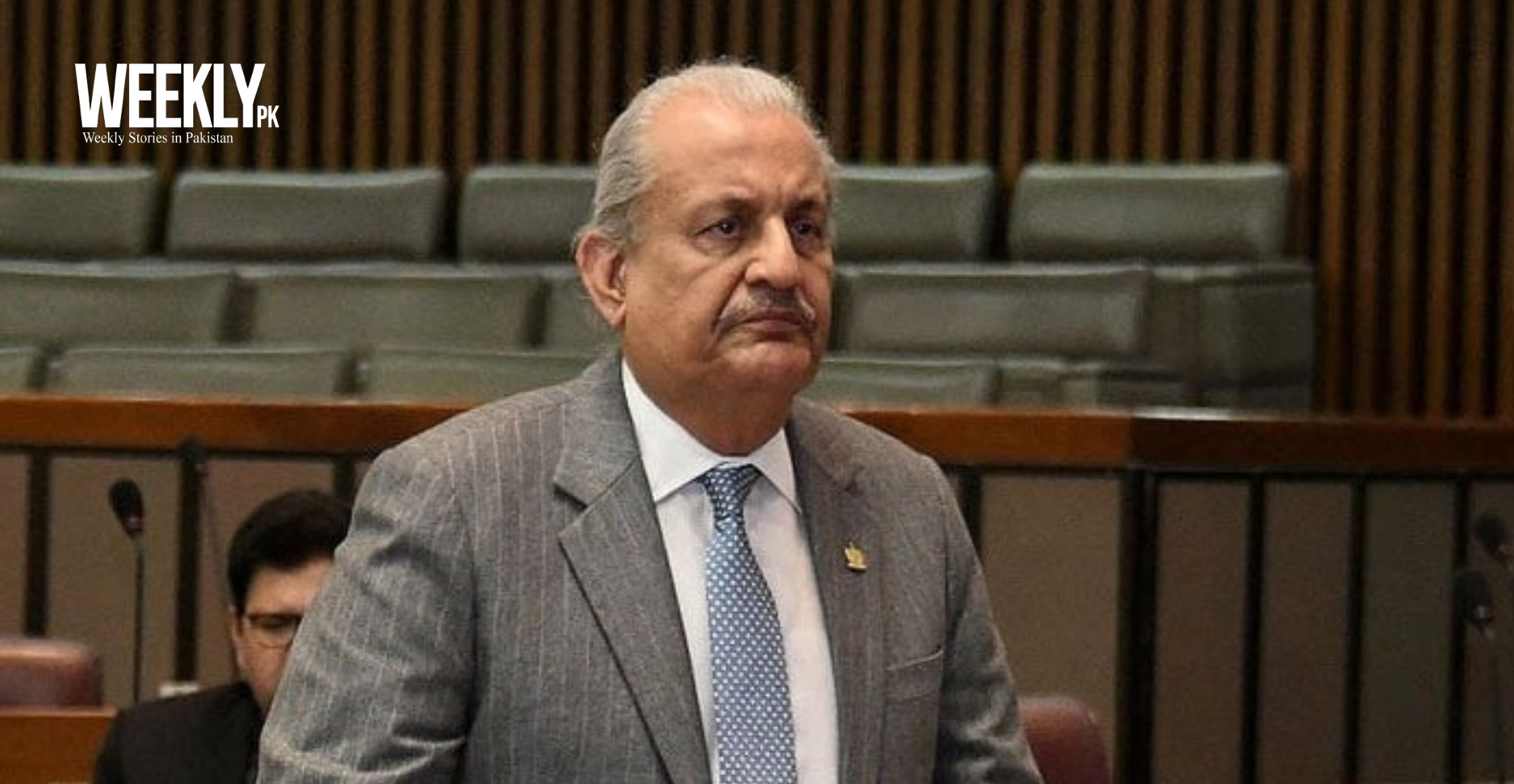
The strongest constitutional argument came from the PPP. In a statement on Sunday, Raza Rabbani, a former Senate chairman and a principal architect of the 18th Amendment, rejected the use of a referendum as a means of changing provincial boundaries, saying it could not override the procedure laid down in the Constitution. He said a public vote could not independently alter the territorial limits of any province, and that the Constitution required approval from the relevant provincial assembly for any such change. He also described the suggestion of seeking judicial endorsement of referendum results as an attempt to undermine the constitutional authority of provincial assemblies, and warned that introducing a new interpretation of the Constitution would be equivalent to amending its fundamental principles. The remark suggests that proposals under discussion may include asking a court to validate a referendum, a detail that has not been confirmed by official sources.
The positions of the PPP and PTI differ in motive but converge on procedure. For the PPP, which governs Sindh and has said any forced division of the province could lead to bloodshed, the Constitution’s requirement of provincial assembly approval is a safeguard. For PTI, which says the current assemblies were elected on a stolen mandate, the argument is that a referendum would sidestep parliament and create a shortcut. Both therefore insist on the constitutional amendment route, which is difficult. A bill to alter a province’s boundaries would need two-thirds support in parliament and in the affected provincial assembly, and the Sindh Assembly has previously passed resolutions opposing new provinces, as Nukta reported earlier this month.
The government’s side has been less specific. Information Minister Attaullah Tarar has described a referendum as a constitutional and legal mechanism to ascertain public opinion, saying that if the people of Pakistan and Sindh want more provinces, they should be created, and that if not, they should not. Defence Minister Khawaja Asif has said that new units should not be created on the basis of language, ethnicity or political interests. The reports reviewed do not describe any draft legislation or a formal government proposal, and the Presidency and the Prime Minister have said that matters would be resolved through dialogue. That leaves the proposal in an unusual position: widely discussed, publicly opposed by two major parties on constitutional grounds, and not formally tabled.
The surrounding politics complicates matters. The talk of a 28th Amendment has raised concerns among opposition parties that the debate on provinces could be linked to wider constitutional changes, including to the judiciary, which is why Gohar and Rabbani both referred to judicial independence in their statements. The prospect of a package of amendments, with new provinces as one part, would require support from parties that are currently disagreeing publicly, and it would face scrutiny from provincial assemblies.
Several questions will shape the next stage. Will the government table a draft amendment, and if so, will it include a referendum or a route through parliament? Will the PML-N, whose position is decisive in Punjab, state its view? Can any proposal obtain two-thirds support when the opposition and a key coalition partner are both on record opposing the referendum route? And what would the public say if asked? None of the reports reviewed provides credible polling, and the claims on all sides about popular demand remain unverified.
For now, the referendum idea has opponents in the PPP and PTI, who agree on little else, and no date. The proposal’s supporters must either find a constitutional path or leave the subject at the level of discussion.
Compiled by the Weekly PK Political Desk.
Leave a Reply