
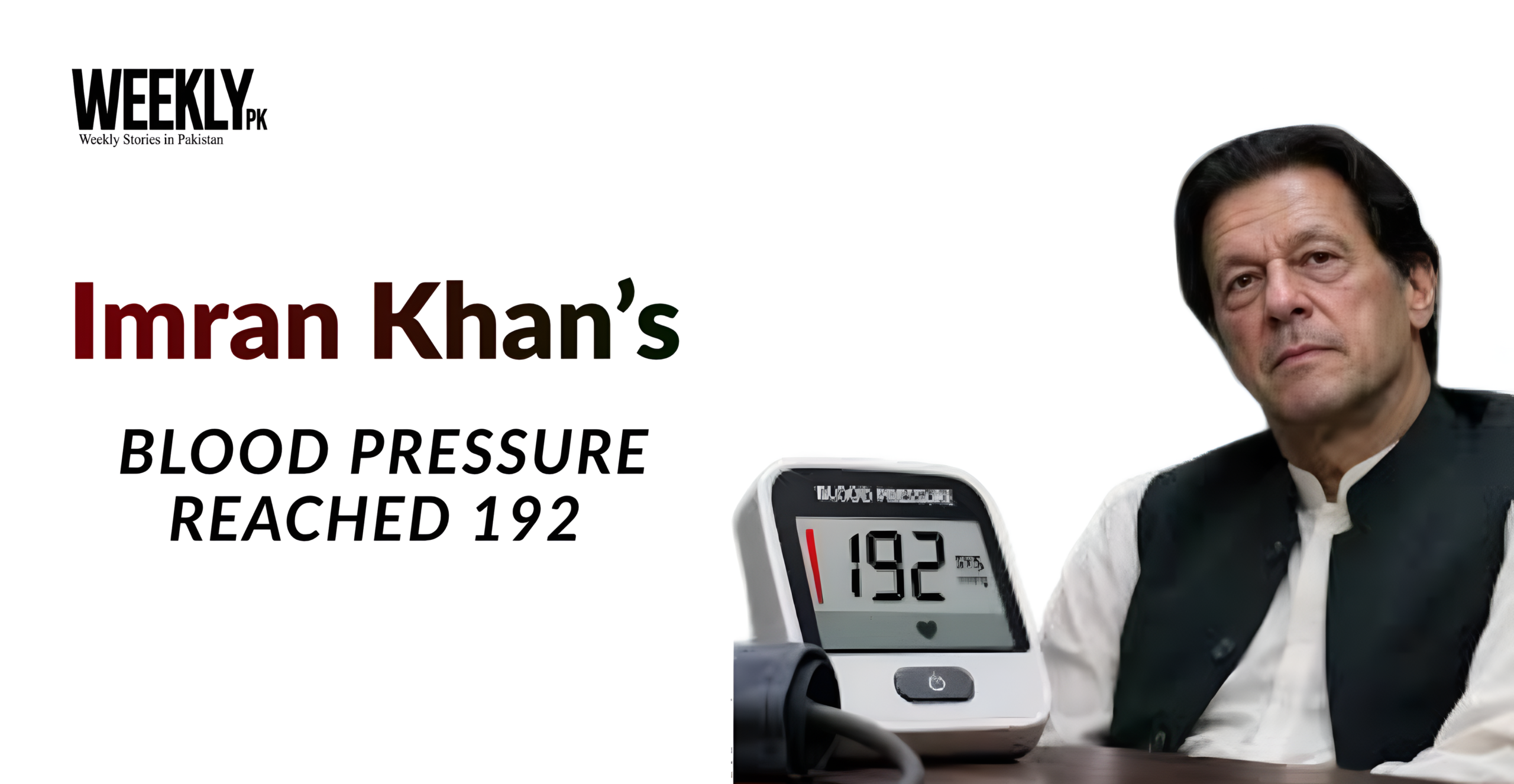
The Pakistan Tehreek-e-Insaf (PTI) says jailed founder Imran Khan’s blood pressure has not returned to normal, citing a reading of 192, and has demanded his immediate transfer from Adiala Jail to Shifa International Hospital for treatment under his personal physicians. The claim has not been independently confirmed, and the coverage reviewed includes no public response from jail or government authorities.
The party raised the alarm on Wednesday. PTI’s central information secretary, Sheikh Waqas Akram, issued a statement saying the former prime minister’s blood pressure had surged to 192 in recent days, and PTI Secretary General Salman Akram Raja called it an extremely alarming matter. Speaking to the media after a meeting with opposition leaders, including JUI-F chief Maulana Fazlur Rehman, Raja said Khan’s blood pressure was not stabilising and that the situation was critical for his wellbeing. Khan’s sister said he had never had high blood pressure, that it had been normal as recently as a year ago, and that the family’s medical advisers considered it unusual for a man over 70 to develop high blood pressure suddenly. His son Kasim shared her statement on X, saying the high reading was not normal.
The reading was reported after a meeting on November 2 between Khan and his lawyer Salman Safdar at Adiala Jail, which PTI Chairman Barrister Gohar Ali Khan described as the first lawyer meeting since April. Accounts of what was said differ. According to a report from QNC News, others familiar with the meeting described Khan as generally fit, and the figure is unverified. Safdar himself said he was not the source of the alarming health reports and described his role as limited to legal matters. The 192 figure, as reported, comes without further detail, including whether it is a systolic or diastolic reading, when it was taken or what treatment was given, and it is not clear who measured it.
The concern is not new. In August, the Supreme Court ordered Khan’s transfer from Adiala to Shifa International Hospital within two days after Adiala’s jail superintendent submitted a report on a cardiac board’s review on August 10. According to Al Jazeera, the report recorded fluctuating blood pressure and anxiety linked to what it said was restricted contact with his family, and the court said his pulse and heart condition were not normal. It also ordered a medical board and tight security at the hospital, and told PTI not to hold rallies outside, with Raja assuring the court that the party would not use medical reports for political purposes. The government had argued that any transfer required judicial authorisation, and authorities have maintained that medical facilities are available at Adiala.
PTI’s current account adds a further layer. Raja said last month that the government’s negotiating team had told the party there were four to five weeks when Khan’s blood pressure rose extremely high and did not respond to medicines, after which a specialist was called from London and his condition began to improve. The party has used that remark to argue that his own doctors must be involved in his care, and Raja said PTI would never abandon that demand. It also sits uneasily with the claim that he has never had high blood pressure, and it suggests that hypertension has been discussed by both sides at least since the summer, a point that the family’s statement does not address.
Also Read: PHC to Hear PTI’s Challenge to KP Governor’s Rule on October 20: What Are the Arguments?
The medical question is entangled with access. Khan has been imprisoned since August 2023, and PTI says he has been denied regular meetings with lawyers, family and doctors. The Islamabad High Court issued a direction on September 2 on meaningful human interaction and family visits, but on Tuesday, the day set for meetings, one of his nephews was reportedly turned away at the jail. With lawyers allowed in only after seven months, the information reaching the public about his health has come through a small number of channels, and each of those channels is also part of the political dispute.
What would settle the matter is straightforward in principle. A medical report from the jail authorities, or a joint examination by government and personal physicians, could confirm the reading and show whether treatment is adequate. Courts have already shown willingness to intervene on health grounds, as the August order demonstrates, and PTI is likely to approach them again. The government’s position will also matter: it can address the claim directly by publishing medical records or allowing independent specialists, or it can leave it unanswered.
The political backdrop makes the issue more sensitive. PTI’s leadership is dealing with the emergency and governor’s rule in Khyber Pakhtunkhwa, its chief minister’s whereabouts, and a hearing in the Peshawar High Court on November 10. Khan’s health has become one of the most potent pressure points for the party, and it also carries real human stakes, which is why verification matters. For now, one side says his condition is worrying, another says he appears generally fit, and no authority has yet provided figures that anyone can check.
Compiled by the Weekly PK Political Desk.
Leave a Reply