
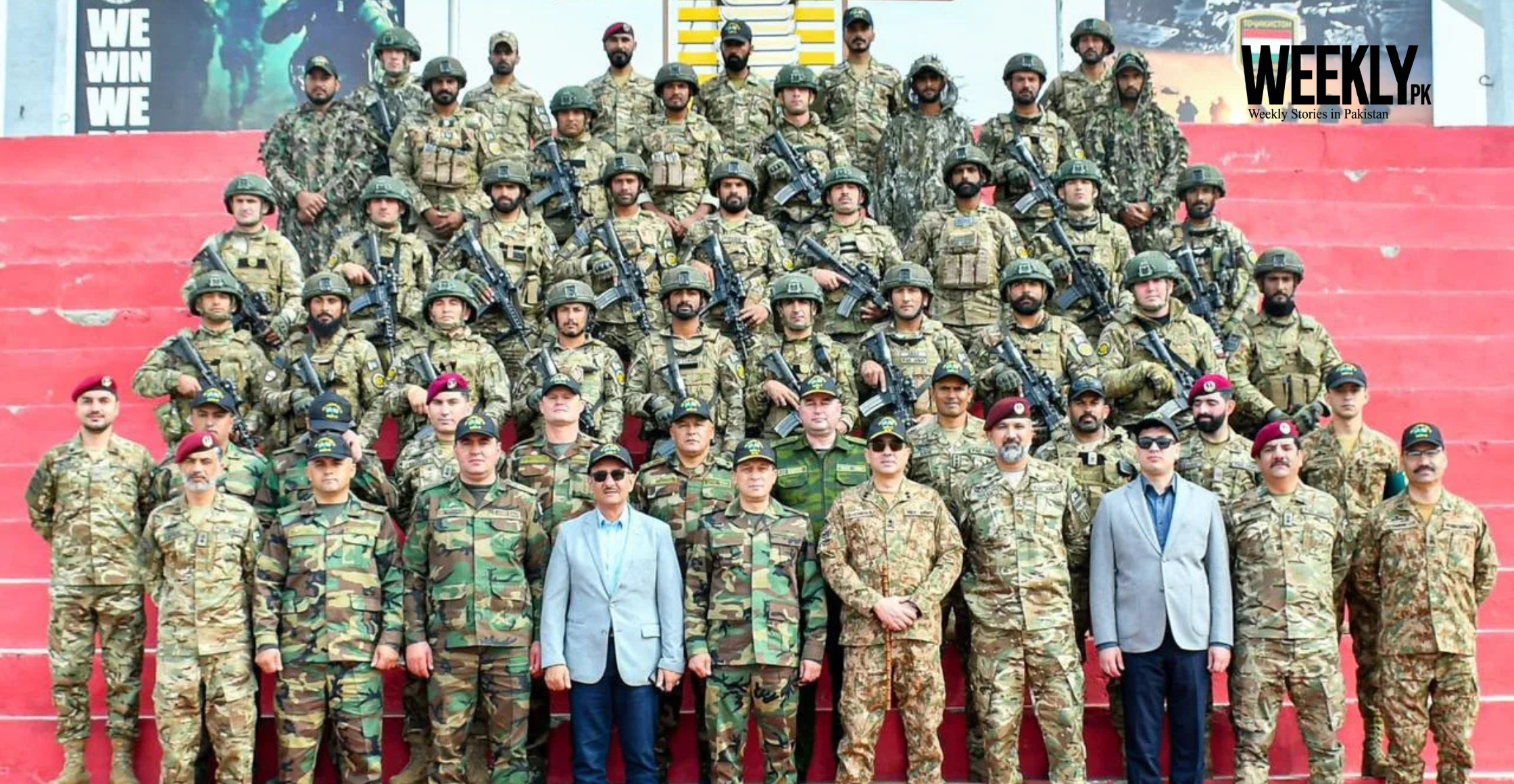
The armies of Pakistan and Tajikistan have concluded the third edition of their joint counterterrorism exercise, Dosti-III, at the Special Operations School in Cherat, the military’s media wing said on Friday. The exercise, which began on October 26, is the latest in a series that both sides describe as a cornerstone of their defence relationship.
According to the Inter-Services Public Relations (ISPR), the exercise focused on sharing counterterrorism experiences, refining operational drills and procedures, and improving combat skills through mutual learning and exchange of best practices. The statement said the exercise reflects the longstanding military cooperation between Pakistan and Tajikistan and reaffirms both countries’ resolve to strengthen bilateral defence ties. Daily Times added that military attaches and senior commanders acknowledged the operational value of continuous joint training, and that planners intend to build on the results in future editions.
The ISPR statement did not say how many troops took part, which units were involved or what scenarios were rehearsed. That is typical of such announcements, but it limits what can be said about the scale of the exercise. Some context is available from the previous edition. Dosti-II was held from August 4 to 9, 2025, at Fakhrobod Base in Tajikistan, and involved two combat teams from the Pakistan Army’s Light Commando Battalion and four combat teams from Tajikistan’s Special Forces, with the ISPR saying all training and military diplomacy objectives had been achieved. The third edition therefore moved the series to Pakistan, and it ran for around eleven days compared with six for the second, according to the dates given in the two announcements.
The exercises are part of a pattern of defence diplomacy that has been especially active this autumn. In recent weeks Pakistan has signed the Badr defence industry memorandum with Qatar, Turkiye and Indonesia, completed ratification of the Makkah defence pact with Saudi Arabia, and flight-tested its first indigenous Fa’az air-to-air missile. Turkiye’s parliament approved the Makkah pact this week, according to Daily Pakistan. Against that backdrop, a bilateral counterterrorism exercise with a Central Asian partner is a smaller event, but it fits the same direction: expanding military relationships beyond Pakistan’s traditional partners.
The counterterrorism focus also reflects Pakistan’s security situation. The army has been engaged in operations across Balochistan and Khyber Pakhtunkhwa, and on the same day as the Dosti-III announcement, Daily Pakistan carried a report that the army had responded to what it called Afghan Taliban border aggression in Kurram, though details were not available in the material reviewed. Pakistan’s Foreign Office has repeatedly accused the Taliban authorities of sheltering militants who attack Pakistan, a charge Kabul rejects. Tajikistan shares a border with Afghanistan, and Central Asian states have their own concerns about militant groups in the region, which gives both sides a shared interest in counterterrorism training. The ISPR statement does not mention Afghanistan, and it would be speculative to say the exercise was designed with any particular threat in mind.
The more useful question is what each side gains from the series. For Pakistan, joint exercises are a way of showcasing the training of its special operations forces and of building relationships in a region where Islamabad is seeking stronger economic and security ties. For Tajikistan, they offer exposure to the experience of an army that has fought militants for more than two decades. Because both sides rotate the venue, each edition is also a chance to host foreign troops and exchange procedures on home ground.
There are also questions the statement leaves open. What specific skills and tactics were covered, and how will they be applied in the future? Will the series expand to include larger units or other partners? And what, if any, wider arrangements on training, equipment or intelligence cooperation accompany the exercises? Without that information, the announcement is best read as a routine confirmation of continuing cooperation rather than a sign of a new commitment.
For now, Dosti-III has ended, and military planners on both sides have said they will build on it. The next edition, whenever it is held, will show whether the series grows in scale or remains a modest bilateral drill.
Compiled by the Weekly PK Defence Desk.
Leave a Reply