
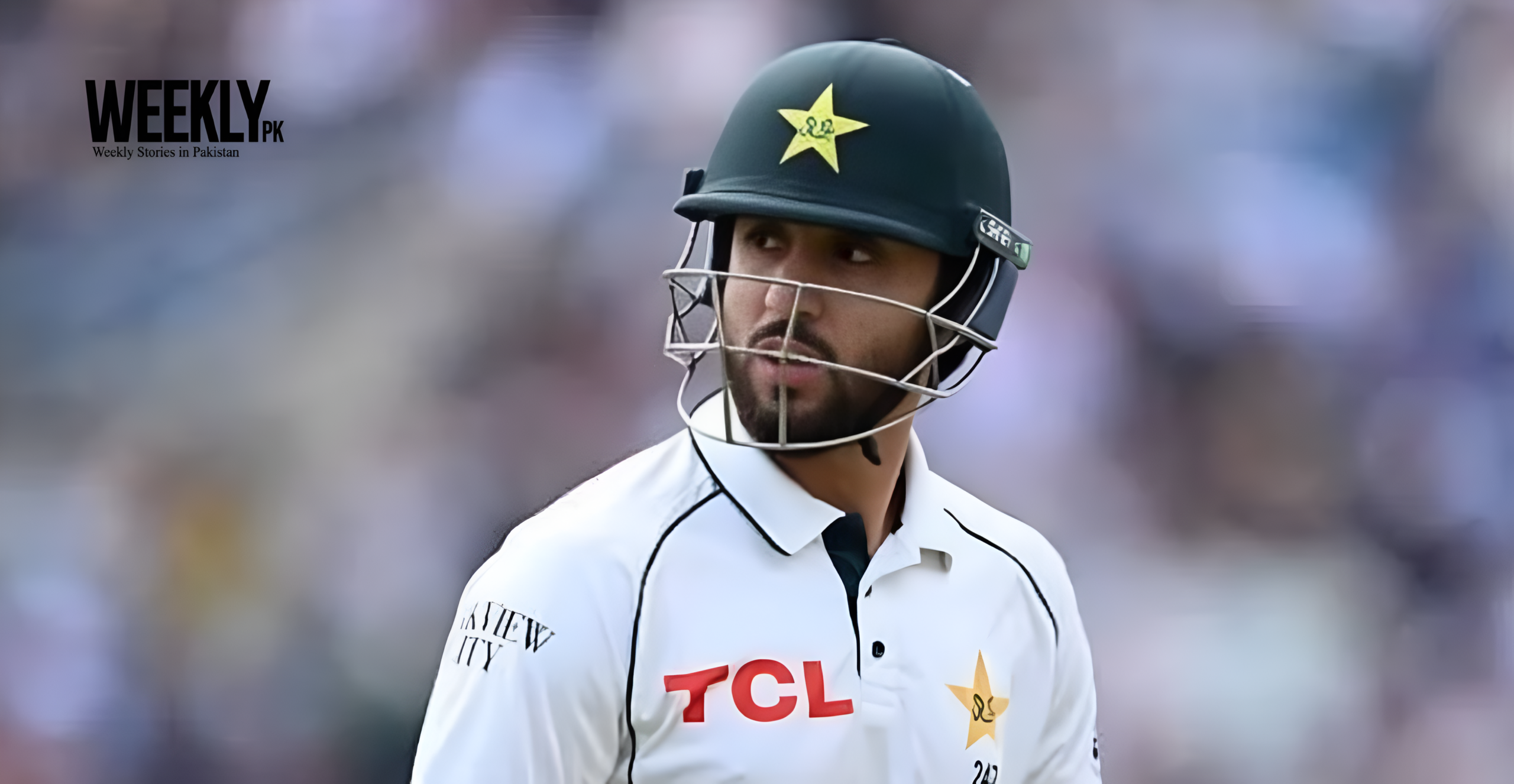
Pakistan have dropped Shan Masood, until recently their Test captain, from the squad for the two-match home series against Sri Lanka, as selectors turn to youth and domestic form in a revamped 14-man group announced by the Pakistan Cricket Board (PCB) on Saturday. Babar Azam continues as captain, and three uncapped batters, Sameer Minhas, Mohammad Taha and Mohammad Suleman, have received maiden Test call-ups.
Masood is not the only notable absentee. Abdullah Shafique, who played a starring role in Pakistan’s win in the West Indies with an unbeaten 160 in the first innings in Port of Spain but struggled in England, scoring 84 runs in six innings, has also been left out. The spin pair of Sajid Khan and Noman Ali has been dropped as well, and reports also list wicketkeeper-batter Mohammad Rizwan and opener Imam-ul-Haq among those excluded. The PCB did not provide any explanation for Masood’s omission in its press release.
The squad that remains mixes a small core of retained players with fresh names. Abdullah Fazal, Arafat Minhas, Azan Awais, Mohammad Abbas, wicketkeepers Mohammad Ghazi Ghori and Saad Baig, Razaullah and Saud Shakeel keep their places, while left-arm spinner Ali Usman and batter Salman Ali Agha are also included. Agha’s selection follows his century in the opening match of the ODI tri-series last week. Two more fast bowlers will be added after a three-day warm-up match against Sri Lanka in Islamabad from November 4 to 6, and the selectors are expected to pick them from the Pakistan Patrons side.
The two Tests will be played in Rawalpindi and Lahore between November 9 and 21, as part of the ICC World Test Championship cycle, with the first Test starting on November 9 in Rawalpindi. The series is an important one for a side that has struggled for consistency in the current cycle, and selectors appear to have decided that the time has come for a different approach.
Masood’s exclusion is the biggest talking point because of what he represented. The left-handed opener led Pakistan in Tests for an extended period, and his most recent innings of note was a 109 against the West Indies in the opening Test in Trinidad in July, after which he missed the second match with a finger injury. That innings makes the decision harder to read as a simple matter of form, and the lack of an explanation from the board has left room for speculation about whether the call reflects results, the results of the England tour, or a longer-term plan to move on from the old guard. Some observers will see it as a clean break. Others will question whether dropping a captain, even a former one, without a public rationale is the best way to manage a transition.
There is a logic to the selectors’ thinking. Pakistan have not been winning enough Tests, and a squad that relies on the same group of experienced batters has not produced the results the team needs. Bringing in three uncapped batters allows the team to test players who have performed in domestic cricket and who have no baggage from recent defeats. The inclusion of Arafat Minhas, who has been in the spotlight in the ongoing ODI series, shows that selectors are also looking at players who have impressed in white-ball cricket and may have the skills for the longer format. Mohammad Abbas, the veteran seamer, offers experience in the pace group alongside Razaullah.
Also Read: Pakistan ODI Tri-Series Preview: Shaheen Afridi’s Side Opens Against Sri Lanka in Rawalpindi
But the plan carries risks. A batting order with three players who have never played Test cricket will be tested early by an experienced Sri Lanka attack, and Pakistan’s margin for error in a two-match series is small. The decision to drop both Sajid Khan and Noman Ali also leaves Pakistan with only one specialist spinner, Ali Usman, in the initial squad, in home conditions where spin has often been central to the team’s strategy. Whether additional spinners are added later, or whether the selectors are betting on a pace-heavy approach, will be clearer once the two extra fast bowlers are named after the warm-up match.
Shafique’s omission is a reminder of how quickly fortunes change. A player who made 160 not out in a Test win earlier this year has been dropped after a poor run in England, which suggests that selectors are weighing recent form heavily. That approach can reward in-form players, but it can also create uncertainty for batters who may feel that one poor series is enough to lose a place.
For Babar, who continues as captain, the series is a chance to shape a new-look side. He will have a batting line-up that is short on experience around him, which means his own form will be crucial, and Salman Ali Agha, who has just scored a century in ODIs, may be asked to anchor the middle order. Saud Shakeel, one of the more experienced players retained, will also be expected to provide stability.
Whether this reshuffle becomes the start of a new era or an experiment that is quickly reversed will depend on how the newcomers perform against Sri Lanka in November. If the young batters succeed, the PCB will point to the decision as a sign of bold and effective selection. If they struggle, questions about the treatment of Masood, Shafique and others will return. Either way, the squad marks a clear change of direction for Pakistan’s Test side, and the first Test in Rawalpindi on November 9 will be the first real examination of it.
Compiled by the Weekly PK Sports Desk.
Leave a Reply