
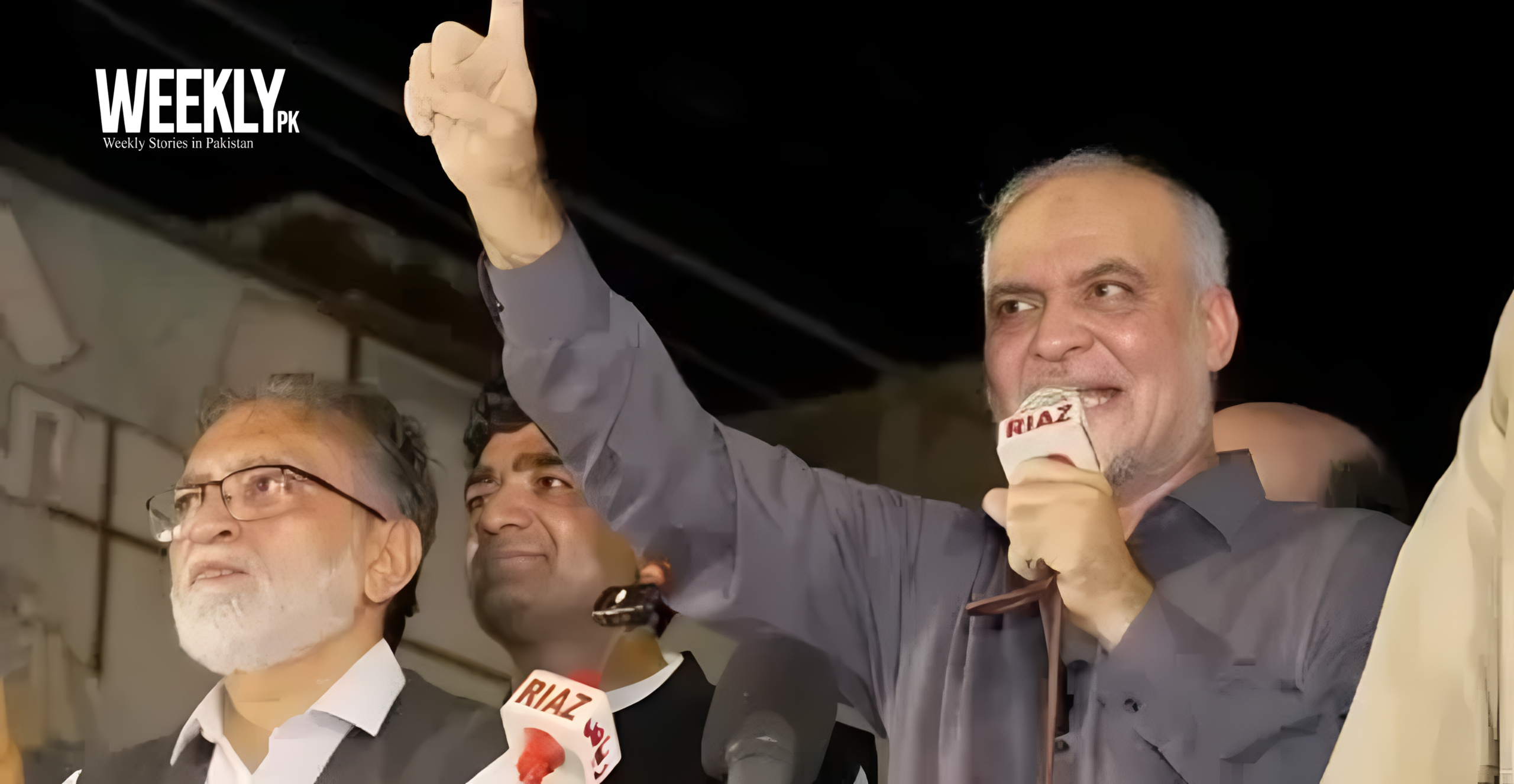
Jamaat-e-Islami (JI) has shelved, for now, its plan to march on Islamabad over the petroleum levy, but the party is making clear that the pause is tactical rather than final. With Prime Minister Shehbaz Sharif expected back in the country soon, JI Emir Hafiz Naeemur Rehman has said a long march remains on the table if talks fail to deliver relief, with the party pointing to the first week of October as the next pressure point.
The train march began on September 20, when Naeem addressed workers at Karachi’s Cantonment Station before the party’s caravan set off for the capital, with planned stops at Hyderabad, Landhi, Nawabshah, Rohri and Sukkur on the way to Multan. At the send-off, he accused the government of pushing up petrol prices more than any other state in the region and warned that if the levy was not abolished, the protest could evolve into a movement to remove the government itself. He also cautioned that if the march was suppressed, the situation in Islamabad might not stay under control, language that raised the stakes considerably.
The momentum behind the march had been building for weeks. According to Naeem, nationwide protests had been running for roughly five weeks by then, and the party said its campaign had spread to 42 cities, with sit-ins in provincial capitals passing the 35-day mark. Five rounds of negotiations between JI and the government had failed to end the standoff, and the party had rejected the government’s recent fuel relief measures as insufficient, maintaining that only a complete withdrawal of the levy would satisfy its demand.
The train reached Multan late on Monday, September 21, about four hours behind schedule. The next day, as the march pulled into the city, the prime minister telephoned Naeem from New York, where he was attending the UN General Assembly. Shehbaz asked the party to hold off until he returned to Pakistan and offered to talk about the levy at that point, according to a JI spokesperson. Naeem told him the party did not want confrontation or a law and order problem, but insisted that the government had to respect the right to protest. He said the decision would go to the party’s Shura, and it later announced that the march had been postponed.
Postponement, however, has not meant retreat. Speaking at a public gathering in Lahore, Naeem said the movement had not ended and that the march would resume if the talks with the prime minister failed to produce relief. He accused the government of placing obstacles in the way of JI’s political activities and rallies, but said workers had carried on regardless. At a press conference at Mansoorah on September 26, he announced a fresh round of public rallies in Charsadda, Swabi, Sahiwal, Sargodha, Larkana, Karak and Karachi, along with a nationwide signature campaign demanding the levy’s withdrawal. The party’s next step, he said, would depend on what happens after Shehbaz returns.
Several details about the situation are worth keeping in view. The levy has become the single most visible symbol of the cost of living debate, largely because it is a government imposed charge that consumers can see in the price at the pump. JI calls it extortion, while the government has argued that it cannot simply be scrapped without consequences for its revenue targets. Earlier reporting has already noted that Planning Minister Ahsan Iqbal pointed to Pakistan’s IMF commitments as a constraint on removing the levy outright, and with an IMF review mission scheduled to arrive in late September, the room for a quick concession looks limited.
That leaves the prime minister with a difficult balance. A meaningful cut to the levy would ease public pressure and take the wind out of JI’s campaign, but it would also open a gap in the revenue that the IMF programme relies on. Refusing to move, on the other hand, risks handing JI a renewed march at a time when the government is already managing security preparations for a separate PTI march and a tense situation along the Afghan border. JI has also been careful to avoid looking like an ally of any other party, opposing calls for governor’s rule in Khyber Pakhtunkhwa while insisting that PTI has a constitutional right to protest peacefully, a position that keeps its own campaign focused on fuel prices rather than wider political fights.
For ordinary consumers, the outcome will matter more than the politics. Petrol has been trading well above Rs370 per litre in recent weeks, and every new price review has revived the argument over how much of that figure is levy and tax. Whether the talks planned for after the prime minister’s return produce a reduction, a phased plan, or simply another round of meetings will determine whether JI’s train, paused in Multan, starts moving again in October.
Compiled by the Weekly PK National Desk.
Leave a Reply