
Pakistan’s Punjab education boards are set to release the 10th class (SSC Part 2) result 2026 on August 6 at 10am, bringing an end to months of anticipation for hundreds of thousands of matriculation students across the province.
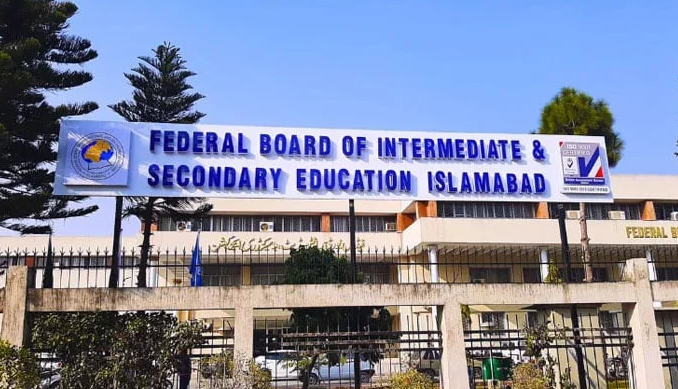
The announcement, expected under the coordination of the Punjab Boards Committee of Chairmen, will apply to boards including Lahore, Gujranwala, Rawalpindi, Faisalabad, Multan, Sargodha, Sahiwal, Bahawalpur and Dera Ghazi Khan. The Federal Board, which examines students in Islamabad and federal areas, is expected to announce its result separately, though a firm date has yet to be confirmed. Federal Board students can check their result once announced at result.fbise.edu.pk.
This year’s cohort is among the largest in recent memory. BISE Lahore alone has registered over 350,000 students, making it the largest board in the country, while boards such as Gujranwala, Multan, Rawalpindi, Sargodha, Sahiwal and Bahawalpur have each registered roughly 200,000 to 250,000 candidates. The Federal Board recorded close to 180,000 examinees this year.
Students will have several ways to access their results once they go live. The most direct route is checking by roll number through a board’s official website, which returns a detailed marksheet. Those who have misplaced their roll number slip can instead search by full name. On result day, when websites typically slow down under heavy traffic, boards also offer an SMS service: students can text their roll number to a designated code and receive their result within seconds. Each board has its own code, ranging from 80029 for Lahore to 800298 for Bahawalpur. Schools and teachers checking results in bulk generally rely on the downloadable result gazette, a PDF list that can be searched using Ctrl+F.
The minimum passing threshold remains 40 percent per subject, and students must clear every subject individually rather than relying on an aggregate score. Punjab’s boards have also introduced incremental changes to the grading framework this year, including a GPA-based evaluation for optional subjects on some boards and a stated shift toward assessing conceptual understanding rather than rote memorisation. Students unhappy with their marks can apply for rechecking online before the deadline, after which the board reviews totals and any unmarked questions before issuing revised results.
Pass percentages have trended upward in recent years. The 2024 result cycle saw overall pass rates in the range of 50 to 65 percent, which climbed to an estimated 70 to 80 percent in 2025. Officials and observers expect a similar or improved trend this year, though this will only be confirmed once results are announced.
Once results are out, students move on to selecting their intermediate track, typically pre-medical, pre-engineering or computer science within the science group, commerce, or the arts and humanities stream, a decision that will shape their academic path for the next two years.
Leave a Reply